


Steam tractors became the go-to tool for agricultural development in the late 1800s/early 1900s. Although their use was widespread, this machinery wasn’t perfect; they didn’t work everywhere. In California, these immensely heavy tractors kept sinking into the soft earth.
The History of Caterpillar
Getting steam tractors to work on California soil was difficult. Sometimes workers laid wooden planks ahead of the tractors. This was costly and time-consuming. Eventually, in 1904, innovation struck. Benjamin Holt came up with the idea of attaching these planks to the tractor, replacing the wheels with a track. The design gave Holt’s tractor a unique way of moving, which was compared to the movement of a caterpillar. This became the Caterpillar tractor namesake. In 1925, Holt’s business, Holt Manufacturing Company merged with C.L. Best Tractor. The company’s new name, Caterpillar, came from the product that made them famous.

Holt Manufacturing Company and C. L. Best Tractor were both incredibly successful during WWI. Post-war, however, these companies floundered, and their merger came as an attempt to alleviate their financial struggles. Post-merger, Caterpillar still needed to undergo changes to bounce back financially. First, they started making diesel engines in 1931. Then they began to focus on developing construction equipment. These changes worked well for them, and the company thrived in the construction boom post-WWII.
After successfully conquering the construction market, Caterpillar began to branch out during the late 1900s. They built truck engines for both on- and off-highway purposes and also entered the global market. In 2008, changing EPA standards made them exit the on-highway diesel engine market, determining that it was too expensive to manufacture truck engines.
Need replacement parts for your Caterpillar C15? Our ASE Certified Technicians are ready to help you find the components you need!
Caterpillar C15: Learn Everything You Need to Know About This Game-Changing Engine
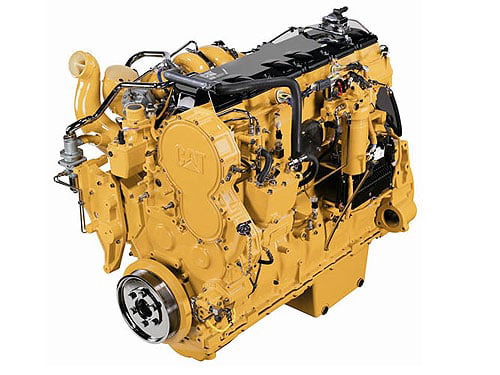
The C15 was first manufactured by Caterpillar from 1999 to 2007. Keep in mind, that this article is about single-turbo Caterpillar C15, not ACERTs. C15s, especially the early C15 engine, have a reliable, quality reputation. Parts for this engine are among our most popular. Early C15s with a 6NZ serial number prefix only have one turbocharger and simple electronics. They also weigh less than the 3406E, the C15 engine’s predecessor.
3406E, C15, and C15 ACERT engines have several interchangeable parts. There are still slight, but important differences between these engines. The C15 was designed as an improvement to the 3406E. This means the C15 sees less oil leakage than its predecessor, and it also includes relief slots at the bottom of the cylinder head that prevent the head gaskets from being crushed.
The C15 ACERT has several differences from the C15 as well. Many think the ACERT’s only difference is the inclusion of a second turbocharger, but there’s much more to it. ACERT engines have the same stroke as C16s, plus a completely different piston design. The C15 uses a two-piece, aluminum skirt piston design, while the ACERTS have one-piece steel pistons. The ACERT namesake comes from the emission technology it uses.
C15 engines are on-highway engines. They’re found in Peterbilt and Kenworth trucks.
Looking for more information on these three engines? Check out our post on the differences between the C15, ACERT, and 3406E.

Common Caterpillar C15 Failures
The C15’s inclusion of relief slots caused issues. While it was a great idea, several shop techs noticed that it caused the head gaskets to fail slightly more. If you buy high-quality gaskets and keep an eye on your engine, it shouldn’t be much of an issue.
Another issue Caterpillar had with the C15 engine was the Bridge engine models. Bridge engines are C15s made between 2002 and 2003 with an MBN serial number prefix. They’re named as such because they were meant to bridge the gap between the pre-emissions 6NZ and emission standard-compliant C15 ACERT engines. They’re also notorious for their poor performance, and the MBN in their serial number is jokingly referred to as “Much Bad News”. The stock engines don’t pull well, their exhaust temperatures run high, and their fuel consumption is terrible. Many MBN owners either have the engines replaced or update the ECM to codes for a different engine.
Aftermarket Improvements of the Caterpillar C15
Since its debut, aftermarket manufacturers have put a lot of time into improving the C15’s design. The engine’s piston skirts have a graphite coating to prevent them from seizing in the cylinder. The rod and main bearings are crafted from a tri-metal blend that increases durability. The cylinder liners are also induction hardened which reduces bore wear.
When you buy aftermarket parts, you’ll get more than engineering improvements. All of HHP’s aftermarket rebuild kits, in-frame or out-of-frame, include new pistons. Kits bought from Caterpillar come with used pistons. They will also make you pay a core charge because of this.
Caterpillar C15 Engine Specifications
435/500 hp MT-T4, 455 hp MT-T4, 475/500 hp MT-T2, 500 hp MT-T2
- Bore: 5.4 mm, Stroke 6.5mm, Displacement: 893 cubic in
- Aspiration: Turbocharged for ATAAC
- Rotation from flywheel end: Counterclockwise
- Cooling system: 5.5 gallons
- Weight, Net Dry: 2695
- Dimensions: 57.2 length, 39.3 width, 49.7 height
C15 has Multi-Torque (MT) Operation
For the best balance between fuel economy and performance requirements on line-haul vehicles with 80,000 lbs. or less, use the following guidelines:
- For 9, 10, or 15-speed single overdrive transmissions, gear to cruise at:
- 1550 rpm @ 65 mph for 410 hp and below
- 1500 rpm @ 65 mph for 435 hp and above
- For 13 or 18-speed dual overdrive transmissions, gear to cruise at:
- 1450 rpm @ 65 mph
- Maximum recommended engine speed at cruise 1550 rpm
Caterpillar C15 Serial Numbers and Casting Numbers

Caterpillar C15 Featured Products
We have a very large offering of parts for C15s of all ESN prefixes. The ones below are some of our most popular.
132-9976 | Caterpillar 3406E/C15/C15 ACERT Cylinder Head, New
P200010
Our best-selling C15 product. This cylinder head is built to fit all 3406E, C15, and C15 ACERT engines. It includes an all-new forged casting with a higher nickel content, giving it improved strength and durability. This design also includes wider passages and a thicker deck for better coolant flow. It also includes valves, springs, retainers, keepers, and cam bearings already installed in the head, so you don’t have to waste time installing them yourself. This part costs way less than what Caterpillar would charge you, and a Capterillar would have none of the design improvements either.
1807352-C15 | Caterpillar C15 Engine Rebuild Kit
P016652
The 6NZ is the most popular C15 type, and this inframe engine rebuild kit is one of two rebuild kits we offer for 6NZ engines. This kit includes induction-hardened cylinder liners to reduce bore wear, resistant bi-metal piston rings, and an updated o-ring design that prevents coolant leaks. It also includes all the typical components you’d find in an engine rebuild kit. Every kit purchased from HHP requires an engine serial number. There are no universal engine models, so we need to make sure you’re getting the kit your engine needs.
0R7299 | Caterpillar C15/3406E Turbocharger with Wastegate, New
P126001
Everybody loves a good turbo! This particular turbocharger is made by the OE suppliers, so they know what they’re doing. Each component is thoroughly inspected for fit and finish before the turbo is fully assembled. It’s also perfectly balanced to ensure you get long-lasting, dependable power. If you want to save a few bucks, you can pick up a remanufactured turbo instead.
10R1000 | Caterpillar 3406E/C15 Fuel Injector, Remanufactured
P016876R
Delphi makes amazing fuel injectors, especially ones for C15 engines. For a remanufactured fuel injector, it includes plenty of all-new parts. This particular injector is guaranteed to include a new nozzle for proper fuel flow and atomization. It will also include an all-new actuator assembly, with a spill valve, NOP spring, washer, shim, and stop. Even the o-rings are brand new.
Do you need replacement parts for your diesel engine? Call our ASE Certified Techs at 844-304-7688. Or, you can request a quote online.
FAQs for the Caterpillar C15 Engine
1. What is the Caterpillar C15 engine?
The Caterpillar C15 is a 14.6L, inline-six diesel engine known for its durability, power, and efficiency. It was widely used in heavy-duty trucks, construction equipment, and industrial applications.
2. How much horsepower does a Caterpillar C15 engine produce?
The C15 engine typically produces between 435 and 625 horsepower, depending on the model and factory specifications. Many owners also tune the engine for higher performance.
3. What makes the Caterpillar C15 engine reliable?
The C15 is well-regarded for its strong internal components, efficient cooling system, and robust electronic controls. It is built to withstand high loads and extreme conditions, making it a preferred choice in heavy-duty applications.
4. What are common problems with the Caterpillar C15 engine?
Common issues include blown head gaskets, injector failure, turbocharger wear, and oil leaks. Regular maintenance, high-quality fuel, and proper cooling system care can help prevent these problems.
5. Is the Caterpillar C15 a good engine for trucking?
Yes! The C15 is a popular engine among truckers due to its reliability, strong torque output, and availability of aftermarket parts. It’s considered one of Caterpillar’s best engines for long-haul and heavy-duty use.


