


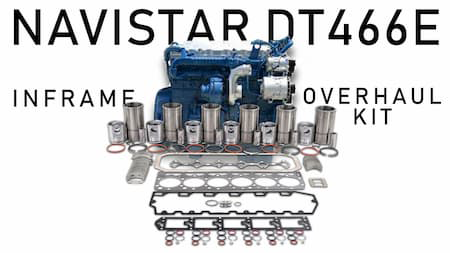

The International/Navistar DT466E diesel engine is a 7.6-liter, inline-six, turbocharged diesel engine. It’s well-known for its durable applications in medium- and heavy-duty equipment, such as trucks and buses. It was produced between 1996 and 2003, based on the DT466 design. The E added to the end of the model number indicates that it has an electronic control system, which makes it more efficient than the previous mechanical version.
Key features of this engine include a horsepower range between 195 and 300 and torque up to 860 pound-feet. It also boasts a wet-sleeve design for easier overhauls. It’s considered one of the most durable International/Navister diesel engines.
Highlights of the DT466E International Diesel Engines
The DT466E engine was built for heavy-duty applications, using durable components like a deep-skirt gray-iron block and a forged-steel crankshaft. As mentioned above, the wet-sleeve design makes it easy to overhaul the engine in-frame, which is popular among mechanics. The DT466E was used in a wide variety of vehicles, including dump trucks, fire trucks, school buses, and construction equipment.
Both the original DT466 engine and the E version have a legendary reputation for reliability and can last for hundreds of thousands of miles with good maintenance. They’ve even been known to get up to a million miles with regular maintenance.
Reasons For Durability: Robust Cylinder Heads
Aside from the common International engine issues that came after the rebrand to MaxxForce, the DT466 engines were known for their durability, and a lot of that was due to notably robust cylinder heads. To start, the weight and material of the heads were important. They were crafted from cast iron and weighed about 250 pounds. The two-valve version was made at a U.S. Foundry, while the four-valve versions were made in Brazil.
The advanced design features of the heads included integrated ductile-iron rocker arms for toughness and hardened valve seats for longevity in extreme conditions. The heads were also installed securely with a six-bolt per cylinder design. This ensured a firm and secure fit.
Reasons For Durability: Wet Sleeve Cylinder Liners
The wet sleeve cylinder liners set the DT466 engines apart thanks to heavy-duty durability and convenient serviceability, something usually only found on bigger engines. The liners were known for their high chrome content for strength and consistent performance. The external side of the sleeves was exposed to engine coolant, allowing for efficient heat transfer.
The liners also contributed to easier maintenance. Each bore had its own sleeve, making cylinder repairs and rebuilds much quicker. In-field repairs were possible with this engine thanks to the cylinder sleeve design.
MaxxForce Family Rebrand
The MaxxForce family of engines was originally a rebrand by International/Navistar, but it was later discontinued in favor of new engine platforms. The MaxxForce 13 featured a light and compact design for a big engine, but it has a number of reliability issues. The EGR and DPF systems were the top culprits for poor reliability, often causing premature engine failure. The dual-stage EGR system was well-known for overheating. International/Navistar issued numerous recalls and recalibrations for this engine before eventually discontinuing it.
DT466 Engines vs. MaxxForce
MaxxForce was essentially a rebrand of the DT466 engines, also called MaxxForce DT. These engines incorporated complex emissions systems and electronic controls that ultimately made them less reliable. The MaxxForce engines have advanced emissions control, like SCR and DEF in the MaxxForce 13. The DT models included EGR systems and became known for having issues.
The mechanical DT engines were more reliable without any modern emissions systems. Some of the electronic versions were generally good, but still often experienced electrical issues. The MaxxForce DT mainly had emissions-related issues.
Evolution of the International/Navistar Diesel Engines
The DT engines made before 1994 were simple and reliable, with mechanical functions and no modern emissions systems. The DT466E introduced electronic controls, but it remained largely reliable, albeit with some issues. The MaxxForce DT was the next evolution of the DT466, but it featured modern emissions controls and is largely seen as less reliable by owners.
Common MaxxForce DT Problems
The main problems with the MaxxForce DT engines, and MaxxForce engines in general, are related to the EGR system. EGR failure leads to issues like coolant leaking into the oil and overheating. Other major issues include clogged DPF, turbocharger failures, and cracks in the intake manifold. These are significant and fairly common issues that lead to poor performance and expensive repairs.
The EGR cooler is prone to stress fractures, which allow coolant to leak into the exhaust or the engine oil. This often causes overheating and engine damage. When coolant enters the exhaust system, the main symptom is usually white exhaust smoke. A more severe symptom is excessive engine heat, leading to overheating.
International/Navistar Diesel Engine Parts at Highway and Heavy Parts
Whether you need International/Navistar diesel engine fuel injectors, turbochargers, or engine rebuild kits, we have you covered at Highway and Heavy Parts. We don’t just sell parts; we also deliver honest pricing, expert support, fast shipping, and quality parts that exceed expectations. We know that time is money and downtime is expensive; that is why you can rely on us from expert diagnosis to quick delivery.
International/Navistar DT466E Diesel Engine FAQs

1. What is the International/Navistar DT466E diesel engine?
The International/Navistar DT466E is a 7.6-liter, inline-six, turbocharged diesel engine produced between 1996 and 2003. The “E” designation indicates it features an electronic control system, making it more efficient than its mechanical predecessor, the DT466. This engine delivers between 195 and 300 horsepower with torque up to 860 pound-feet, and it’s widely used in medium- and heavy-duty applications, including dump trucks, fire trucks, school buses, and construction equipment.
2. Why are DT466E engines known for their durability?
DT466E engines are renowned for their exceptional durability due to several key design features. They utilize heavy-duty components like a deep-skirt gray-iron block and forged-steel crankshaft. The cylinder heads are made from robust cast iron, weighing about 250 pounds, featuring integrated ductile-iron rocker arms and hardened valve seats. Additionally, the wet-sleeve cylinder liner design allows for efficient heat transfer and easier in-frame overhauls. With proper maintenance, these engines can last hundreds of thousands of miles, with some reaching up to a million miles.
3. What is the difference between the DT466, DT466E, and MaxxForce engines?
The DT466 (1973-1992) was the original mechanical version known for durability and simple design. The DT466E (1996-2003) added electronic controls while maintaining reliability. The MaxxForce DT was a later rebrand of the DT466 that incorporated complex emissions systems, including EGR (exhaust gas recirculation) and DPF (diesel particulate filter), which unfortunately led to decreased reliability. The MaxxForce 13 is a separate, larger 13-liter engine with advanced emissions controls that experienced significant reliability issues, particularly with its dual-stage EGR system.
4. What are the most common problems with MaxxForce DT engines?
The primary issues with MaxxForce DT engines stem from their emissions control systems, particularly failures in the EGR system. Common problems include EGR cooler stress fractures, which can cause coolant to leak into the exhaust or engine oil, resulting in white exhaust smoke and overheating. Other frequent issues include clogged diesel particulate filters (DPF), turbocharger failures, and intake manifold cracks. These emissions-related problems often result in poor performance, engine damage, and expensive repairs, which is why MaxxForce engines are generally considered less reliable than their mechanical DT predecessors.
5. What makes the wet sleeve design of the DT466E advantageous for maintenance?
The wet sleeve cylinder liner design of the DT466E offers significant maintenance advantages typically found only in larger engines. Each cylinder bore has its own individual sleeve with high chrome content for strength and durability. The external side of these sleeves is exposed to engine coolant, providing efficient heat transfer and cooling. This design makes cylinder repairs and engine rebuilds much quicker and more cost-effective, as individual sleeves can be replaced without extensive engine disassembly. The wet sleeve design enables in-field repairs, making the DT466E particularly popular among mechanics and fleet operators.


