


Description
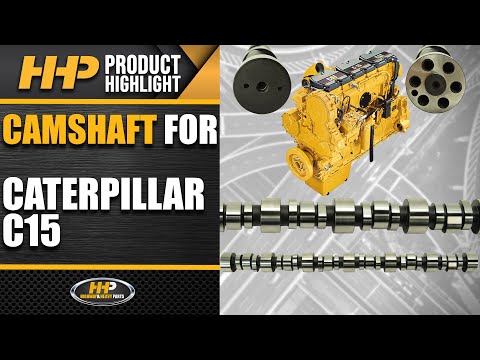
3406E and C15 Camshaft for Caterpillar Diesel Engines – Part Number: 10R3292
Why Choose Our New Camshaft for Caterpillar 3406E and C15s?
- Aftermarket Caterpillar Camshaft meets or exceeds OEM specs
- Our 3406E and C15 camshafts are in stock and ready to order
- New Casting – No metal fatigue due to heat cycles and stress in metal.
IMPROVE PERFORMANCE AND EXTEND THE LIFE OF YOUR DIESEL ENGINE
HHP’s Camshafts for the Caterpillar C15 and 3406E diesel engines produce a higher level of performance than OE parts and increase the life of your C15 and 3406E diesel engines. Our Camshaft is engineered as an upgraded replacement to the OEM part with a perfect fit for easy installation.
Why is my 3406E or C15 diesel engine losing power? Why is my Caterpillar engine popping or backfiring in the intake manifold or exhaust? Your Caterpillar C15 or 3406E diesel engine may be experiencing the failure of a camshaft or valve train. As these parts wear and eventually fail, they can cause damage to your diesel engine if not replaced. Fortunately for you, HHP has you covered! Fix up your failing camshaft or valve train with a 3406E or C15 Camshaft (part number: 10R3292) from Highway and Heavy Parts.
Don’t risk the health of your C15 or 3406E diesel engine; buy a high-quality aftermarket 10R3292 Camshaft from America’s most trusted diesel engine parts supplier. At Highway and Heavy Parts, you’ll get a Camshaft manufactured in an ISO 9001:2015 certified facility, ensuring quality and consistency for your Caterpillar C15 or 3406E heavy-duty engine. Each part is crafted with hard-wearing strength and durability to ensure your 10R3292 Camshaft can withstand the rigors of the road.
Guaranteed for OEM fit and function, HHP parts have the right combination of quality and price with total support from our on-staff ASE-certified diesel technicians. With specialized knowledge, quality products, fast shipping, and unbeatable customer service, HHP has you covered. Order your Camshaft 10R3292 today!
From diagnosis through delivery, we’re Highway & Heavy Parts!
Contents:
Caterpillar C15, 3406E Camshaft – (10R3292)
Frequently Asked Questions
What Caterpillar engines are compatible with the 10R3292 camshaft?
The 10R3292 camshaft is specifically designed for Caterpillar C15 and 3406E diesel engines, two of the most reliable and widely used heavy-duty engines in commercial trucking, construction equipment, and industrial applications. This camshaft also replaces Caterpillar part number 1390538, ensuring broad compatibility across multiple model years and engine configurations within these proven engine families. The 3406E represents the electronic evolution of Caterpillar’s legendary 3406 engine platform, incorporating advanced electronic fuel injection and engine management systems while maintaining the robust valve train architecture that accommodates this camshaft design. The C15 engine, which succeeded the 3406E in Caterpillar’s lineup, continues using compatible valve train components including this same camshaft specification despite enhanced performance capabilities and improved emissions control systems. Both engines share similar displacement characteristics, bore and stroke dimensions, and valve train geometry that allow this single camshaft part number to provide optimal performance across both engine types with identical fit and timing characteristics. Fleet operators managing mixed Caterpillar fleets benefit from this standardized compatibility that simplifies inventory management, reduces parts complexity, and streamlines maintenance procedures across different engine models and production years. These engines are commonly found in over-the-road trucks, vocational vehicles, construction equipment, marine applications, and stationary power generation systems where reliable valve train operation is critical for sustained performance under demanding operating conditions. The camshaft design accommodates various horsepower ratings within both engine families, from standard duty configurations to high-performance variants requiring precise valve timing for optimal combustion efficiency and power delivery. When selecting replacement camshafts, verification of engine serial number and specific model designation ensures proper fitment and optimal valve train performance, as minor variations in timing specifications or auxiliary drive requirements may exist between different applications and production years.
What are the advantages of HHP’s new casting versus remanufactured camshafts?
HHP’s new casting 10R3292 camshaft provides significant advantages over remanufactured alternatives through virgin metallurgy and advanced manufacturing processes that eliminate the inherent weaknesses and reliability concerns associated with used components. New casting construction begins with premium alloy steels specifically formulated for heavy-duty camshaft applications, providing optimal grain structure and chemical composition without the stress concentrations, micro-cracks, or metallurgical degradation that accumulate in camshafts during their initial service life under demanding operating conditions. The absence of metal fatigue from previous heat cycles and operational stress ensures maximum service life potential, as the new camshaft begins operation without pre-existing damage or structural weaknesses that could lead to premature failure in critical commercial applications. Advanced manufacturing processes applied to new castings achieve superior dimensional accuracy, surface finish quality, and material consistency compared to remanufacturing procedures that must work within the constraints of existing material conditions and previous wear patterns. Heat treatment processes for new castings provide optimal hardness characteristics throughout the camshaft, with precisely controlled surface hardening of cam lobes and proper core toughness that cannot be reliably achieved in remanufacturing operations. Quality control procedures for new castings include comprehensive material testing, dimensional verification using coordinate measuring machines, and surface analysis that guarantees consistent performance standards across all production units. New camshafts eliminate concerns about core availability, exchange charges, and potential warranty complications associated with remanufactured components, providing straightforward purchasing and installation without complex core return procedures or potential delays. The reliability advantages become particularly important in commercial applications where unexpected camshaft failure can result in significant downtime, towing costs, and lost revenue that far exceed the initial cost difference between new and remanufactured components. Manufacturing precision available with new castings enables tighter tolerances and enhanced performance characteristics that often exceed original equipment specifications, providing improved engine operation and extended service life in demanding heavy-duty applications.
What symptoms indicate camshaft problems in Caterpillar C15 and 3406E engines?
Camshaft problems in Caterpillar C15 and 3406E engines present through progressive symptoms that indicate valve train deterioration requiring immediate attention to prevent catastrophic engine damage and costly repairs. Power loss represents one of the most noticeable early symptoms, as worn camshaft lobes reduce valve lift and timing accuracy, resulting in poor cylinder breathing, reduced combustion efficiency, and diminished engine performance under load conditions. Intake manifold popping or backfiring indicates improper valve timing from camshaft wear, causing combustion gases to escape through intake valves during compression strokes and creating audible backfire events that become more frequent during acceleration or high-load operation. Exhaust system popping or unusual exhaust noise suggests exhaust valve timing problems from camshaft deterioration, preventing proper exhaust gas evacuation and causing pressure waves that create distinctive popping sounds during deceleration or engine braking situations. Unusual valve train noise including tapping, clicking, grinding, or knocking sounds indicates excessive clearances between camshaft lobes and valve train components such as followers, pushrods, and rocker arms, often becoming more pronounced during engine warm-up periods or idle conditions. Hard starting or rough idle conditions frequently accompany camshaft problems, as irregular valve timing disrupts proper air/fuel mixture ratios and compression characteristics necessary for reliable ignition and smooth engine operation across all operating conditions. Oil pressure fluctuations may occur due to worn camshaft bearings affecting oil gallery flow distribution, potentially causing pressure variations that impact other engine systems including turbocharger lubrication and hydraulic valve actuation systems. Advanced symptoms include metal particles detected in routine oil analysis indicating camshaft bearing wear, excessive blow-by from poor valve seal caused by timing irregularities, and diagnostic trouble codes related to valve timing correlation or camshaft position sensor readings. Complete camshaft failure can result in catastrophic valve train damage including bent valves, damaged pistons from valve-to-piston contact, or complete loss of engine timing that requires major engine rebuild with extensive component replacement throughout the valve train and potentially the entire engine assembly.
How is the 10R3292 camshaft properly installed in Caterpillar engines?
Installing the 10R3292 Caterpillar C15 or 3406E camshaft requires extensive engine disassembly, specialized tools, and meticulous attention to timing procedures and clearance specifications to ensure optimal valve train operation and engine performance. The installation process typically requires 16-20 hours of skilled labor depending on engine accessibility within the vehicle chassis, mechanic experience level, and whether additional valve train components require replacement during the comprehensive repair procedure. Essential tools include heavy-duty engine lifting equipment for potential engine repositioning, comprehensive metric socket and wrench sets, precision torque wrenches with multiple ranges, specialized camshaft installation and removal tools, valve train measuring equipment, and timing verification instruments for ensuring proper valve timing coordination with crankshaft position. The procedure begins with systematic engine disassembly including removal of cylinder heads, intake and exhaust manifolds, valve covers, front engine covers, cooling system components, and timing gear assemblies to access the camshaft mounting location within the engine block’s cam bore. Camshaft removal requires careful extraction procedures using specialized tools to prevent damage to camshaft bearings, bearing bores, or timing gear components, often necessitating partial engine disassembly and careful component alignment during removal and installation processes. Critical preparation steps involve thorough inspection of camshaft bearings for wear or damage, verification of bearing clearances using precision measuring tools, measurement of cam bore dimensions, and complete cleaning of oil galleries and lubrication passages to ensure adequate camshaft lubrication throughout its service life. New camshaft installation requires precise timing procedures including proper alignment of timing marks on camshaft and crankshaft gears, verification of valve timing relationships, and careful assembly of timing gear components to maintain accurate valve train operation and prevent interference between valves and pistons. Valve adjustment procedures become essential during installation, requiring precise measurement and adjustment of valve clearances to manufacturer specifications to ensure optimal performance and prevent valve train damage from excessive or insufficient clearances. Post-installation procedures include complete lubrication system priming with specified oil grade, extended break-in periods with careful monitoring of oil pressure and valve train operation, comprehensive timing verification using diagnostic equipment, and thorough leak inspection before returning the engine to normal service operations.
What quality standards and technical support does HHP provide for the 10R3292 camshaft?
HHP’s 10R3292 Caterpillar camshaft undergoes rigorous manufacturing and quality control processes in ISO 9001:2015 certified facilities that ensure exceptional performance and reliability through comprehensive quality management systems and advanced manufacturing technologies. The ISO certification mandates stringent quality control protocols including detailed incoming material inspection of premium alloy steels, precision machining verification using coordinate measuring machines and advanced metrology equipment, and extensive final product testing that guarantees consistent manufacturing standards and dimensional accuracy across all production batches. Each camshaft receives meticulous inspection of critical dimensions including cam lobe profiles, lift specifications, bearing journal tolerances, timing gear interfaces, and overall shaft straightness using precision measuring equipment to ensure optimal fit and performance characteristics in demanding heavy-duty applications. Advanced quality control procedures include comprehensive hardness testing of cam lobe surfaces using Rockwell and Brinell testing methods, surface finish verification for bearing journals using profilometers, and dimensional analysis of timing features to ensure proper valve train operation and coordination with engine timing systems. The manufacturing process utilizes premium alloy steels with advanced metallurgy specifically selected for heavy-duty camshaft applications, featuring enhanced grain structure and chemical composition that provides superior durability under high-stress valve train conditions typical of commercial diesel engines. Specialized heat treatment processes provide optimal hardness characteristics for cam lobes while maintaining proper toughness and fatigue resistance in bearing areas, with surface treatments including precision grinding and specialized case hardening techniques that significantly enhance wear resistance and extend service life. HHP provides comprehensive technical support through ASE-certified diesel technicians with specialized expertise in Caterpillar valve train systems who understand the complex timing relationships and installation procedures required for optimal camshaft performance in C15 and 3406E applications. Technical support services include detailed installation guidance with step-by-step procedures, timing verification methods, torque specifications, troubleshooting assistance for valve train issues, and compatibility verification for specific engine applications and model years. The extensive support infrastructure includes comprehensive technical documentation, installation procedures with timing diagrams, specification charts for clearances and tolerances, and diagnostic assistance that ensures successful installation and optimal camshaft performance throughout the service life. This combination of rigorous manufacturing standards, comprehensive testing protocols, and extensive technical support makes HHP’s camshafts the preferred choice for professional mechanics, fleet operators, and equipment owners requiring reliable valve train components for their valuable Caterpillar engines operating in demanding commercial and industrial applications where engine reliability and performance directly impact operational profitability and equipment availability.


