


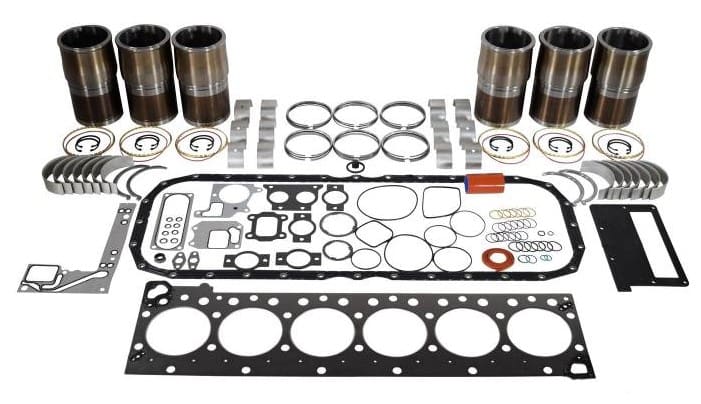
What are the key differences between OEM and aftermarket? Is one better than the other? These questions and many more will be answered in today’s post.
For starters, aftermarket parts are the cost-effective alternative to OEM parts. OEM stands for Original Equipment Manufacturer. This means that all OEM parts are made to meet certain specifications and guidelines set out by the manufacturer.
Alternatively, some of our customers think that OEM parts are a necessity to ensure proper engine function. While that may have been a concern in the past, the standards and quality of aftermarket parts have risen dramatically in the past few decades. Now, aftermarket engine rebuild kits sold on Highway and Heavy Parts are meant to be as good, if not better than their OEM counterparts.
Below are some of the pros and cons of OEM and aftermarket engine rebuild kits. While some parts or kits are better, others are simply a waste of money. HHP is dedicated to helping you make the right decision when it comes to choosing a new rebuild kit for your diesel engine.

Aftermarket Engine Rebuild Kits
Pros
It is common knowledge that aftermarket rebuild kits are cheaper. But that does not necessarily mean they are worse off in terms of quality. As previously mentioned, aftermarket companies have stepped their game up and in most cases, offer products that are as good, if not better than OE.
Another lesser-known fact about aftermarket parts is that, if you know which to buy, you can get the same part, at a much lower price. Engine manufacturers such as Caterpillar cannot manufacture each component. They outsource most companies and assemble the engines on-site at their facilities.
For example, Mahle is a premier manufacturer of pistons. They will sell their products to OE manufacturers and aftermarket suppliers such as HHP. Simply put, you can get the same products at a fraction of the price by purchasing directly from us.
Alternatively, some aftermarket parts are not sold to OE manufacturers. And the only way to get them is through a well-known supplier such as HHP. Although not as common, that does not mean that aftermarket parts are any less durable or reliable.
To offset the stigma that aftermarket parts are worse off in terms of quality, most manufacturers offer a warranty that is double that of the OEM. So, even if you think that you might not have a quality part, a 12-24 month safety cushion will help ensure you are protected while out on the road or in the field.
Rebuild kits from aftermarket companies are made with all new parts. It is a less known fact, but some OE companies will use remanufactured parts whereas most aftermarkets won’t.
Cons
In a perfect world, there would be no cheap or poorly made parts. Unfortunately, there are manufacturers out there who put out less than acceptable products. Lucky for you, HHP takes all the guesswork out of this process.
We try and test each engine rebuild kit component for reliability, durability, and longevity.
The last misconception about aftermarket parts is that most aftermarket companies cannot make parts for the latest and newest engines. This is a myth has that been busted over and over again. It may indeed take a little time to design parts for the newest engines, but the wait will be worth it. Trust us!
Pros and Cons of OEM Engine Rebuild Kits
Pros
The biggest advantage of going with an OEM kit is that you can be 100% sure you are using exactly the same parts as the manufacturer utilized when initially building the engine. Sure, it may cost more, but that’s the price to pay for added peace of mind.
On top of that, you will be able to maintain the factory warranty, which is crucial, especially on newer engines. Overall, OEM kits do have slight advantages over aftermarket in certain situations.
Cons
Ok, so let’s address the elephant in the room. OEM parts are pricy. Especially when it comes to rebuild kits. It gets even more frustrating when you know that there are less expensive alternatives out there. But sometimes, we are forced to use them as certain warranties cannot be honored if OE parts are not used.
Contrary to its aftermarket counterparts, original equipment manufacturers have a lower supply (if any) for older engines. Whereas, the aftermarket is flooded with types of parts for almost any diesel engine you can imagine.
Lastly, the biggest downside is that some OEM manufacturers will actually use remanufactured parts in their kits and pass them off as new. They use their reputation to justify the higher prices, and in the end, give you less than what you paid for.
Caterpillar kits, for example, come pre-assembled. This acts as the perfect disguise for reusing old pistons.
Final Words
There you have it. The common advantages and disadvantages of OEM and aftermarket engine rebuild kits. We, here at HHP, are dedicated to making sure that you are satisfied. That means getting the best possible products at the lowest possible price.
SHORT ON TIME? TAKE YOUR QUOTE ONLINE!
We get it – when you need diesel engine parts, time is of the essence. That’s why we’ve developed the HHP Online Quoting System.


