


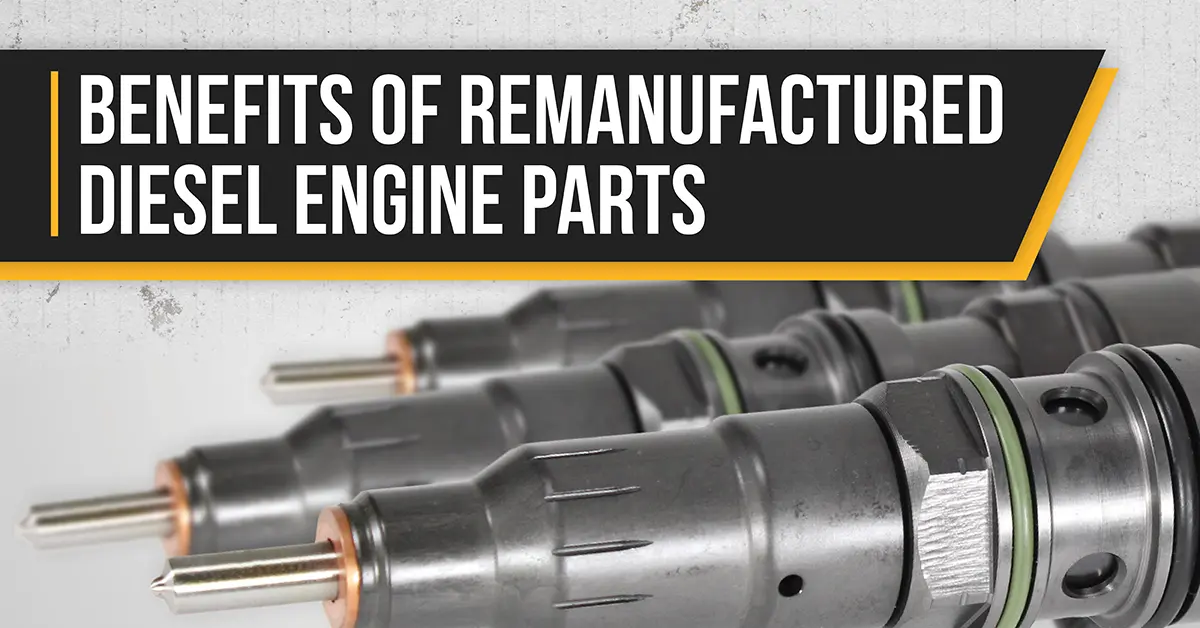
Remanufactured diesel engine parts offer a practical alternative to new OEM components. To understand their value, you first need to understand what “remanufactured” really means.

What Are Remanufactured Diesel Engine Parts?
Remanufactured diesel engine parts are previously used components that have been completely disassembled, cleaned, inspected, machined to OEM specifications, rebuilt with new internal wear components, and tested before being released for sale.
Remanufactured does not mean:
- Used and Resold As-Is
- Lightly Repaired
- Cosmetic Refurbishment
A properly remanufactured part is restored to original manufacturer tolerances and functional standards. Critical surfaces are re-machined. Wear components are replaced. Clearances are verified. The component is tested before it leaves the facility. That’s what separates remanufactured from simply “rebuilt.”
Remanufactured vs. Rebuilt vs. Used: What’s the Difference?
Used Part
- Removed From Another Engine
- No Internal Restoration
- Sold in Current Condition
Rebuilt Part
- Disassembled and Repaired as Needed
- Some Components Replaced
- May not be Machined Back to Original Tolerances
- Testing Standards Vary
Remanufactured Part
- Fully Disassembled
- All Wear Components Replaced
- Machined to OEM Specifications
- Reassembled to Original Tolerances
- Tested Prior to Release
The Key Benefits of Remanufactured Diesel Engine Parts
1. Significant Cost Savings Without Compromising Function
Remanufactured diesel engine parts can be significantly less expensive than brand-new parts, often slashing costs by nearly 30%. This is because they undergo a rigorous process of cleaning, inspecting, and replacing worn-out components with high-quality new ones, while still maintaining the original casting or housing.
2. Performance Restored to OEM Specifications
When properly remanufactured, parts are restored to original manufacturer tolerances – not approximations. Clearances, sealing surfaces, and critical dimensions are re-machined and verified. Internal wear items such as bearings, seals, and gaskets are replaced. The goal of remanufacturing is not “good enough.” It is restoration to specification.
3. Faster Availability in Many Situations
New OEM components can carry long lead times, especially for older or discontinued engine platforms. Remanufactured parts are often available from stocked inventory. For businesses that depend on equipment uptime, availability can matter more than the brand label on the box.
4. Warranty Protection
Many remanufactured diesel engine parts include warranty coverage comparable to new components. Warranty terms vary by supplier, so it is important to review duration, parts and labor coverage, and core return requirements. Warranty protection reduces risk – particularly for high-value engine components.
5. Reduced Environmental Impact
Remanufacturing reduces the need for new castings and raw material extraction. Reusing the core housing can lower engine consumption, material waste, and industrial emissions. While cost and performance typically drive the purchase decision, environmental efficiency is an additional benefit.
When Remanufactured Diesel Parts Make the Most Sense
- Budget Control is a Priority
- The Engine Platform is Older
- OEM Lead Times are Excessive
- You Need Reliable Performance without Full OEM Pricing
- You Want Warranty Coverage without Paying for New Casting Production
They are especially common in fleet maintenance environments where predictable cost control is critical.
Addressing the Most Common Concern: “If It’s Cheaper, Is It Lower Quality?”
This is the most frequent question – and it deserves a direct answer.
A properly remanufactured part:
- Uses the Original OEM Casting
- Replaces All Wear Components
- Machines Critical Surfaces to Spec
- Undergoes Inspection and Testing
The cost reduction comes primarily from reusing the core housing – not from lowering manufacturing standards. Quality depends on the remanufacturing process, not the price tag alone.
Choosing the Right Option for Your Engine
The decision between new and remanufactured diesel engine parts is not about choosing the cheapest option.
It is about choosing the solution that aligns with:
- Your Budget
- You Downtime Tolerance
- Your Equipment Age
- Your Operational Goals
In many cases, remanufactured parts provide the optimal balance of cost, availability, and performance.
Making the Right Call for Your Diesel Engine
Choosing between new and remanufactured diesel engine parts isn’t about cutting corners.
It’s about understanding:
- What Failed
- Why it Failed
- What Level of Investment Makes Sense
- How Quickly You Need to Get Back Up and Running
When properly remanufactured, diesel engine components restore performance to OEM specifications – often at a significantly lower cost and with faster availability.
Continue Your Research
If you’re still evaluating your options, these resources may help:
- More Differences Between Refurbished, Rebuilt, and Remanufactured
- How to Return Diesel Engine Core Parts
- Understanding Our Shipping and Returns
- Understand Our Warranty and Submit a Claim
You can also explore:
- Diesel Engine Rebuild Kits
- Diesel Engine Fuel Injectors
- Diesel Engine Turbochargers
- Diesel Engine Gaskets
Why Work With Highway and Heavy Parts?
At Highway and Heavy Parts, we don’t just sell diesel engine components.
We help you verify fitment, understand why the original part failed, and choose the right replacement for your engine and application. Our team works with repair shops, fleets, and owner-operators every day. If a remanufactured part makes sense, we’ll tell you. If it doesn’t, we’ll explain why.
Before you order, speak with a diesel parts expert who can confirm compatibility and answer your questions. Call 833-990-3406 to speak directly with a diesel expert.
From diagnosis through delivery, we’re Highway and Heavy Parts.
FAQs for Remanufactured Diesel Engine Parts
1. How much can I save by choosing remanufactured diesel engine parts?
Remanufactured diesel engine parts can be significantly less expensive than brand-new parts, often reducing costs by nearly 30%.
2. Are remanufactured diesel engine parts as reliable as new ones?
Yes, remanufactured parts undergo rigorous testing and quality control measures to ensure they meet or even exceed original equipment (OE) specifications. This process ensures that the engine runs smoothly and efficiently, comparable to when it was new.
3. Do remanufactured diesel engine parts come with warranties?
Many reputable remanufacturers offer warranties on their parts that are similar to, or even longer than, those provided with new parts. This provides peace of mind, knowing you’re covered if issues arise.
4. Can remanufactured parts be customized for specific engine models?
Yes, remanufactured parts cover a wide range of diesel engine models. Some companies even offer customization options to tailor the part to your specific needs and performance preferences.
5. How do remanufactured diesel engine parts benefit the environment?
Choosing remanufactured parts is environmentally friendly. The process uses significantly fewer resources and energy compared to manufacturing new parts from scratch. It also diverts usable components from landfills, contributing to a more sustainable and circular economy.


