


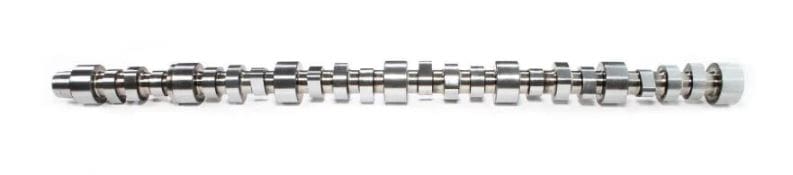
The camshaft in a Cummins ISX isn’t just another internal component – it’s one of the engine’s most failure-prone parts, and when it goes bad, the results are almost always expensive. Understanding why these failures happen – and how to spot them early – is critical for anyone trying to keep an ISX on the road and out of costly downtime.

What Are the Features and Benefits of This System?
One of the biggest factors in understanding ISX camshaft problems is knowing which version of the engine you’re dealing with. Cummins built the ISX in both single cam and dual cam configurations, and each comes with its own set of wear points and failure patterns. Knowing the difference is key – because diagnosing and preventing camshaft failure often starts with identifying which style is under the valve cover.
The Single Cam System
The early-generation Cummins ISX engines used a single overhead camshaft design. In this setup, one camshaft controls both the injectors and the valvetrain. This simplifies the overall layout and reduces the number of moving components under the rocker cover, which can be a benefit for basic serviceability. The single-cam system is also known for delivering strong low-end torque and straightforward timing control. While these engines do have well-documented lobe wear and oil flow limitations, the simpler design can make diagnosis and repair more direct, and replacement camshafts are generally more cost-effective compared to later systems.
The Dual-Cam System
As emissions requirements tightened and performance demands increased, Cummins transitioned the ISX into a dual overhead camshaft configuration. In this design, one camshaft is dedicated to the valvetrain while the second camshaft handles fuel injection. By separating these duties, the dual-cam system improves control over timing events, enhances precision in fuel delivery, and allows for smoother, more efficient combustion. This setup also reduces the stress each camshaft experiences, helping spread the mechanical load across two components. While dual-cam engines introduced their own challenges – especially with rocker assemblies and actuator wear – the design offers better performance, more refined emissions control, and improved responsiveness compared to the single-cam predecessors.
What Are Some Common Failure Points?
As we mentioned, a common failure point on the dual cam engine is the injection cam itself, because you’ll get a lot of wear on it.
Injection Cam Failure Points
On both single-cam and dual-cam ISX engines, the injection lobes are one of the highest-stress areas of the system. These lobes carry significantly more load than the valve lobes because they must generate the pressure needed for fuel actuation. Over time, poor lubrication, dirty oil, or restricted oil passages can cause:
- Lobe scuffing and pitting.
- Loss of fuel timing and uneven cylinder contribution.
- Accelerated wear on the injector followers.
Roller & Rocker Lever Failure Points
The rollers and rocker assemblies are another major weak spot, especially on higher-mileage or poorly maintained ISX engines. The most common issues include:
- Flat-spotted rollers caused by uneven rotation or dry operation.
- Needle bearing failure inside the rollers, leading to metal contamination.
- Broken rocker lever bridges that affect valve and injector actuation.
- Binding or seized rollers that rapidly grind down the cam lobes.
Once a roller bearing begins to fail, it often sends metal through the top end, which accelerates wear across the entire camshaft and, in many cases, destroys the head.
What is the Most Common Failure?
Across all generations of the ISX, the most common failure is premature cam lobe wear, especially on the exhaust and injector lobes.
What makes this the leading failure?
- The ISX relies heavily on consistent oil pressure to keep the cam properly lubricated.
- Any drop in oil quality, extended idle time, or skipped maintenance increases friction.
- Once a lobe begins to wear, it cuts into the roller, creates metal debris, and accelerates total top-end failure.
This is why ISX camshafts are replaced so frequently – and why catching the first signs of lobe wear can prevent an expensive repair.
Other Important Info About ISX Camshafts
The dual-cam injector camshaft lives its life horizontally. Because oil is fed through the center of the camshaft, it spins.
A lot of companies end up using what’s called a centrifugal oil filter. The point of this filter is to use centrifugal force to pull the stuff that’s not supposed to be in the filter to the outside.
This results in the oil passages starting to get reduced in size because of the solid buildup. This can result in a spun cam bushing on startup.
When the cam is removed for repairs, a lot of times it is set on end, and even that small impact can cause some of that material to break loose. When it’s put back into the engine it can block oil passages, which results in a cam bushing spinning, which ruins the head and the cam.
To prevent this, though, the soft plug at the end of this particular cam needs to be removed, the inside of the camshaft should be cleaned, and then the plug should be replaced.
Order Your Cummins ISX Camshaft Today
Guaranteed for fit and function, HHP parts have the right combination of quality and price with total support from our on-staff ASE-certified technicians. With specialized knowledge, quality products, fast shipping, and unbeatable customer service, HHP has you covered. Order your Cummins ISX Camshaft today!
Call us at 844-304-7688 or visit highwayandheavyparts.com to order now.
From diagnosis through delivery, we’re Highway and Heavy Parts.


