


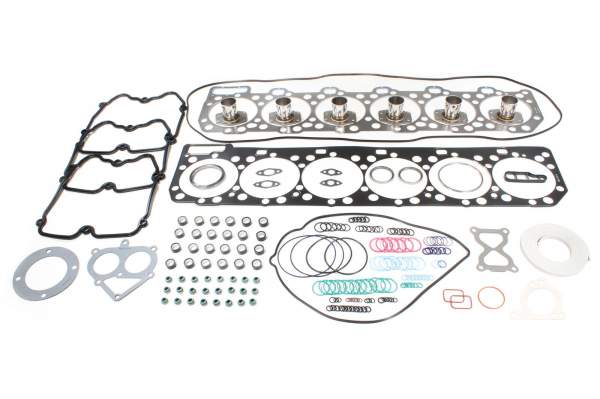
When it comes to sealing a diesel engine, your head gasket isn’t just another component: it’s one of the most critical sealing surfaces in the entire engine.
And choosing the wrong type? That can mean compression loss, coolant leaks, or even a full teardown.
Two of the most common options are:
- Multi-Layer Steel (MLS) Head Gaskets
- Graphite (Composite) Head Gaskets
They may serve the same purpose – but they behave very differently under real engine conditions.
What Is an MLS Head Gasket?
Multi-Layer Steel (MLS) head gaskets are constructed from multiple layers of stainless steel, often coated with elastomer or polymer sealing layers (like Viton or nitrile coatings).
Why MLS Gaskets Are Used in Modern Diesel Engines
MLS gaskets are designed for:
- High cylinder pressures
- High combustion temperatures
- Tight sealing tolerances
Each layer in the gasket allows for:
- Controlled movement under thermal expansion
- Improved sealing under load
- Long-term durability
👉 This is why MLS gaskets are standard in most modern heavy-duty diesel engines.
The Critical Requirement: Surface Finish Matters
Here’s where MLS gaskets separate themselves:
👉 They require extremely smooth and flat mating surfaces.
- Surface finish (RA) must typically be 30 microinches or smoother
- Any scratches, pitting, or warping can prevent proper sealing
- If you can physically feel imperfections, it’s likely too rough
Because MLS gaskets rely on surface conformity and coating activation under heat and pressure, they cannot compensate for poor machining.
Can MLS Head Gaskets Be Reused?
Short answer:
👉 No – MLS gaskets should not be reused in standard applications.
Here’s why:
- Heat cycles compress the sealing layers
- Coatings degrade after installation
- Clamp load distribution changes after torque
While some high-performance or racing environments may reuse them under controlled conditions, this is not recommended for diesel engine applications where reliability is critical.
What Is a Graphite (Composite) Head Gasket?
Graphite head gaskets are made from a composite material, typically consisting of:
- Graphite facing material
- Perforated steel or fiber core
Where Graphite Gaskets Are Commonly Used
Graphite gaskets are more forgiving and are often used in:
- Older engine designs
- Lower compression applications
- Situations where resurfacing is not performed
Why Graphite Gaskets Are More Forgiving
Unlike MLS gaskets, graphite gaskets can:
- Conform to rougher surfaces
- Compensate for minor imperfections
- Provide initial sealing even on less-than-perfect decks
This makes them more adaptable – but also introduces limitations.
The Tradeoff: Durability vs. Forgiveness
While graphite gaskets are easier to install, they typically:
- Break down faster under high heat
- Struggle with high cylinder pressures
- Lose sealing integrity over time
In high-performance or heavy-load diesel engines, this can lead to:
- Exhaust gas leaks
- Combustion blow-by
- Premature gasket failure

Installation Best Practices (Critical for Both Types)
No matter which gasket you choose, installation is everything.
Always Verify Surface Flatness
Use a straight edge and feeler gauge to check:
- Cylinder head
- Engine block
Even slight warpage can lead to sealing failure.
Proper Surface Cleaning Matters
Before installation:
- Remove all old gasket material
- Avoid aggressive abrasives that can damage the surface
- Use appropriate cleaners to ensure a residue-free finish
Avoid “Quick Fix” Sealants
Some installers use copper spray or sealants, but:
👉 These can interfere with MLS gasket coatings and torque accuracy.
Modern MLS gaskets are designed to seal without additional compounds.
Choosing the Right Gasket for Your Application
The right choice comes down to your engine condition and application:
Use MLS Gaskets When:
- Surfaces are properly machined
- Engine operates under high load
- Long-term durability is required
Use Graphite Gaskets When:
- A more forgiving seal is needed
- Surface finish is less than ideal
- Engine is older or lower compression
Why This Choice Matters More in Diesel Engines
Diesel engines operate under:
- Higher compression ratios
- Greater cylinder pressures
- Sustained heavy loads
That means sealing demands are significantly higher than in gasoline engines.
👉 Choosing the wrong gasket – or installing it incorrectly – can lead to major engine damage.
Need Help Choosing the Right Components?
If you’re not sure which gasket is right for your application, it’s worth getting a second set of eyes on the build.
👉 Browse diesel engine gasket sets here: Shop All Gaskets
👉 Or explore complete engine rebuild kits: Shop All Engine Rebuild Kits
Call 844-304-7688 or visit highwayandheavyparts.com to place your order today.
From diagnosis through delivery, we’re Highway and Heavy Parts.
Related Articles:
GASKET DAMAGE: THERMAL PUSH FROM DETONATION
GASKET INSTALLATION MISTAKES TO AVOID
WHAT ARE FIRE RINGS IN DIESEL ENGINE CYLINDER HEADS?
HOW AFTERMARKET GASKETS CAN SAVE YOU TIME AND MONEY
WHAT PROBLEMS INDICATE HEAD GASKET FAILURE ON C15 ACERT DIESEL ENGINES?


