


A diesel engine rebuild is not finished the moment the engine starts.
Even after the first startup and initial break-in procedure, the internal components are still seating, wearing in, and establishing the final sealing surfaces that help the engine build compression, control oil, and operate reliably.
That is why oil changes during the break-in period matter.
Fresh oil helps protect the engine, but early oil changes help remove assembly debris, break-in particles, and microscopic metal from new contact surfaces before they circulate through bearings, turbochargers, piston rings, and other critical components.
The exact break-in procedure and oil change schedule should always follow the engine builder’s or manufacturer’s recommendation. However, for many rebuilt heavy-duty diesel engines, an early oil and filter change is still one of the best ways to protect the investment you just made.
After a diesel engine rebuild, oil changes should be more frequent during the break-in period. A first oil and filter change around the first 500 miles is a common best practice because it helps remove assembly debris and break-in wear particles before they can contribute to premature engine wear.
Why Break-In Oil Changes Matter
During break-in, new components are seating against each other for the first time.
This is especially important for the piston rings and cylinder liners.
Cylinder liners are finished with a controlled surface pattern that helps retain oil and allows the piston rings to seat correctly. During the early break-in period, the rings and liner surface begin establishing their final sealing relationship.
That process can create microscopic wear particles.
Some amount of initial wear is normal during break-in, but those particles should not remain in the oil longer than necessary. If contaminated oil continues circulating, it can affect bearings, turbocharger components, oil passages, and other precision surfaces.
Early oil changes help remove:
- Assembly debris
- Break-in wear particles
- Microscopic metal
- Gasket or sealant residue
- Contaminants introduced during the rebuild
- Early fuel dilution or soot buildup
This is why the first oil change after a rebuild is not just routine maintenance. It is part of protecting the break-in process.
Break-In Is Not Always Finished After the First Drive
Many people think break-in is complete once the engine has been run under load.
That is only part of the process.
The initial break-in helps seat the rings and confirm that the engine is building pressure, temperature, and load correctly. But full stabilization can take longer, especially in a heavy-duty diesel engine that sees varied operating conditions.
During the first several oil changes, the engine is still proving that:
- Rings are seating correctly
- Oil consumption is stabilizing
- Blow-by is normal
- Coolant temperature is controlled
- Oil pressure remains stable
- No contamination issues are developing
If the engine continues to consume oil, smoke, pressurize the crankcase, or show abnormal wear material in the oil, the break-in process may not be complete—or there may be another issue that needs to be diagnosed.
Recommended Oil Change Pattern After Break-In
Every engine builder and manufacturer may have specific requirements, so always follow the instructions provided with your rebuild kit, long block, or engine assembly.
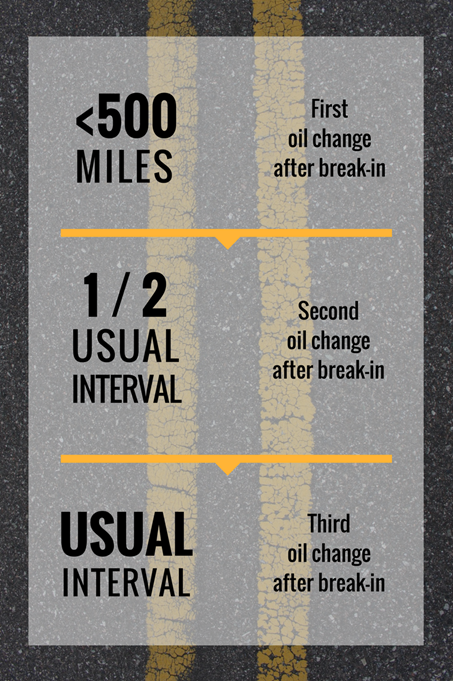
That said, a common break-in oil change pattern looks like this:
First Oil Change: Around 500 miles after initial startup.
Second Oil Change: Around half of the normal service interval.
Third Oil Change: Return to the normal service interval if the engine is operating properly.
Always Confirm: Follow the engine builder’s instructions, OEM recommendations, and any warranty requirements for your specific engine.
The First Oil Change: Around 500 Miles
The first oil change is the most important one after a rebuild.
A common best practice is to change the oil and filter within the first 500 miles after initial startup.
This early oil change helps remove contaminants that may have entered during assembly, along with microscopic metal created as new surfaces begin seating together.
It is especially important because fresh rebuilds often include new or freshly machined components such as:
- Piston rings
- Cylinder liners
- Bearings
- Camshaft components
- Lifters or followers
- Sealing surfaces
- Turbocharger oil-fed components
The oil filter captures much of this material, but the goal is to remove the contaminated oil and filter before debris continues circulating.
The Second Oil Change: Half the Normal Interval
After the first oil change, the second oil change is commonly performed at about half of the engine’s normal service interval.
For example, if the engine normally receives oil changes every 15,000 miles, the second post-rebuild oil change may be performed around 7,500 miles.
This second oil change gives the shop or owner another opportunity to check the oil condition, filter condition, consumption rate, and overall engine behavior before returning fully to normal service intervals.
During this period, pay close attention to:
- Oil consumption
- Blow-by
- Oil pressure
- Coolant contamination
- Fuel dilution
- Unusual noise
- Smoke
- Fault codes
- Filter debris
If anything looks abnormal, do not simply extend the interval. Diagnose the issue early.
The Third Oil Change and Beyond
If the engine is operating normally after the first and second oil changes, the third oil change can usually return to the standard maintenance interval recommended for that engine and application.
However, the “standard interval” should still be based on how the truck is used.
A long-haul truck running steady highway miles may safely follow a different interval than a vocational truck that idles heavily, runs PTO equipment, hauls heavy loads, or operates in dusty conditions.
For heavy-duty diesel engines, oil change intervals should consider:
- OEM recommendations
- Engine hours
- Mileage
- Idle time
- Load
- Operating temperature
- Fuel quality
- Oil analysis results
- Severe-duty operation
If the engine works hard, the oil works hard too.
Should You Use Conventional Oil, Synthetic Oil, or Break-In Oil?
This is where recommendations can vary.
Some engine builders recommend petroleum-based or conventional diesel engine oil during the initial break-in period because they want the piston rings and cylinder liners to seat correctly. Some also recommend avoiding full synthetic oil during the earliest break-in period unless the engine builder specifically approves it.
Other modern engines and manufacturers may allow standard-service oil from the beginning, depending on the engine design, machining process, and factory recommendations.
The safest answer is this: Use the oil type, viscosity, and specification required by the engine builder or manufacturer.
Do not guess.
Do not assume every rebuilt diesel engine needs the same break-in oil. Some builders require conventional oil, some allow standard diesel engine oil, and others may have specific warranty requirements. Always follow the instructions provided with the engine or rebuild components.
Avoid Excessive Idling During Break-In
Oil changes are only one part of a successful break-in.
How the engine is operated matters too.
Excessive idling during break-in can prevent the piston rings from seating properly because the engine may not build enough cylinder pressure. Without proper cylinder pressure, the rings may not load correctly against the liner wall.
This can contribute to:
- Poor ring seating
- Cylinder glazing
- Blow-by
- Oil consumption
- Reduced compression
- Long-term sealing problems
A freshly rebuilt diesel engine generally needs controlled load, proper temperature, and varied operation—not hours of unnecessary idle time.
What to Watch After the First Oil Change
The first oil change is a good opportunity to look for early warning signs.
Oil that appears slightly darker than expected is not automatically a problem. But heavy metallic debris, coolant contamination, fuel dilution, or unusual filter material should be investigated.
□ Metal in the oil or filter
□ Coolant contamination
□ Fuel dilution smell
□ Abnormal oil consumption
□ Low oil pressure
□ Excessive blow-by
□ Blue, white, or black smoke
□ New leaks around gaskets or seals
If any of these issues appear, it is better to investigate early than to continue operating the engine and risk damaging the rebuild.
Oil Analysis Can Help Confirm the Engine Is Healthy
For fleets, repair shops, and anyone trying to protect a major rebuild investment, oil analysis can be valuable after break-in.
A lab can evaluate the oil for:
- Wear metals
- Fuel dilution
- Soot
- Coolant contamination
- Viscosity change
- Oxidation
- Additive condition
This does not replace the recommended break-in oil changes, but it can help identify developing problems before they turn into major failures.
Oil analysis is especially useful if the engine will be used in severe-duty service or if the owner wants to safely establish future oil change intervals based on real operating conditions.
The Cost of an Extra Oil Change Is Small Compared to Another Rebuild
Heavy-duty diesel oil changes are not cheap.
But neither is a second engine teardown.
During break-in, the engine is at one of the most important points in its service life. A few early oil changes help remove debris, confirm the engine is stabilizing properly, and reduce the risk of contaminated oil damaging new components.
When compared to the cost of bearings, liners, pistons, turbochargers, crankshafts, labor, and downtime, the extra oil change is inexpensive insurance.
Need Diesel Engine Rebuild Parts?
Whether you are rebuilding an engine, replacing worn components, or trying to prevent repeat failures after break-in, Highway and Heavy Parts can help you find the right parts for your application.
Find pistons, liners, rings, bearings, gasket sets, cylinder heads, crankshafts, and complete rebuild kits for many of the industry’s most popular diesel engines.
Shop Diesel Engine Parts
Final Takeaway
Oil change intervals after diesel engine break-in matter because the engine is still seating, stabilizing, and shedding early wear material.
A first oil and filter change around 500 miles is a common best practice because it helps remove assembly debris and break-in particles before they can circulate through critical components. A second oil change around half the normal interval gives the engine another checkpoint before returning to standard maintenance.
After that, oil change intervals should be based on the engine manufacturer’s recommendations, the engine builder’s instructions, operating conditions, engine hours, mileage, and oil analysis when available.
The most important rule is simple:
Do not treat a freshly rebuilt engine like an engine that has already proven itself.
Protect the break-in period, monitor the oil, avoid excessive idling, and address any warning signs early.
If you have questions about diesel engine rebuild parts or choosing the right replacement components for your application, our ASE Certified Technicians are here to help.
Call 844-304-7688 or visit highwayandheavyparts.com.
From diagnosis through delivery, we’re Highway and Heavy Parts.


