


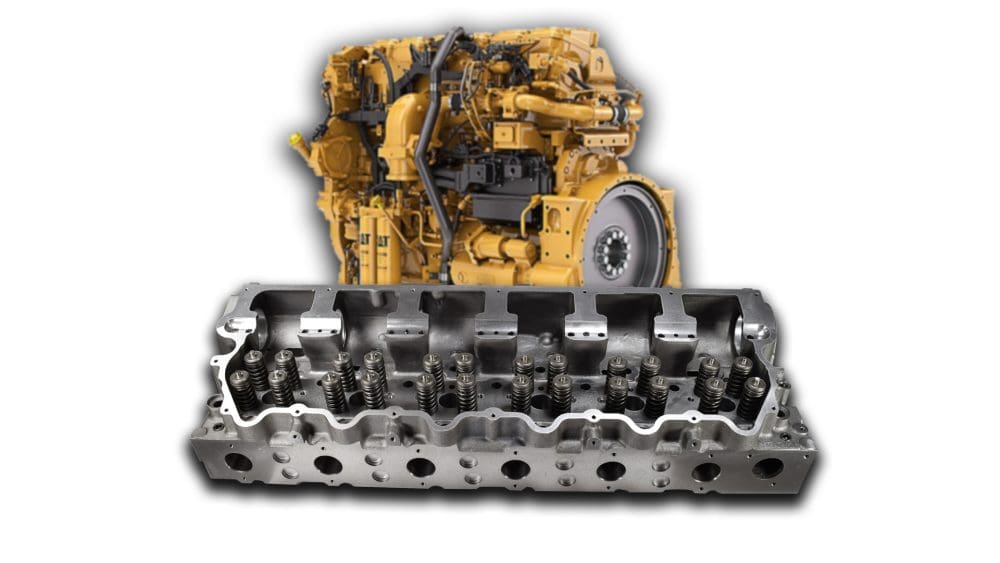
When you open a diesel engine, it’s easy to focus on the big components—pistons, crankshafts, cylinder heads, and turbochargers.
What you can’t see is often just as important.
Modern diesel engines rely on components manufactured to incredibly tight tolerances. In many cases, a difference of just a few thousandths of an inch can affect oil pressure, compression, bearing life, piston ring sealing, and overall engine reliability.
That’s where precision machining comes in.
Precision machining is the process of manufacturing engine components to extremely accurate dimensions, shapes, and surface finishes. While it may not be the most visible part of the manufacturing process, it’s one of the biggest reasons quality diesel engine parts last hundreds of thousands of miles.
In this article, we’ll explain what precision machining is, why it matters, and how it affects the performance and longevity of your diesel engine.
What Is Precision Machining?
Precision machining is the process of removing material from a component until it reaches an exact size, shape, and surface finish.
Modern diesel engine manufacturers use advanced equipment such as CNC machining centers, grinders, hones, and coordinate measuring machines (CMMs) to produce components that meet extremely tight engineering specifications.
Rather than simply making a part “fit,” precision machining ensures every critical dimension is within an acceptable tolerance.
This process is used throughout diesel engines, including:
- Cylinder heads
- Cylinder liners
- Pistons
- Crankshafts
- Camshafts
- Connecting rods
- Engine blocks
- Flywheels
- Bearing journals
Every one of these components depends on precision machining to operate correctly.
Why Diesel Engines Require Such Precision
Heavy-duty diesel engines operate under enormous loads.
Modern high-pressure common rail fuel systems routinely operate between 30,000 and 36,000 PSI, with some applications exceeding 40,000 PSI.
Inside the cylinders, combustion pressures commonly exceed 2,000 PSI, while high-output diesel engines may experience peak cylinder pressures well over 3,000 PSI.
At the same time, many bearing clearances are measured in only a few thousandths of an inch.
Under these conditions, even a small machining error can create major problems.
✔ Proper piston ring sealing
✔ Correct bearing clearances
✔ Stable engine oil pressure
✔ Reduced friction and wear
✔ Better heat transfer
✔ Longer engine life
Precision isn’t simply about preventing failures.
It’s also what allows today’s diesel engines to produce more power, better fuel efficiency, and longer service life than engines built decades ago.
Precision Is More Than Just Size
When most people think about machining, they think about making a part the correct size.
In reality, precision machining controls three different characteristics of every component.
Making the component the correct size.
Geometry
Ensuring the component is round, flat, straight, and properly aligned.
Surface Finish
Creating the correct texture for lubrication, sealing, and wear resistance.
All three are equally important.
Two pistons may measure exactly the same diameter, but if one has poor geometry or an incorrect surface finish, it may not perform the same once installed.
Where Precision Machining Makes the Biggest Difference
Although nearly every engine component is machined, some parts rely on precision more than others.
| Component | Why Precision Matters |
|---|---|
| Cylinder Liners | Maintain proper piston ring sealing and oil control |
| Pistons | Maintain correct piston-to-liner clearance |
| Crankshafts | Ensure proper bearing clearances and smooth rotation |
| Camshafts | Maintain accurate valve timing and lift |
| Cylinder Heads | Provide proper valve sealing and combustion efficiency |
| Connecting Rods | Maintain alignment between the piston and crankshaft |
| Bearing Journals | Support a consistent oil film and reduce wear |
Even though these parts serve different functions, they all rely on one thing:
Precision.
Surface Finish Matters Just as Much as Dimensions
It’s easy to assume that if a part measures correctly, it’s ready to install.
In reality, that’s only part of the equation.
The surface finish of a component—the microscopic texture left behind after machining—can have a major impact on how well that part performs.
For example, cylinder liners are intentionally honed with a crosshatch pattern. This finish helps retain a thin film of engine oil while providing the proper surface for piston rings to seat during engine break-in.
If the surface is too rough, excessive friction and accelerated wear can occur.
If it’s too smooth, the cylinder may not retain enough oil, preventing the piston rings from sealing correctly and increasing the risk of blow-by and oil consumption.
That’s why professional engine builders don’t just measure components—they inspect the quality of the machined surface as well.
If you’d like to learn more about this process, read our article on Black Series Lab Episode 3: Crosshatch — The Surface You’ve Never Actually Seen, where we take a closer look at how cylinder liner surface finish affects engine performance and longevity.
Two cylinder liners can measure exactly the same diameter, yet perform very differently if their surface finish is incorrect. Proper machining is about much more than size—it’s also about creating the correct surface for lubrication and sealing.
Common Problems Caused by Poor Machining
When machining isn’t performed correctly—or when components fall outside of specification—the effects can often be seen throughout the engine.
✔ Excessive blow-by
✔ Poor piston ring sealing
✔ High oil consumption
✔ Low oil pressure
✔ Premature bearing wear
✔ Reduced engine efficiency
✔ Shortened engine life
Many of these symptoms are often blamed on a defective component, when the real issue may be improper machining, incorrect clearances, or poor installation.
Proper diagnosis should always include verifying component dimensions, clearances, and surface condition before replacing parts.
Precision Doesn’t End at Manufacturing
Even the highest-quality replacement parts can fail if they’re installed incorrectly.
During an engine rebuild, proper measurement is just as important as selecting quality components.
Engine builders routinely verify bearing clearances, piston-to-liner clearance, crankshaft journal dimensions, cylinder liner protrusion, valve recession, and many other critical specifications before final assembly.
Skipping these measurements—or assuming every new part is automatically correct for every application—can lead to expensive failures later.
Precision machining and precision assembly work together to build a reliable diesel engine.
Why Precision Matters at Highway and Heavy Parts
Whether you’re replacing a piston, cylinder liner, crankshaft, cylinder head, or complete engine rebuild kit, every component must work together as a complete system.
At Highway and Heavy Parts, we understand that quality isn’t determined by appearance alone.
Proper fit, geometry, surface finish, and manufacturing consistency all contribute to how a diesel engine performs after it’s rebuilt.
That’s why precision matters—from the manufacturing process all the way through final engine assembly.
Need Quality Diesel Engine Parts?
Whether you’re rebuilding an engine from the ground up or replacing individual components, precision matters every step of the way.
Highway and Heavy Parts offers quality diesel engine components, including pistons, cylinder liners, crankshafts, camshafts, cylinder heads, bearings, engine rebuild kits, and much more for many of the industry’s most popular diesel engines.
Find quality replacement components designed to help keep your diesel engine running reliably.
Shop Diesel Engine Parts
Final Takeaway
Modern diesel engines demand an incredible level of precision.
While horsepower and torque often get the attention, it’s the microscopic details—dimensions, geometry, surface finish, and proper clearances—that determine whether an engine will perform reliably for hundreds of thousands of miles.
Precision machining ensures engine components fit together exactly as intended, allowing them to seal properly, maintain lubrication, reduce wear, and operate efficiently under extreme heat and pressure.
Whether you’re rebuilding a work truck, maintaining a fleet, or simply learning more about how diesel engines operate, understanding the importance of precision machining helps explain why quality components and careful assembly make such a difference.
If you have questions about replacement engine components or choosing the right parts for your application, our ASE Certified Technicians are here to help.
Call 844-304-7688 or visit highwayandheavyparts.com.
From diagnosis through delivery, we’re Highway and Heavy Parts.


