


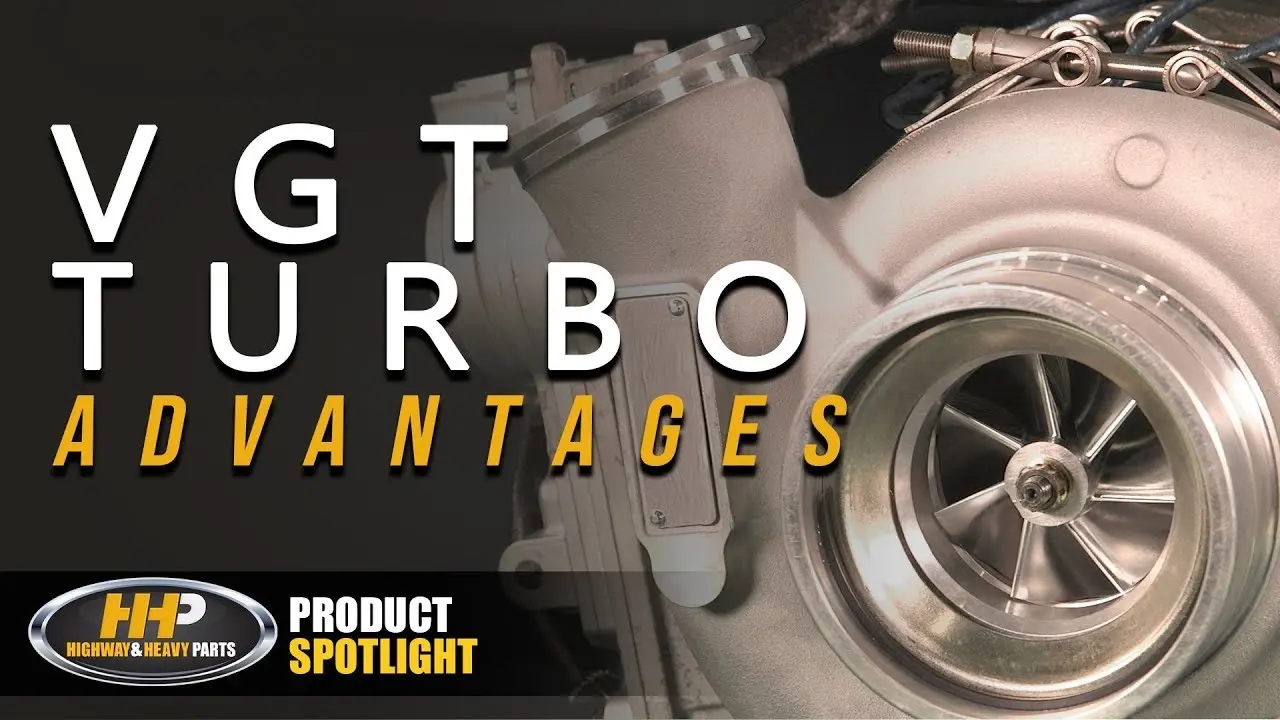
One of the biggest advantages of a Variable Geometry Turbo (VGT) isn’t just efficiency – it’s how it controls airflow at low engine speeds.
Because of this, VGT turbos can improve performance across a wider RPM range.
However, when that system stops working correctly, the engine feels completely different – and performance drops fast.
Quick Answer: What Is the Main Advantage of a VGT Turbo?
A VGT turbo improves low RPM performance by adjusting vane position to increase exhaust velocity, allowing the turbo to spool faster and build boost sooner.
As a result, there is:
- Faster throttle response
- Increased low-end torque
- More consistent power delivery
For a more in-depth breakdown of how VGT turbochargers work in diesel engines, read this: Official Guide to Variable Geometry Turbochargers

Why Turbo Lag Happens in Fixed Geometry Turbos
Traditional turbochargers rely on fixed exhaust housing geometry.
At low RPM:
- Exhaust flow is limited
- Turbine speed is slow
- Boost pressure builds slowly
Because of this, we get this delay known as turbo lag.
How a VGT Turbo Eliminates Lag
A VGT turbo uses adjustable vanes inside the turbine housing.
At Low Engine Speeds:
- Vanes close
- Exhaust flow is restricted
- Velocity increases
As a Result:
- Turbine spins faster
- Boost builds earlier
- Engine produces more torque sooner
What This Means for Real-World Performance
This design allows diesel engines to:
- Deliver usable power at lower RPM
- Improve drivability under load
- Reduce the need for excessive throttle input
For heavy-duty applications, this translates to:
- Better performance when pulling weight
- Improved response during acceleration
- More efficient power delivery
What Happens When the VGT System Stops Working
When vane movement is restricted or incorrect, the system loses its advantage.
If Vanes Are Stuck Open:
- Slow turbo response
- Weak low-end power
- Increased turbo lag
If Vanes Are Stuck Closed:
- Excessive boost at low RPM
- High cylinder pressure
- Increased exhaust temperatures
Diagnostic Breakdown: Performance Symptoms and Causes
| Symptom | Likely Cause | What To Check |
|---|---|---|
| Poor Low-End Power | Vanes stuck open | Turbo response, boost at low RPM |
| Excessive Lag | VGT not adjusting | Actuator function, vane movement |
| Overboost Condition | Vanes stuck closed | VGT position control |
| High Exhaust Temps | Airflow imbalance | Fuel system, turbo operation |
Why This Matters for Engine Efficiency
When boost is available earlier:
- Fuel burns more efficiently
- Combustion pressure increases
- Less fuel is wasted
However, if boost is delayed:
- More fuel is injected to compensate
- Efficiency drops
- Engine temperatures rise
The Most Overlooked Factor: Airflow Balance
A VGT turbo is only as effective as the systems supporting it.
If there are issues with:
- Fuel delivery
- Air intake
- Exhaust flow
The turbo cannot perform correctly.
When to Replace vs Diagnose
Before replacing a turbo, it’s important to determine:
- Is the turbo mechanically failing?
- Or is the actuator or control system the issue?
👉 Shop Turbochargers Here
👉 Shop All Parts Here
👉 For a deeper breakdown of real-world problems and what causes them, read:
Common VGT Turbocharger Failures
The Real Advantage of a VGT Turbo
In conclusion, the real advantage isn’t just efficiency – it’s control.
A VGT turbo allows the engine to:
- Adapt to load conditions
- Maintain consistent boost
- Deliver power when it’s needed
Call 844-304-7688 to speak with a diesel parts specialist
or visit highwayandheavyparts.com to find the right rebuild kit for your engine.
From diagnosis through delivery, Highway and Heavy Parts has your back.


