


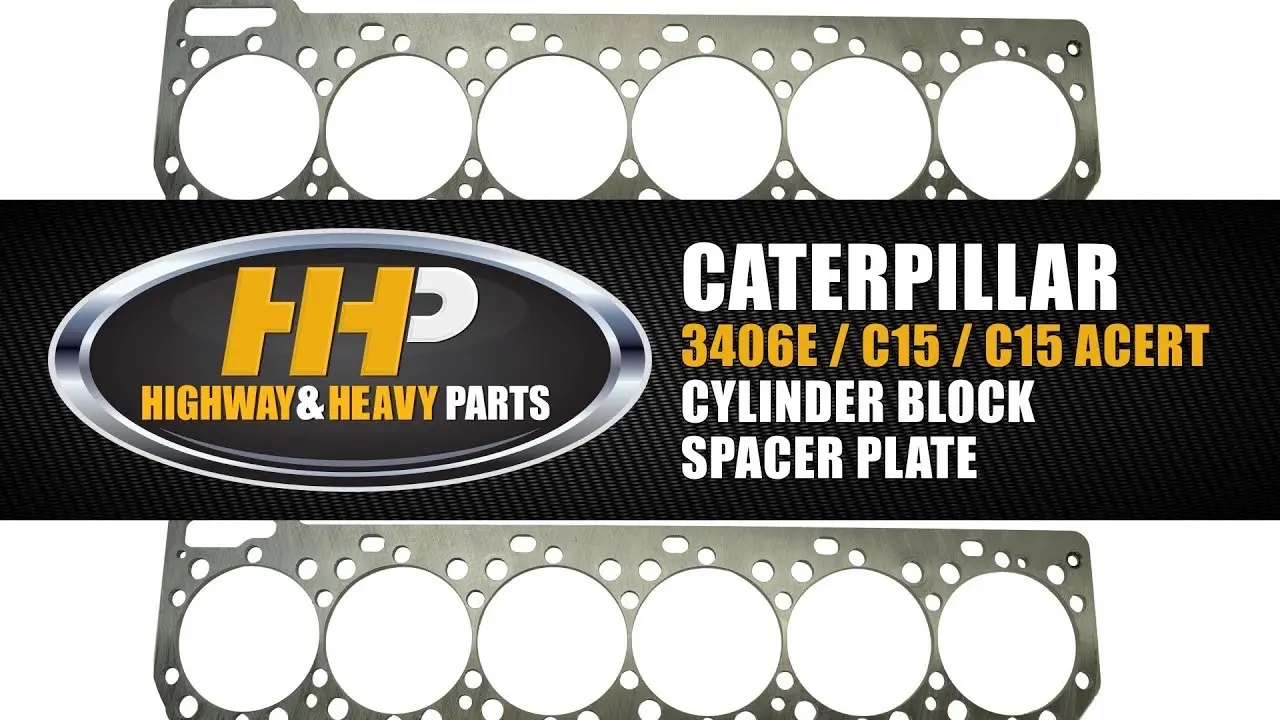
The spacer plate in a Caterpillar 3406E, C15, and C15 ACERT is not just a structural component.
It is a critical part of the engine’s sealing system.
It directly controls:
- Cylinder Liner Protrusion
- Head Gasket Clamping Force
- Combustion Sealing Integrity
If the spacer plate is worn, damaged, or machined incorrectly, the entire sealing system is compromised.
What the Spacer Plate Actually Does
The spacer plate sits between the engine block and the cylinder head.
Its primary function is to:
- Establish Correct Deck Height
- Provide A Flat Sealing Surface
- Control Liner Standout (Protrusion)
The cylinder liners sit in the block and extend slightly above the spacer plate.
That height is what allows the head gasket to seal properly.
Why Liner Protrusion Is Critical
Liner protrusion is one of the most important measurements in these engines.
Typical protrusion is measured in thousandths of an inch.
If liner height is incorrect:
- Too Low → Head Gasket Will Not Seal
- Too High → Uneven Clamping And Distortion
Proper protrusion ensures:
- Even Clamping Across All Cylinders
- Correct Combustion Sealing
- Reduced Risk Of Gasket Failure
The spacer plate plays a direct role in maintaining this dimension.
How the Spacer Plate Affects Head Gasket Sealing
The sealing system consists of:
- Cylinder Head
- Head Gasket
- Spacer Plate
- Cylinder Liners
Combustion pressure must be contained within this stack.
If the spacer plate is not perfectly flat or has wear:
- Clamping Force Becomes Uneven
- Gasket Crush Is Inconsistent
- Combustion Gases Can Escape
This often results in:
- Repeated Head Gasket Failures
- Coolant Loss
- Combustion Leakage
Common Spacer Plate Failure Modes
Spacer plates experience both mechanical and thermal stress.
Common failure issues include:
- Surface Fretting Or Erosion
- Warping From Heat Cycling
- Pitting Around Liner Seats
- Damage From Improper Installation
Over time, these issues affect the plate’s ability to maintain a flat sealing surface.
Fretting and Micro-Movement at the Sealing Surface
Fretting occurs when there is slight movement between components under load.
In the spacer plate area, this can happen between:
- Liner Flange And Plate
- Plate And Head Gasket
This movement causes:
- Surface Wear
- Material Transfer
- Loss Of Flatness
Even small imperfections can affect sealing under high combustion pressure.
The Relationship Between Spacer Plate and Liner Seats
The liner flange rests against the spacer plate.
This interface must be:
- Flat
- Clean
- Structurally Sound
If the plate is worn or damaged:
- Liner Height Becomes Inconsistent
- Load Distribution Is Uneven
- Localized Stress Increases
This can lead to premature failure of both the liner and gasket.
Why Resurfacing Isn’t Always the Answer
In some cases, spacer plates are resurfaced, but this must be done carefully.
Material removal affects:
- Liner Protrusion Height
- Head Bolt Clamping Geometry
- Overall Deck Stack
If too much material is removed:
- Liner Height May Fall Out Of Spec
- Gasket Sealing Pressure Is Reduced
This is why replacement is often the better solution when wear is significant.
Signs of Spacer Plate-Related Issues
Spacer plate problems often show up as repeat failures.
Watch for:
- Repeated Head Gasket Failures
- Coolant Loss With No External Leak
- Combustion Gas In Cooling System
- Uneven Liner Protrusion Measurements
If these issues persist after repairs, the spacer plate should be inspected.
Why Proper Measurement Matters During Rebuild
During an inframe or overhaul, measurements must be verified.
Critical checks include:
- Liner Protrusion At Multiple Points
- Spacer Plate Flatness
- Surface Condition Around Liner Seats
Skipping these checks can lead to:
- Immediate Sealing Issues
- Reduced Engine Life
- Repeat Repairs
When to Replace the Spacer Plate
Spacer plate replacement should be considered when:
- Surface Wear Or Fretting Is Visible
- Flatness Is Out Of Specification
- Liner Protrusion Cannot Be Achieved Consistently
- Previous Repairs Have Failed
At this point, replacement ensures proper sealing geometry.
Shop Caterpillar 3406E, C15, C15 ACERT Spacer Plates
If you’re dealing with repeated sealing issues or rebuilding your engine, the spacer plate is a critical component.
👉 Shop Caterpillar Spacer Plates
At Highway and Heavy Parts:
- Verified Fitment Before Shipping
- High-Quality Components Built For Heavy-Duty Applications
- Fast Shipping (1–2 Days In Most Areas)
- Expert Diesel Support
- 2 Year Parts And Labor Warranty
Don’t Overlook the Spacer Plate
Spacer plates are often reused without inspection.
But they directly affect:
- Liner Height
- Gasket Sealing
- Engine Reliability
Ignoring them can lead to repeat failures.
Get the Sealing Stack Right the First Time
Proper sealing starts with correct geometry.
👉 Measure Liner Protrusion Accurately
👉 Inspect The Spacer Plate Surface
👉 Replace Components That Are Out Of Spec
Call 844-304-7688 to speak with a diesel parts specialist
or visit highwayandheavyparts.com to find the right rebuild kit for your engine.
From diagnosis to delivery, Highway and Heavy Parts has your back.


