


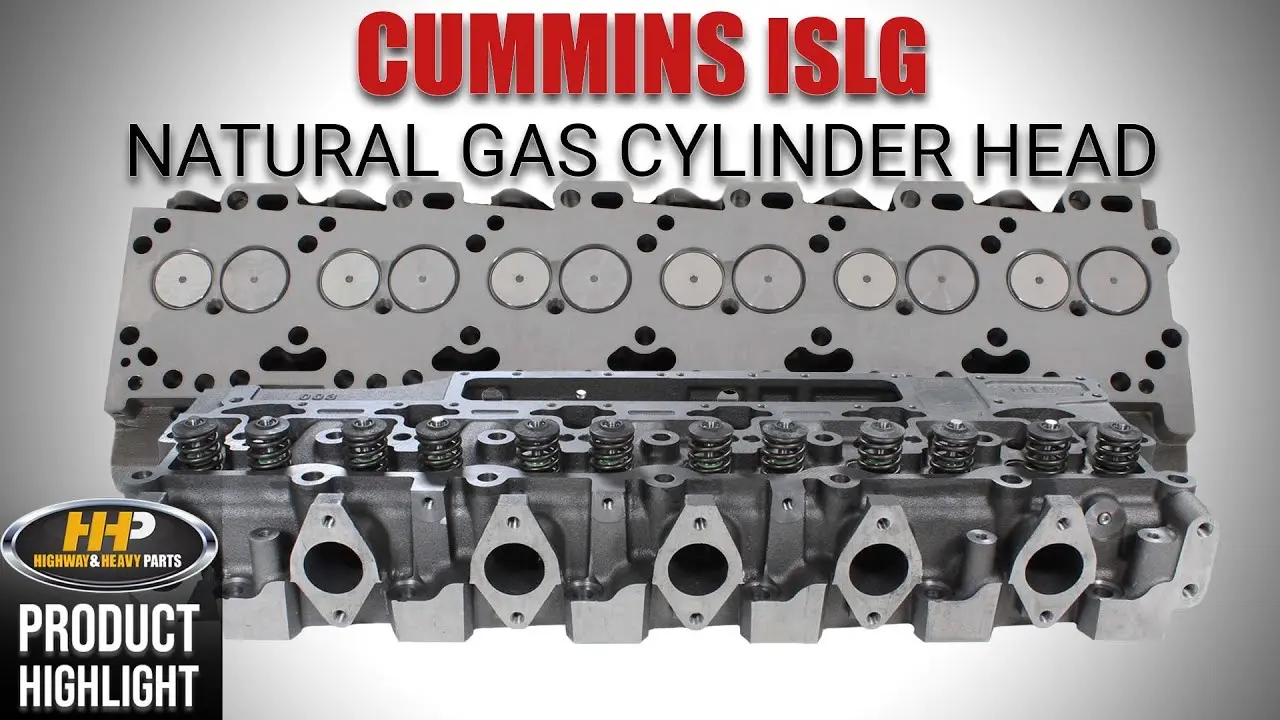
The Cummins ISL G natural gas engine is built for a different type of combustion.
And that difference is exactly why the cylinder head fails the way it does.
Unlike diesel engines, ISL G failures are not typically caused by pressure.
They are caused by heat, material fatigue, and valve seat wear.
How Combustion in the ISL G Changes Cylinder Head Stress
The ISL G is a spark-ignited natural gas engine, not a compression-ignited diesel.
This changes the entire combustion environment.
Key differences include:
- Lower Peak Cylinder Pressure
- Higher Sustained Exhaust Gas Temperatures
- Longer Combustion Duration
- Lean-Burn Operating Conditions
Instead of sharp pressure spikes like diesel, the ISL G experiences prolonged thermal loading.
This has a direct impact on the cylinder head.
Why Valve Seats Fail in Natural Gas Engines
The most common failure in an ISL G cylinder head is valve seat recession or seat drop.
This is caused by a combination of factors:
- Dry Fuel (No Lubrication From Fuel)
- High Exhaust Valve Temperatures
- Repeated Thermal Expansion And Contraction
- Material Fatigue In The Seat Insert
Unlike diesel fuel, natural gas provides no lubricating effect at the valve face.
This increases friction and wear at the seat interface.
The Mechanics of Valve Seat Recession
Valve seat recession occurs when the valve gradually wears into the seat.
This changes valve geometry.
As the valve sinks:
- Valve Lash Decreases
- Valve Timing Becomes Inaccurate
- Heat Transfer Is Reduced
Eventually:
- The Valve Cannot Fully Close
- Combustion Gases Leak Past The Seat
- The Valve Begins To Burn
This is a progressive failure that often goes unnoticed until performance drops.
What Causes a Valve Seat to Drop Completely
A dropped valve seat is a catastrophic failure.
It occurs when the seat insert loses its interference fit in the cylinder head.
This can be caused by:
- Excessive Heat Expansion
- Loss Of Press Fit Between Seat And Head
- Cracking Around The Seat Pocket
- Repeated Thermal Cycling
Once the seat moves:
- The Valve Cannot Seal
- Internal Engine Damage Occurs Rapidly
- The Cylinder Head Becomes Unusable
Why Heat Is the Primary Failure Driver
The exhaust side of the ISL G cylinder head is exposed to continuous high temperatures.
Factors that increase thermal stress include:
- Lean Air-Fuel Mixtures
- Improper Ignition Timing
- Restricted Exhaust Flow
- Cooling System Inefficiency
These conditions accelerate:
- Material Fatigue
- Seat Deformation
- Valve Burning
Heat – not pressure – is the main cause of failure.
Cylinder Head Cracking in ISL G Engines
Another common issue is cracking between valve seats or in the exhaust port area.
This is caused by:
- Thermal Expansion Differences Between Materials
- Repeated Heating And Cooling Cycles
- Localized Hot Spots
Cracks can lead to:
- Compression Loss
- Coolant Leakage (In Severe Cases)
- Progressive Structural Failure
Why Cooling System Performance Is Critical
Cooling plays a larger role in natural gas engines than in diesel engines.
The cylinder head must dissipate sustained heat.
Key areas to monitor:
- Coolant Flow Through The Head
- Radiator Efficiency
- Thermostat Operation
Any reduction in cooling efficiency increases failure risk.
Upgraded Cylinder Heads: What Actually Improves
Updated ISL G cylinder heads often address known failure points.
Improvements may include:
- Enhanced Valve Seat Materials
- Improved Seat Retention Design
- Better Heat Resistance In Critical Areas
- Revised Cooling Passages
These upgrades help extend service life under high thermal load.
Signs Your ISL G Cylinder Head Is Failing
Failures often start gradually.
Watch for:
- Loss Of Valve Lash Clearance
- Misfires Under Load
- Reduced Power Output
- Increased Exhaust Temperatures
- Difficulty Maintaining Proper Engine Performance
Catching these early can prevent catastrophic failure.
When to Replace the Cylinder Head
Cylinder head replacement is necessary when:
- Valve Seats Are Recessed Beyond Spec
- A Seat Has Dropped
- Cracks Are Present
- Valves Cannot Maintain Proper Seal
At this point, repair is no longer reliable.
Shop Cummins ISL G Cylinder Heads
If your engine is showing signs of cylinder head failure, replacing it early can prevent further damage.
👉 View Our Cummins ISL G Cylinder Head
At Highway and Heavy Parts:
- Verified Fitment Before Shipping
- High-Quality Components Built For Heavy-Duty Applications
- Fast Shipping (1–2 Days In Most Areas)
- Expert Diesel And Natural Gas Engine Support
- Parts And Labor Warranty
Don’t Treat Natural Gas Failures Like Diesel Failures
The ISL G fails differently.
Understanding that difference is what prevents repeat issues.
Fix the Problem at the Source
Cylinder head failure is a result of operating conditions.
👉 Monitor Engine Temperatures
👉 Maintain Proper Valve Lash
👉 Address Cooling System Performance
Call 844-304-7688 to speak with a diesel parts specialist
or visit highwayandheavyparts.com to find the right rebuild kit for your engine.
From diagnosis to delivery, Highway and Heavy Parts has your back.


