


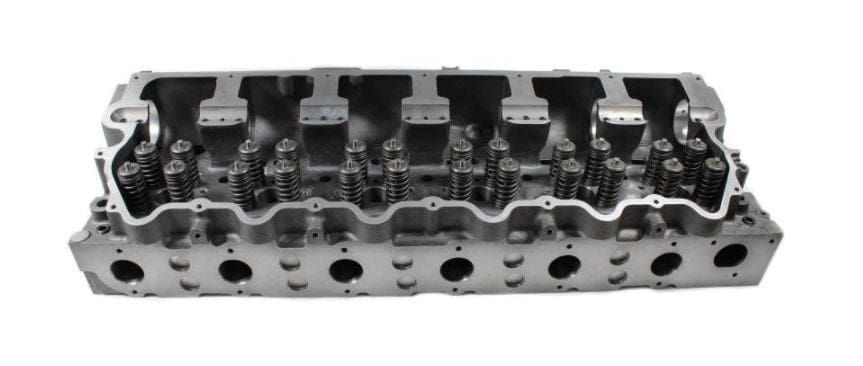
Cylinder head resurfacing is one of the most critical steps in a diesel engine repair – but it’s also one of the most misunderstood.
Resurfacing isn’t just about making the head “look flat.” It’s about restoring the correct sealing surface for combustion pressure, coolant passages, and oil flow. If done incorrectly – or skipped entirely – it can lead to immediate or repeat failure.
What Is Cylinder Head Resurfacing?

Cylinder head resurfacing is the process of machining the head’s deck surface to restore flatness and proper surface finish.
Definition:
Resurfacing removes a controlled amount of material from the cylinder head to ensure a flat, smooth sealing surface that allows the head gasket to properly seal combustion pressure and fluid passages.
Why Flatness Matters In Diesel Engines
Diesel engines operate under significantly higher cylinder pressures than gasoline engines – often exceeding 2,000 PSI during combustion.
Even minor surface irregularities can lead to:
- Uneven Clamping Force Across The Head
- Head Gasket Failure
- Coolant Leakage Into Cylinders
- Combustion Gas Leakage Into Cooling System
Cylinder Head Flatness Specifications
Flatness must be measured before reinstalling a cylinder head.
Typical Flatness Guidelines (General Diesel Range):
- Maximum Warpage: 0.002″–0.004″ Across The Surface
- Measured Using A Straightedge And Feeler Gauge
⚠️ Always verify manufacturer-specific specs (Caterpillar, Cummins, Detroit Diesel).
Surface Finish (RA) Requirements
Flatness alone is not enough – the surface finish is just as critical.
Definition:
Surface finish (measured in Ra, or roughness average) determines how well the head gasket can seal against the head and block.
Typical Surface Finish Range:
- MLS (Multi-Layer Steel Gaskets): 30–60 Ra
- Composite Gaskets: 60–120 Ra
If the surface is:
- Too Rough: Gasket cannot fully seal
- Too Smooth: Gasket may not “bite” and hold
Resurfacing your cylinder head might seem like the best option to get more miles out of it between replacements. There are some situations where it might not work for you.
When Cylinder Head Resurfacing Is Required
Resurfacing should be performed when:
- Flatness Measurements Are Out Of Spec
- Head Gasket Failure Has Occurred
- Overheating Has Warped The Head
- Visible Surface Damage Or Pitting Exists
- Coolant Or Combustion Leakage Is Present
To learn more about how to resurface a diesel engine cylinder head, read this step-by-step guide.
When Resurfacing Should NOT Be Done
Resurfacing is not always the correct solution.
Do Not Resurface If:
- Cracks Are Present In Critical Areas
- Valve Seat Integrity Is Compromised
- Material Removal Would Exceed Manufacturer Limits
- Head Thickness Falls Below Minimum Spec
In these cases, replacement is the better option.
How Improper Resurfacing Leads To Failure
Incorrect resurfacing can create more problems than it solves.
Common Mistakes:
- Removing Too Much Material
- Incorrect Surface Finish For Gasket Type
- Uneven Machining Across The Deck
- Not Checking Valve Recession After Machining
Resulting Issues:
- Premature Engine Wear
- Compression Loss
- Valve Train Geometry Problems
- Repeat Head Gasket Failure
The Role Of The Head Gasket After Resurfacing
Once resurfaced, the cylinder head must work in conjunction with the correct gasket.
A proper seal depends on:
- Correct Surface Finish
- Proper Liner Protrusion (if applicable)
- Correct Torque Sequence And Fasteners
Even a perfectly machined head will fail if these are not verified.
What To Check Before Reinstalling A Cylinder Head
Before installing a resurfaced head:
Pre-Installation Checklist:
- Verify Head Flatness
- Confirm Surface Finish Matches Gasket Type
- Inspect Block Deck Surface
- Measure Liner Protrusion
- Use New Head Bolts Or Studs
- Follow Correct Torque Procedure
Final Takeaway
Cylinder head resurfacing is not just a machine shop step – it’s a precision process that directly affects engine reliability.
If flatness, surface finish, and installation procedures are not correct, the repair will not last.
Call 844-304-7688 to speak with a diesel parts specialist
or visit highwayandheavyparts.com to find the right rebuild kit for your engine.
From diagnosis through delivery, we’re Highway and Heavy Parts.
Related Articles:
GUIDELINES FOR INSTALLING A DIESEL ENGINE CYLINDER HEAD & COMMON MISTAKES
WHAT CAUSED A CRACK IN MY DIESEL ENGINE CYLINDER HEAD?
WHEN CAN I REUSE MY CYLINDER HEAD BOLTS? HOW TO CLEAN, AND INSPECT
Related Videos:

Short on Time? Take your Quote Online!
We get it- when you need Diesel Engine Parts, time is of the essence. That’s why we’ve developed the HHP Online Quoting System.


