


Do you want good engine power? Great fuel economy?
Category: Cummins ISX Dual Cam Engine Parts & Components
Liner & Piston Update for ISX Engines
Cummins has been producing the ISX engine since it replaced the N14 in 2001. In those years, many improvements have been made to the designs of both the pistons and the cylinder liners. Below are summaries of the updates to the designs of those two parts.
Continue reading Liner & Piston Update for ISX EnginesCummins ISX Engine Rebuild Kits from HHP
Here at HHP, we’re pretty proud of the rebuild kits we offer. So, we’re going to use this article to brag a little bit about the rebuild kits we have to fit various Cummins ISX engines.
Continue reading Cummins ISX Engine Rebuild Kits from HHPCummins ISX Engine Spotlight
The huge company that is Cummins was founded almost a century ago in 1919 by Clessie Cummins. Cummins partnered with J. Irwin Miller, who helped Mr. Cummins grow his business. With Cummins’ diesel knowledge and Miller’s business expertise, the company quickly grew. In the years after World War II, the N-Series heavy duty trucks helped the company become an industry leader, and the company’s first overseas facility was built in Scotland in 1956.
Continue reading Cummins ISX Engine SpotlightHHP is pleased to announce the addition of a wide range of new diesel engine products to their existing line of parts
Highway and Heavy Parts is pleased to announce the addition of a wide range of new diesel engine products to their existing line of parts.
Continue reading HHP is pleased to announce the addition of a wide range of new diesel engine products to their existing line of partsCUMMINS ISX15 INFRAME ENGINE REBUILD KIT (5405986)
A loss of power, excessive oil consumption, or poor fuel economy are signs that it may be time to rebuild your Cummins ISX 15.
Continue reading CUMMINS ISX15 INFRAME ENGINE REBUILD KIT (5405986)Cummins ISX oil pump assembly (5599284)
Is your ISX overheating? Low oil pressure? Or is there an unusual noise coming from your engine? You may need an oil pump replacement in your Cummins ISX.
Continue reading Cummins ISX oil pump assembly (5599284)Cummins ISX Oil Pump Assembly | Issues With Low Oil Pressure Or A Noisy Engine? – Contact Us Today 844.447.1453
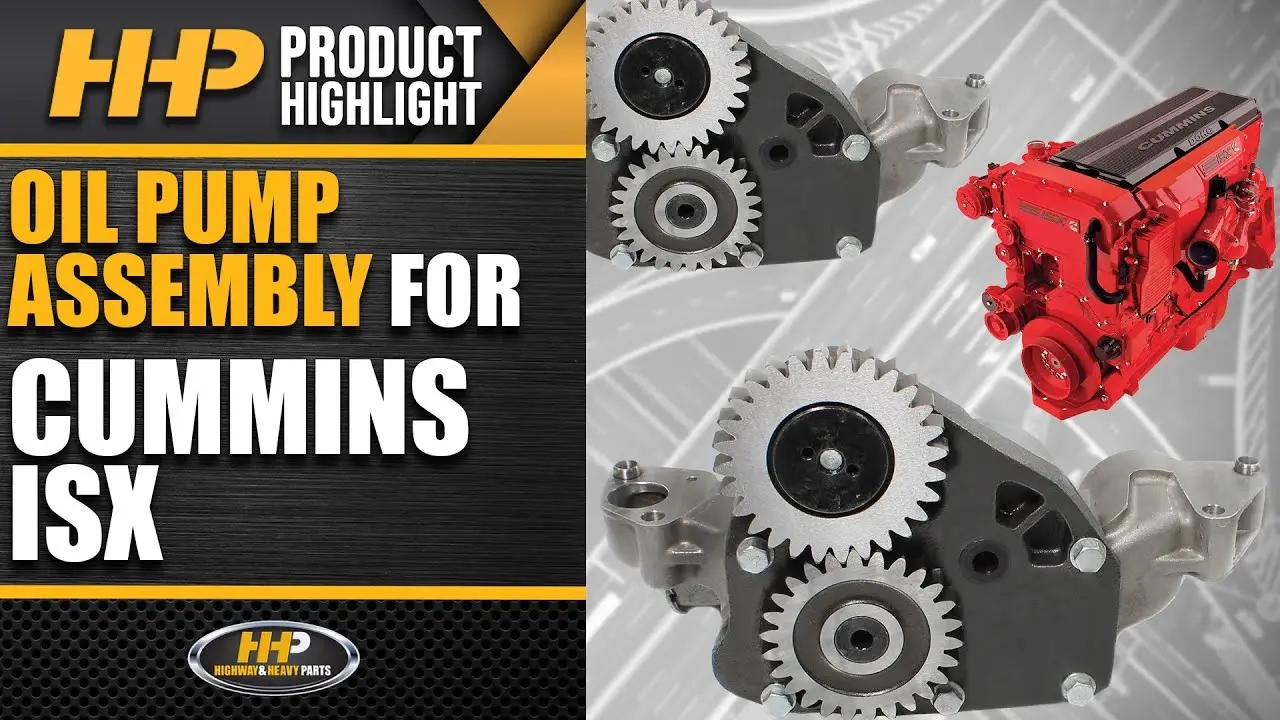
Cummins ISX Oil Pump For Sale At HHP. Take A Look!

Cummins ISX Upper Engine Gasket Set (4376104)
If you’re replacing the top end on a Cummins ISX, this upper engine gasket set is one of the most critical parts you’ll install. When the head comes off – or you’re addressing signs of upper-end leaks – you can’t afford to skimp on sealing integrity.
Continue reading Cummins ISX Upper Engine Gasket Set (4376104)Cummins ISX Single & Dual Cam Electronic Actuator (4034289)
If your Cummins ISX is having trouble creating boost, throwing fault codes or if the turbocharger creates a lot of noise. You may have a faulty actuator on your VGT turbocharger.
Continue reading Cummins ISX Single & Dual Cam Electronic Actuator (4034289)Cummins ISX Turbocharger, Remanufactured (5357368)
Your Cummins ISX on a streak of failed turbochargers? Searching for answers on why it’s not creating enough boost, getting poor fuel economy or only roughly 15k miles per turbocharger before failing? Identify the real engine issue with your ISX that’s causing your turbocharger to quit after install.
Continue reading Cummins ISX Turbocharger, Remanufactured (5357368)Remanufactured, Fuel Injector for Cummins ISX (4088665R)
Is the Cummins ISX in your truck having trouble starting? Misfiring? Noticing an increase of fuel consumption? Your ISX fuel injectors may have become faulty.
Continue reading Remanufactured, Fuel Injector for Cummins ISX (4088665R)Understanding the ISX Dual Cam System
The Cummins ISX Dual Cam represents a significant advancement in diesel engine technology, featuring an innovative dual camshaft design that optimizes both intake and exhaust valve timing. This sophisticated system allows for precise control of valve events, resulting in improved fuel efficiency, reduced emissions, and enhanced overall performance compared to traditional single-cam configurations. The dual cam setup enables independent control of intake and exhaust valve operations, providing engineers with greater flexibility in engine tuning and optimization.
Introduced as part of Cummins’ evolution beyond the legendary N14 engine, the ISX Dual Cam incorporates advanced electronic controls and precision engineering to meet increasingly stringent emission standards while maintaining the durability and reliability that Cummins engines are known for. The dual camshaft configuration requires specialized components and precise maintenance procedures, making quality replacement parts essential for optimal engine performance.
Critical Components and Maintenance Requirements
The complexity of the ISX Dual Cam system demands attention to specific components that are unique to this engine design. Critical parts include the dual camshafts themselves, cam followers, valve bridges, and the intricate timing mechanisms that coordinate the dual cam operation. Additionally, the electronic control systems that manage valve timing require specialized sensors and turbocharger actuators that must meet exact specifications for proper engine operation.
Cylinder Heads and Engine Rebuild Kits
At Highway and Heavy Parts, we specialize in providing complete solutions for ISX Dual Cam maintenance and repair. Our cylinder heads are engineered to meet or exceed OEM specifications, ensuring proper fit and long-lasting performance. We also offer comprehensive engine rebuild kits that include all necessary gaskets, seals, and components for major engine rebuilds.
Expert Support for Your ISX Dual Cam
Our technical team understands the unique requirements of the ISX Dual Cam system and can help you identify the correct parts for your specific application. Whether you need routine maintenance items or major components for a complete engine rebuild, we stock quality parts that keep your ISX Dual Cam running efficiently and reliably.


