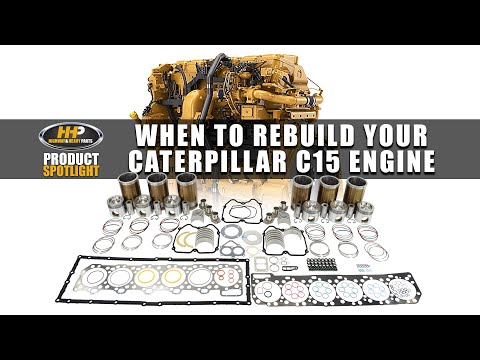
Caterpillar built some of the most well-known diesel engines in the trucking industry.
From the early 3406 series to the C15, these engines earned a reputation for durability, rebuild-ability, and long service life.
But despite that reputation, Caterpillar exited the on-highway truck engine market in 2010.
So what actually happened?
The Real Reason Caterpillar Left the On-Highway Market
Caterpillar’s exit was not due to a single failure: it was the result of increasing emissions regulations, engineering tradeoffs, and business strategy.

Emissions Regulations Changed Everything
Beginning in the 1990s, U.S. diesel emissions standards became progressively stricter under the Environmental Protection Agency.
Key milestones included:
- 1994 standards: Initial NOx and particulate reductions
- 2004 standards: Significant tightening of emissions limits
- 2007 standards: Required major aftertreatment systems (DPF)
- 2010 standards: Further NOx reduction, often requiring DEF/SCR systems
Each step required:
- New engine designs
- Additional emissions components
- Increased development costs
Caterpillar Took a Different Approach: ACERT
Instead of adopting Selective Catalytic Reduction (SCR) early, Caterpillar developed:
👉 ACERT (Advanced Combustion Emissions Reduction Technology)
ACERT focused on:
- Advanced fuel injection timing
- Air management (including twin turbo systems)
- Combustion temperature control
The goal was to meet emissions standards without relying on DEF-based SCR systems.
Why ACERT Wasn’t Enough Long-Term
While ACERT worked for earlier emissions tiers, it became increasingly difficult to meet 2010 emissions standards without aftertreatment like SCR.
Competitors moved toward:
- DEF (Diesel Exhaust Fluid) systems
- SCR-based emissions reduction
Caterpillar’s approach required:
- More complex engine-side solutions
- Higher development cost
- Limited scalability for future regulations
The Business Decision: Exit Instead of Compete
By the late 2000s, Caterpillar faced a choice:
- Invest heavily to redesign engines for SCR compliance
or - Exit the on-highway market and focus elsewhere
Caterpillar chose to exit.
👉 In 2010, they stopped producing on-highway diesel engines entirely.
Why Caterpillar Walked Away (Beyond Engineering)
There were also clear business reasons behind the decision.
1. High Development Costs
Meeting emissions standards required:
- New engine platforms
- Integration with aftertreatment systems
- Ongoing regulatory adaptation
2. Low Profit Margins in On-Highway Market
Class 8 truck engines are:
- Highly competitive
- Price-sensitive
- Lower margin compared to off-highway equipment
3. Stronger Position in Off-Highway Markets
Caterpillar remained dominant in:
- Construction equipment
- Mining
- Industrial applications
👉 These markets offered higher margins and more control over product design
The Final Engine: The SDP C15
The last Caterpillar on-highway engine was the C15 SDP.
This engine included major updates:
- Redesigned turbocharger system
- Updated fuel system configuration
- EGR (Exhaust Gas Recirculation) integration
- Revised oil cooling system
Despite these changes, it marked the end – not the evolution – of Caterpillar’s on-highway lineup.
Evolution of Caterpillar C15 Engines (Quick Breakdown)
Early Engines (5EK, 6TS)
- Mechanical roots with early electronic controls
- Aluminum and two-piece piston designs
Mid-Generation (1LW, 2WS)
- Introduction of popular two-piece piston designs (steel crown + aluminum skirt)
- Improved durability and performance
ACERT Era (BXS, MXS, NXS)
- Twin turbo configurations
- Advanced air and fuel management
- Similar core components across models
Final Generation (SDP)
- Major redesign for emissions compliance
- Introduction of EGR and updated systems
- Final on-highway engine produced by Caterpillar
What This Means for Today’s Diesel Engines
Even though Caterpillar no longer produces on-highway engines:
👉 Their engines are still widely used and rebuilt today.
Many C15 and 3406 engines remain in service because of:
- Strong block design
- Rebuildable architecture
- Parts availability
👉 Browse Caterpillar engine parts: Shop All Caterpillar Parts
Will Caterpillar Ever Come Back?
As of today:
👉 Caterpillar has not returned to the on-highway engine market.
They continue to focus on:
- Off-highway diesel engines
- Industrial power systems
While there are occasional rumors of a return, there has been no confirmed production of new on-highway engines since 2010.
Final Thoughts
Caterpillar didn’t leave the on-highway market because they couldn’t build engines.
They left because:
- Emissions regulations required major system changes
- The cost to compete increased significantly
- Other markets offered better long-term opportunities
The result was the end of one of the most recognizable diesel engine lineups in trucking history.
Call 844-304-7688 or visit highwayandheavyparts.com to place your order today.
From diagnosis through delivery, we’re Highway and Heavy Parts.
Caterpillar Resource Library
Related Articles:
- WHEN TO REBUILD YOUR CATERPILLAR C15 DIESEL ENGINE
- CATERPILLAR DIESEL ENGINE SERIAL NUMBERS
- WHAT’S THE DIFFERENCE BETWEEN CATERPILLAR 3406E, C15, AND C15 ACERT DIESEL ENGINES?
Related Videos: