


Piston rings are small compared to many other diesel engine components, but they have a major impact on engine performance, oil control, compression, and long-term reliability.
When piston rings fail, the symptoms can show up quickly: excessive oil consumption, blow-by, loss of power, poor compression, or blue exhaust smoke. The difficult part is that piston ring failure is often not the true root cause. In many cases, the rings were damaged by another issue inside the engine, such as improper installation, abrasive contamination, overheating, poor lubrication, incorrect cylinder finish, or an improper break-in procedure.
That is why failure analysis matters.
Replacing the rings without understanding what caused the failure can lead to the same problem happening again.
If your diesel engine is experiencing piston ring failure, the goal should not be to simply identify the broken part. The goal should be to understand why the ring failed, what other components may have been affected, and what needs to be corrected before the engine goes back together.
What Do Piston Rings Do?
Piston rings sit in grooves around the piston and seal against the cylinder liner wall.
They perform three important jobs inside the engine.
First, they help seal combustion pressure inside the cylinder. This allows the engine to build compression and convert combustion force into usable power.
Second, they control oil on the cylinder wall. The oil control ring helps scrape excess oil away so the engine maintains lubrication without pulling too much oil into the combustion chamber.
Third, piston rings help transfer heat from the piston into the cylinder liner, where the cooling system can carry that heat away.
When the rings cannot seal properly, the entire engine is affected.
Compression drops. Oil consumption rises. Blow-by increases. Combustion efficiency decreases. In severe cases, damaged rings can contribute to piston scoring, liner damage, crankcase pressure problems, and premature rebuild failure.
Common Symptoms of Piston Ring Failure
Piston ring problems usually show up as sealing, oil control, or compression issues.
1. Excessive Blow-By
Combustion gases escape past the piston rings and enter the crankcase, increasing crankcase pressure.
2. High Oil Consumption
Oil moves past the ring pack and enters the combustion chamber, where it burns during operation.
3. Low Compression
Damaged or poorly seated rings reduce the engine’s ability to hold compression.
4. Blue Exhaust Smoke
Burning engine oil often creates blue or blue-gray smoke from the exhaust.
5. Loss of Power
Poor cylinder sealing reduces combustion efficiency and can make the engine feel weak under load.
These symptoms can point toward piston ring problems, but they can also overlap with injector issues, turbocharger oil leaks, valve seal problems, cylinder liner wear, or crankcase ventilation problems.
That is why inspection matters.
The ring damage pattern often tells the story.
Failure Analysis #1: Broken Oil Control Ring Caused by Assembly Error
One of the most common piston ring failures is also one of the easiest to prevent.
During engine assembly, piston rings must be compressed evenly as the piston is installed into the cylinder liner. If the oil control ring is twisted, snagged, or forced into the liner, it can crack or bend before the engine is ever started.
In the photo below, the broken oil control ring has been placed on a precision granite surface. Notice how one side of the ring bends upward. That distortion indicates the ring fractured during installation rather than during normal engine operation.

Once damaged, the oil control ring can no longer regulate the oil film on the cylinder wall. Excess engine oil remains above the ring pack, where it is pulled into the combustion chamber and burned.
Common Symptoms
- High oil consumption
- Blue exhaust smoke
- Carbon buildup on pistons
- Oil fouling
- Poor ring sealing
Prevention
Always use the proper ring compressor and follow the manufacturer’s installation procedures. Never force the piston into the liner. If resistance is encountered, stop and determine why before continuing. Taking a few extra minutes during assembly can prevent an expensive teardown later.
Failure Analysis #2: High Crankcase Pressure Caused by Incorrect Ring Installation
Even if the piston rings are not physically broken, incorrect installation can prevent them from sealing properly.
Compression rings must be installed in the correct orientation, with the proper side facing upward and the ring end gaps staggered according to the engine manufacturer’s specifications. If the rings are installed incorrectly, combustion gases can leak past the ring pack and enter the crankcase.
This condition is commonly known as blow-by.

As crankcase pressure increases, engine performance often decreases. Oil may begin leaking from seals and gaskets, crankcase breathers may emit excessive vapor, and the engine can lose noticeable power because combustion pressure is escaping instead of pushing the piston downward.
Common Symptoms
- Excessive blow-by
- High crankcase pressure
- Oil leaks around seals and gaskets
- Reduced engine power
- Increased oil consumption
Prevention
Carefully verify ring orientation, ring end-gap positioning, piston orientation, and manufacturer installation procedures before final assembly. Even perfectly manufactured piston rings cannot seal properly if they are installed incorrectly.
Failure Analysis #3: High Oil Consumption Caused by a Broken Oil Control Ring
Oil control rings have one primary job: regulate the amount of oil that remains on the cylinder wall.
A thin oil film is necessary for lubrication, but excess oil must be scraped back into the crankcase. When the oil control ring breaks, it loses its ability to perform that function.
The image below shows an oil control ring that has fractured in multiple locations (highlighted by the yellow arrows).
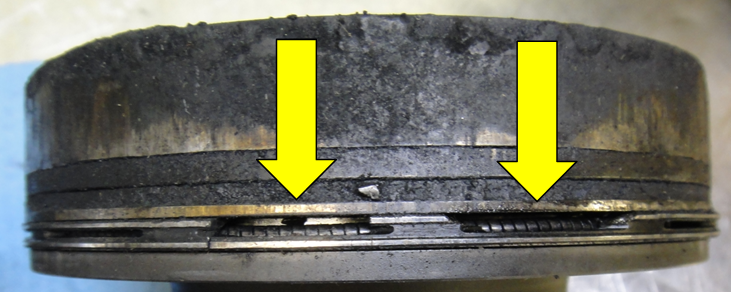
With portions of the ring missing or damaged, excessive oil remains on the cylinder wall and enters the combustion chamber during every power stroke.
The result is increased oil consumption, blue exhaust smoke, carbon deposits, and eventually reduced engine efficiency.
Although broken oil control rings are one possible cause of excessive oil consumption, they are not the only cause. Worn cylinder liners, damaged pistons, valve guide wear, turbocharger oil leaks, and improper break-in procedures can produce similar symptoms.
Failure Analysis #4: Ring Face Wear Caused by Abrasive Contamination
Piston rings and cylinder liners operate with extremely small clearances. Even fine dust or abrasive particles entering the engine can rapidly wear the sealing surfaces.
During this inspection, four piston ring sets were examined after a customer reported excessive oil consumption.
Under magnification, noticeable vertical scratches were observed on both the top compression ring and intermediate compression rings.

These scratches prevent the rings from maintaining a complete seal against the cylinder wall. As sealing efficiency decreases, combustion gases escape past the rings while engine oil moves into the combustion chamber.
Common sources of abrasive contamination include:
- Air intake leaks
- Damaged or poorly installed air filters
- Dirt introduced during engine assembly
- Contaminated engine oil
- Poor maintenance practices
No manufacturing defects were observed during the inspection. The damage pattern is consistent with abrasive contamination entering the engine after assembly.
Prevention
Maintaining a clean intake system is just as important as maintaining clean engine oil. Inspect air filters regularly, repair intake leaks immediately, and keep all engine components clean during assembly. Preventing contamination is far less expensive than repairing the damage it can cause.
Other Common Causes of Piston Ring Failure
Not every piston ring failure looks the same. While improper installation and contamination are two of the most common causes, several other conditions can dramatically shorten piston ring life.
Engine Overheating
Excessive temperatures can reduce ring tension, damage the piston, and accelerate wear on both the rings and cylinder liner.
Poor Lubrication
Low oil pressure, contaminated oil, or using the wrong engine oil can increase friction and wear throughout the ring pack.
Cylinder Glazing
If a freshly rebuilt engine is idled excessively during break-in, the cylinder walls can become polished before the rings properly seat, resulting in poor sealing and continued oil consumption.
Improper Honing or Crosshatch Finish
A cylinder liner that is too smooth, too rough, or improperly honed may prevent the piston rings from seating correctly.
Incorrect Ring End Gap
Too little end gap can cause the ring ends to butt together as they expand from heat, while excessive end gap can reduce compression and increase blow-by.
Detonation or Abnormal Combustion
Abnormally high cylinder pressures can damage piston ring lands, crack rings, or overload the ring pack.
How to Prevent Piston Ring Failure
Many piston ring failures can be prevented with careful engine assembly, proper break-in procedures, and routine maintenance.
✔ Verify piston ring orientation before installation.
✔ Measure and confirm ring end gaps according to manufacturer specifications.
✔ Maintain a clean assembly environment to prevent abrasive contamination.
✔ Inspect the air intake system for leaks and replace damaged filters.
✔ Use the correct engine oil and maintain recommended oil change intervals.
✔ Ensure the cylinder liner has the proper crosshatch finish before assembly.
✔ Follow the recommended engine break-in procedure and avoid excessive idling after a rebuild.
Proper installation and maintenance not only extend piston ring life, but also help protect pistons, cylinder liners, bearings, turbochargers, and other critical engine components.
Need Replacement Piston Rings or Engine Rebuild Parts?
Whether you’re replacing damaged piston rings or planning a complete engine rebuild, using quality components is only part of the repair. Proper inspection, careful installation, and identifying the root cause of the original failure are just as important for long-term engine reliability.
Find pistons, piston rings, cylinder liners, bearings, gasket sets, and complete engine rebuild kits for many of the industry’s most popular diesel engines.
Shop Engine Rebuild Parts
Final Takeaway
Piston rings are responsible for sealing combustion pressure, controlling engine oil, and transferring heat away from the piston. When they fail, the symptoms often include excessive blow-by, increased oil consumption, reduced compression, blue exhaust smoke, and loss of power.
However, damaged piston rings are rarely the original problem.
Improper installation, abrasive contamination, overheating, poor lubrication, incorrect cylinder liner preparation, and improper break-in procedures are all common contributors to piston ring failure. Replacing the rings without correcting the underlying cause can lead to repeat failures and unnecessary downtime.
A successful repair starts with accurate diagnosis.
By understanding how the rings failed—not just that they failed—you can make better repair decisions, improve engine reliability, and help ensure your next rebuild delivers the performance and service life it was designed for.
If you need help identifying the right replacement parts for your diesel engine or have questions during a rebuild, our ASE Certified Technicians are here to help.
Call 844-304-7688 or visit highwayandheavyparts.com.
From diagnosis through delivery, we’re Highway and Heavy Parts.


