


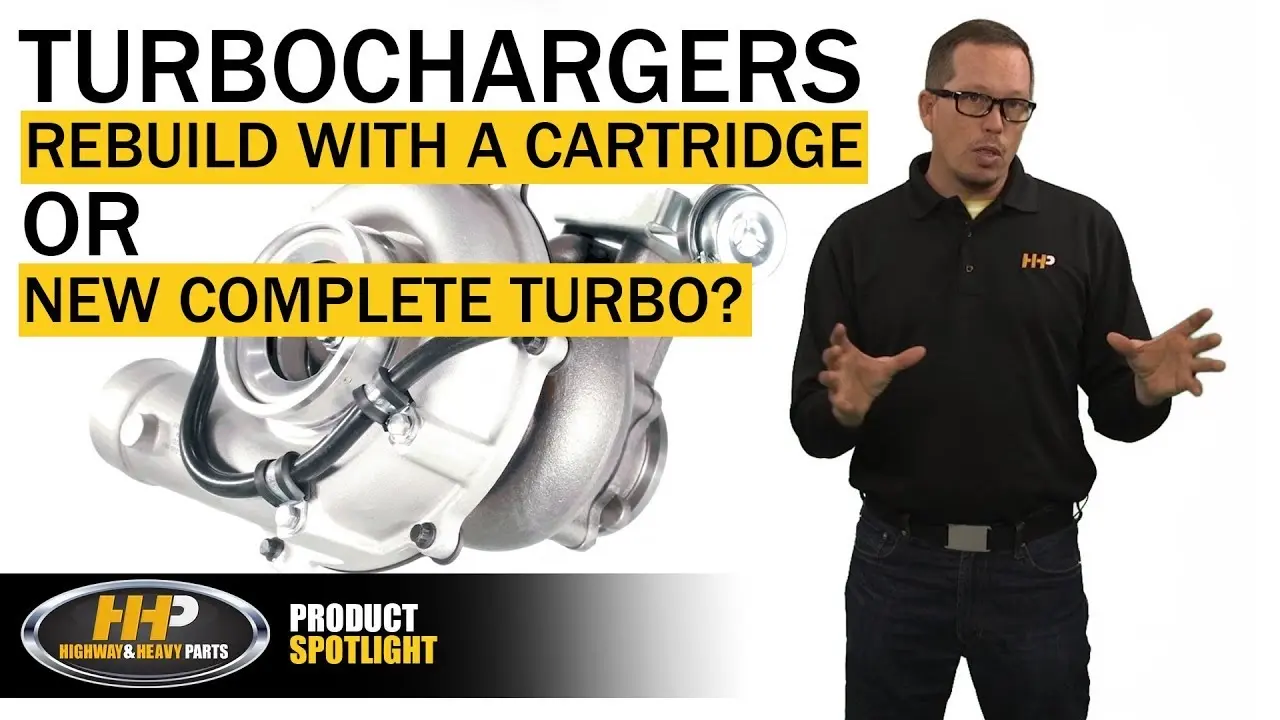
When a turbocharger fails, most people ask the same question:
Should you rebuild it with a cartridge (CHRA), or replace the entire turbo?
The answer depends on what actually failed.
And getting that wrong can cost you more than the turbo itself.
What Is a CHRA and What Does It Do
The CHRA (Center Housing Rotating Assembly) is the core of the turbocharger.
It includes:
- The Shaft
- The Bearings
- The Turbine Wheel
- The Compressor Wheel
This is the part that spins – often at speeds over 100,000 RPM.
If the CHRA fails, the turbo cannot function.
When Replacing the CHRA Makes Sense
In some cases, replacing just the CHRA is a viable repair.
This is typically when the outer housings are still in good condition.
A CHRA replacement may work if:
- The Compressor And Turbine Housings Are Undamaged
- There Is No Cracking Or Warping
- The Failure Was Limited To Bearing Or Shaft Wear
- There Is No Foreign Object Damage
This approach can reduce cost and downtime. But it must be done correctly.
When You Should Replace the Entire Turbocharger
There are situations where replacing only the CHRA is not enough.
If the housings or other components are damaged, the entire turbo should be replaced.
You should replace the full turbo if:
- There Is Damage To The Compressor Or Turbine Housing
- The Turbo Has Experienced Foreign Object Damage
- There Are Cracks From Excessive Heat
- The Actuator Or VGT System Is Failing
- The Turbo Has High Mileage And Multiple Wear Points
In these cases, installing only a CHRA can lead to repeat failure.
The Risk of Replacing Only the Cartridge
Replacing a CHRA sounds simple, but turbochargers rely on precise alignment and balance.
If the housing is worn or misaligned:
- The new CHRA may not seat correctly
- Airflow may be disrupted
- The turbo may fail prematurely
This is why many turbo failures happen again shortly after a cartridge replacement.
What Actually Causes Turbo Failure
Before deciding how to repair the turbo, you need to identify the root cause.
Most turbo failures are not caused by the turbo itself. Common causes include:
- Oil Contamination Or Poor Lubrication
- Restricted Oil Supply Or Drain Lines
- Debris Entering The Intake System
- Excessive Exhaust Temperatures
- Improper Shutdown After Heavy Operation
If the root cause isn’t fixed, any repair—CHRA or full turbo—will fail again.
Performance Differences: CHRA vs Full Turbo Replacement
A properly installed CHRA can restore function.
But a full turbo replacement provides:
- Complete Component Integrity
- Proper Factory Balancing
- New Actuator (If Equipped)
- Reduced Risk Of Hidden Damage
For high-load diesel engines, this often makes a full replacement the more reliable option.
Cost vs Reliability: What Matters More
Replacing only the CHRA is usually less expensive upfront.
But if the repair fails, the total cost increases quickly. Consider:
- Downtime
- Labor Costs
- Repeat Repairs
- Potential Engine Damage
In many cases, replacing the full turbo reduces long-term risk.
How to Make the Right Decision
Before choosing CHRA or full turbo replacement, inspect:
- Turbo Housing Condition
- Shaft Play And Internal Damage
- Oil Supply System
- Air Intake And Exhaust Systems
This ensures you’re fixing the actual problem—not just the symptom.
Shop Turbochargers and CHRA Components
Whether you need a full replacement or a cartridge, choosing the right part matters.
👉 Shop diesel turbochargers and CHRA components
At Highway and Heavy Parts:
- Verified Fitment Before Shipping
- High-Quality Components Built For Diesel Applications
- Fast Shipping (1–2 Days In Most Areas)
- Expert Diesel Support
- Parts And Labor Warranty
Don’t Let a Turbo Repair Turn Into a Bigger Problem
Choosing the wrong repair method can lead to:
- Repeat turbo failure
- Increased engine wear
- Higher long-term costs
Fixing the problem correctly the first time is what protects your engine.
Make the Right Call the First Time
Turbocharger repairs aren’t just about replacing parts.
They’re about understanding the failure.
👉 Inspect The Full Turbo System
👉 Identify The Root Cause
👉 Choose The Correct Repair Solution
Call 844-304-7688 to speak with a diesel parts specialist
or visit highwayandheavyparts.com to find the right rebuild kit for your engine.
From diagnosis to delivery, Highway and Heavy Parts has your back.


