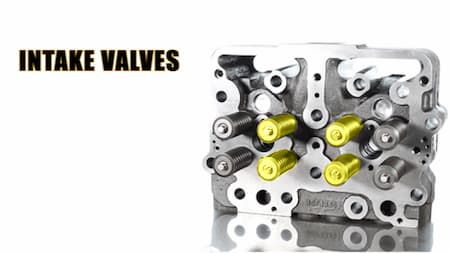
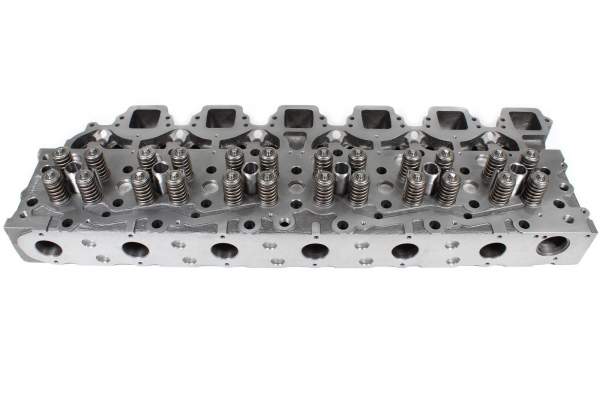
Today we’re going to go over a little bit about cylinder heads. Before diving head first into the cylinder head market, its important to have an understanding of what you’re working with.
We know how frustrating it can be when your cylinder head cracks. You’re losing coolant, have compression in your cooling system, or seeing excessive smoke, and you’re looking at lost time and money and an expensive repair.
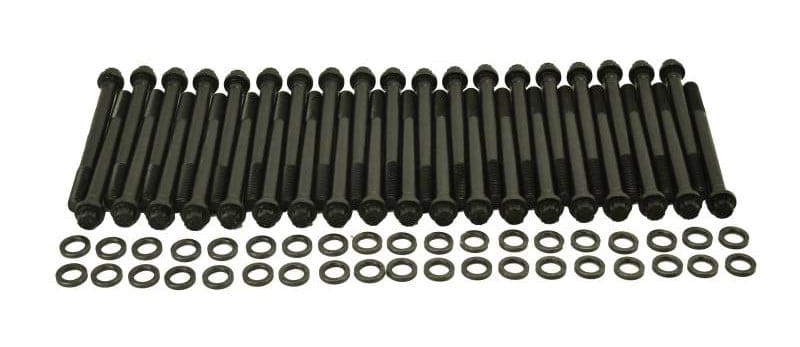
Head bolts might seem like a minor or unimportant part, but without them, combustion wouldn’t be possible and your diesel engine wouldn’t work. They hold your cylinder head to the engine block and help the head gasket to seal properly.
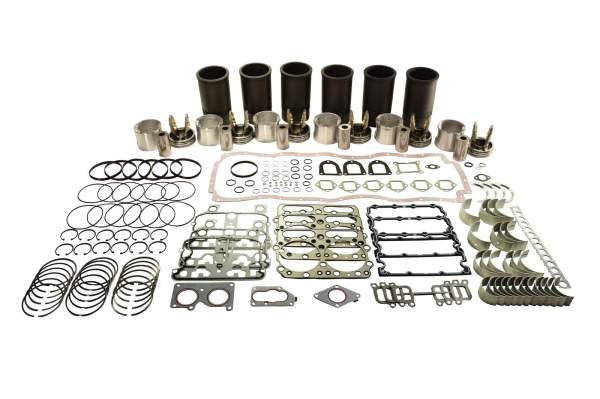
We know that rebuilding your engine is a time consuming and expensive process. And that’s not even mentioning the profits you lose when your engine is out of commission.
As we’ve mentioned in a previous post, cylinder head damage is a major issue that can cause problems throughout your engine. It’s not just cracks that you have to worry about.
It’s no small undertaking to replace your cylinder head, and it only makes sense that you want it done correctly. Ensure yours is properly installed with these guidelines and common mistakes to avoid.
As we talked about in an earlier post, there are many things that could lead to an engine failure or the need for an engine rebuild. One such indicator is low or no compression in your engine cylinders.
Are you experiencing low power or poor fuel economy? Do you find yourself replacing filters more often, or have you noticed smoke coming from your exhaust stack?
We know how frustrating it can be when your equipment fails and you’re facing down time and lost profits. And paying those high OEM dealer prices only makes it worse.
Whether you’re on the road or in the fields, we know that an engine failure in your diesel engine is more than just a minor inconvenience. It means lost time and lost profits. And if it’s a failure in your fuel system, you can be looking at thousands of dollars in repairs.