


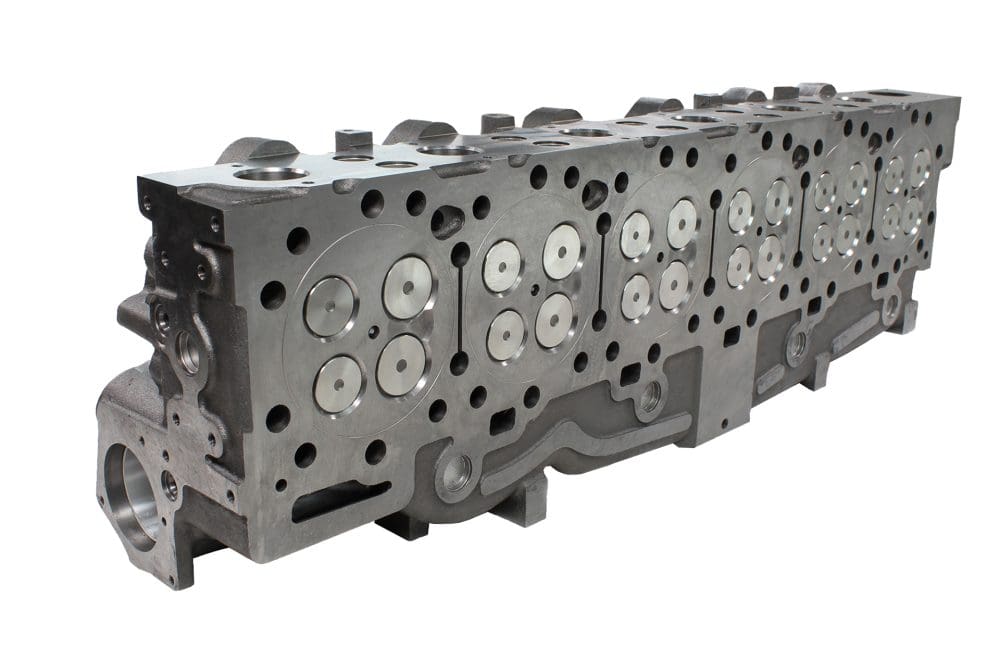
Cylinder heads are one of the most critical components in a diesel engine. They seal combustion pressure, manage airflow, house the valves and injectors, and help transfer heat away from the combustion chamber.
Because cylinder heads operate under extreme pressure and temperature, they are also one of the most failure-prone areas in a diesel engine.
Many major engine failures eventually trace back to cylinder head problems caused by:
- Overheating
- Cooling system issues
- Excessive combustion pressure
- Poor maintenance
- Improper installation procedures
Some cylinder head failures develop slowly over hundreds of thousands of miles. Others can happen suddenly and cause catastrophic engine damage in minutes.
A failed cylinder head can lead to:
- Coolant loss
- Compression loss
- White smoke
- Hard starting
- Engine overheating
- Piston and liner damage
That is why accurate diagnosis matters so much.
What Does a Diesel Cylinder Head Actually Do?
The cylinder head seals the top of the engine block while managing several critical engine functions at the same time.
Inside the cylinder head are:
- Intake valves
- Exhaust valves
- Valve seats
- Injector bores
- Coolant passages
- Rocker assemblies
The cylinder head also plays a major role in controlling combustion temperature and airflow efficiency.
Modern diesel engines place enormous stress on cylinder heads because of:
- High compression ratios
- Turbocharger boost pressure
- Emissions system temperatures
- Heavy towing and hauling demands
In many heavy-duty diesel engines, cylinder pressure can exceed several thousand PSI during combustion events.
Cracked Cylinder Heads
Cracked cylinder heads are one of the most common diesel engine cylinder head problems.
Most cracks form because of repeated heat cycling and thermal stress. Every time the engine heats up and cools down, the cylinder head expands and contracts slightly. Over time, that stress can weaken the casting.
Cracks commonly form:
- Between valve seats
- Around injector bores
- Near exhaust valve bridges
- Inside coolant passages
Exhaust-side cracks are especially common because exhaust valves operate under extremely high temperatures.
A cracked cylinder head may cause:
- Coolant loss
- White smoke
- Overheating
- Misfires
- Hard starting
- Combustion gases entering the cooling system
In severe cases, coolant may enter the combustion chamber and damage pistons, bearings, or cylinder liners.

Head Gasket Failure
Head gasket failure is another extremely common diesel cylinder head problem.
The head gasket seals:
- Combustion pressure
- Oil passages
- Coolant passages
…between the cylinder head and engine block.
When the gasket fails, combustion pressure can leak into the cooling system or coolant may enter the cylinders.
One of the most common causes of head gasket failure is overheating.
Once engine temperatures rise excessively, the cylinder head may warp slightly and reduce clamping force across the gasket surface.
High cylinder pressure from performance tuning or excessive boost can also contribute to gasket failure over time. Common symptoms include:
- Bubbling coolant reservoirs
- Coolant pushing out of the overflow
- White smoke
- Loss of coolant
- Rough running
- Overheating under load
This is especially common in trucks that tow heavy or operate under sustained high-load conditions.
Read This If You Have Diesel Problems That Only Show Up Under High Load
Warped Cylinder Heads
Overheating does not always crack a cylinder head. Sometimes it warps the sealing surface instead.
When a cylinder head warps, it can no longer clamp evenly against the engine block.
Even slight warping can create:
- Compression leakage
- Coolant leakage
- Repeat head gasket failures
Aluminum cylinder heads are particularly vulnerable because aluminum expands faster than cast iron during heat cycles.
A warped cylinder head often requires resurfacing or replacement depending on the amount of distortion.
Many repeat gasket failures happen because the head flatness was never properly checked during repair.
Burned Valves and Valve Seat Damage
Exhaust valves are exposed to extreme heat every time combustion occurs.
If the valve cannot transfer heat correctly into the valve seat, the edge of the valve may begin to burn.
Burned valves are commonly caused by:
- Excessive EGTs
- Injector problems
- Poor valve seating
- Cooling issues
- Prolonged heavy load operation
As valve damage worsens, compression begins to drop.
The engine may develop:
- Rough idle
- Misfires
- Low power
- Hard starting
Valve seats can also crack or loosen over time.
A dropped valve seat is one of the most destructive cylinder head failures because the loose seat can contact the piston and severely damage the engine internally.

Injector Cup and Injector Bore Problems
Many diesel cylinder heads use injector cups or sleeves to isolate fuel passages from coolant passages.
When injector cups fail, they may allow:
- Fuel into the coolant
- Coolant into the cylinder
- Combustion leakage
This can create confusing symptoms that resemble multiple different engine problems.
Common warning signs include:
- Fuel contamination in coolant
- White smoke
- Hard starting
- Rough idle
- Coolant loss
Some diesel engines are more prone to injector cup problems because of injector bore stress and thermal expansion around the injector area.
Cooling System Problems Cause Many Cylinder Head Failures
One major pattern appears repeatedly across almost all cylinder head failures:
Heat is usually involved somewhere.
Even a short overheating event can permanently damage a cylinder head.
Common cooling-related causes include:
- Weak water pumps
- Low coolant levels
- Restricted radiators
- Failed thermostats
- Fan clutch problems
- Plugged charge air coolers
When coolant flow becomes restricted, temperatures rise rapidly around combustion areas and exhaust valves.
That added heat dramatically increases the risk of:
- Cracking
- Warping
- Valve damage
- Head gasket failure
Read our guide on How Elevation Affects Diesel Engine Performance.
Improper Installation Causes Repeat Failures
Not every cylinder head failure is caused by the engine itself.
Improper installation procedures are responsible for many repeat failures.
Critical steps include:
- Proper torque sequences
- Correct bolt stretch procedures
- Flatness inspection
- Surface finish inspection
- Correct liner protrusion measurements
Skipping these steps can create uneven clamping force and cause sealing problems almost immediately.
Many technicians also replace:
- Head bolts or studs
- Injector seals
- Valve train components
- Cooling components
…during major cylinder head repairs to reduce the risk of repeat failures.
Excessive Cylinder Pressure Creates More Stress
Modern diesel engines produce tremendous combustion pressure.
Performance tuning, heavy towing, and aggressive fueling strategies all increase stress on the cylinder head.
Higher cylinder pressure places additional load on:
- Head gaskets
- Valve seats
- Exhaust valves
- Cylinder head castings
That is one reason many high-performance diesel engines use:
- Stronger fasteners
- Upgraded head gaskets
- Improved cooling systems
Monitoring exhaust gas temperatures (EGTs) is especially important on modified diesel engines.
Common Signs of Cylinder Head Problems
Cylinder head failures do not always appear immediately.
However, some warning signs should never be ignored:
- Unexplained coolant loss
- White smoke
- Overheating
- Bubbling coolant reservoirs
- Hard starting
- Rough idle
- Pressurized cooling systems
- Oil contamination
Early diagnosis is important because many cylinder head problems worsen quickly once combustion sealing begins to fail.
Why Proper Diagnostics Matter
Cylinder head symptoms can resemble several other engine problems.
For example:
- Injector failure
- Turbocharger problems
- Cooling system restrictions
- Fuel system issues
…can all create similar symptoms.
That is why proper testing matters.
Common diagnostic procedures include:
- Cooling system pressure testing
- Leak-down testing
- Combustion gas testing
- Compression testing
- Crack inspection
- Surface flatness inspection
Accurate diagnostics help prevent unnecessary parts replacement and identify the true root cause of failure.
Final Takeaway
Cylinder heads operate under some of the harshest conditions inside a diesel engine.
Common cylinder head problems include:
- Cracking
- Head gasket failure
- Warping
- Burned valves
- Valve seat damage
- Injector cup failure
Many of these failures are directly related to excessive heat, cooling system problems, or improper repair procedures.
That is why preventive maintenance, accurate diagnostics, and proper installation procedures matter so much in diesel engine repair.
Call 844-304-7688 or visit highwayandheavyparts.com to get the right diesel engine parts for your application.
From diagnosis through delivery, we’re Highway and Heavy Parts.


