


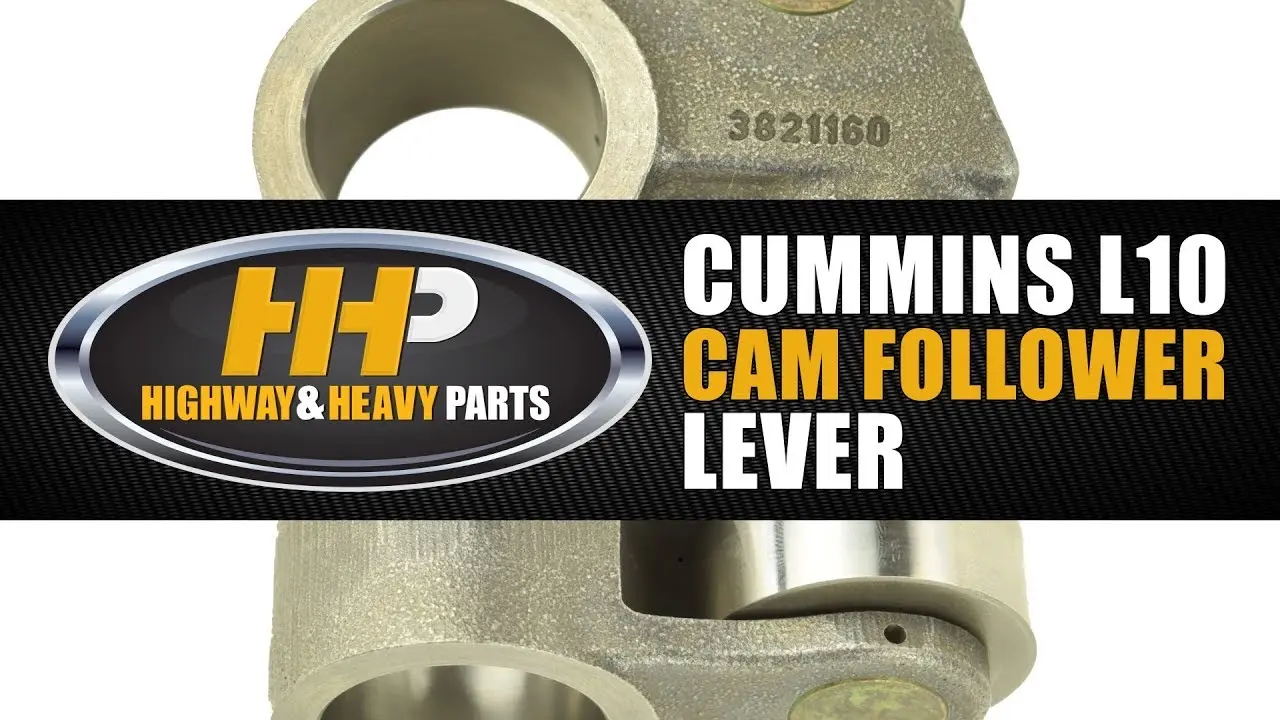
The cam follower in a Cummins L10 is a small component with a very large job.
It directly transfers motion from the camshaft to the valve train.
And when it fails, it doesn’t just affect performance – it can lead to catastrophic engine damage.
What the Cam Lever Follower Actually Does
In the Cummins L10 valve train, the camshaft does not directly actuate the valves.
Instead, motion is transferred through a cam follower (cam lever with roller).
This component:
- Converts Rotational Camshaft Motion Into Linear Movement
- Maintains Correct Valve Timing And Lift
- Reduces Friction Through A Roller Contact Surface
The roller rides directly on the cam lobe, making this a high-load, high-contact stress interface.
Why Roller Followers Are Used Instead of Flat Tappets
The Cummins L10 uses a roller-style follower to reduce friction and wear.
Compared to flat tappets, roller followers:
- Reduce Sliding Friction At The Cam Lobe Interface
- Lower Heat Generation
- Improve Camshaft Longevity
- Maintain More Consistent Valve Timing Over Time
However, this design introduces a different failure risk — roller bearing failure.
Contact Stress and Load Distribution at the Cam Lobe
The cam-to-roller interface experiences extreme contact pressure.
This is a classic Hertzian contact stress scenario, where:
- Load Is Concentrated Over A Small Contact Area
- Surface Hardness And Lubrication Are Critical
- Any Imperfection Leads To Accelerated Wear
Under normal conditions, a hydrodynamic oil film separates the surfaces.
But when lubrication is compromised, metal-to-metal contact occurs.
How Cam Followers Fail
Cam follower failures typically start small but escalate quickly.
Common failure modes include:
- Roller Bearing Wear Or Seizure
- Flat Spots On The Roller Surface
- Spalling Or Pitting Of The Roller
- Misalignment Of The Follower
Once the roller stops rotating:
- Sliding Friction Replaces Rolling Contact
- Heat Increases Rapidly
- Cam Lobe Wear Accelerates
What Happens When the Roller Stops Turning
This is where failure becomes severe.
A seized roller creates:
- Direct Sliding Contact Against The Cam Lobe
- Rapid Material Removal From The Camshaft
- Loss Of Proper Valve Lift Profile
This leads to:
- Incorrect Valve Timing
- Reduced Airflow And Combustion Efficiency
- Increased Stress On Other Valve Train Components
Eventually, this can damage:
- Camshaft Lobes
- Pushrods
- Rocker Arms
Lubrication: The Critical Failure Variable
The cam follower depends entirely on proper lubrication.
Oil must:
- Reach The Roller Bearing
- Maintain A Film Between Cam And Roller
- Remove Heat From The Contact Area
Failure causes related to lubrication include:
- Low Oil Pressure
- Contaminated Oil (Debris Or Soot)
- Oil Starvation During Startup
Without lubrication, failure accelerates rapidly.
Secondary Damage from Cam Follower Failure
A failing cam follower rarely fails alone.
It creates a chain reaction:
- Camshaft Lobe Wear Alters Valve Timing
- Metal Debris Circulates Through The Engine
- Additional Components Experience Accelerated Wear
In severe cases, this can lead to:
- Complete Valve Train Failure
- Engine Tear-Down Requirements
Signs of a Failing Cam Follower
Early detection can prevent major damage.
Watch for:
- Unusual Valve Train Noise (Ticking Or Knocking)
- Loss Of Engine Performance
- Metal Particles In Oil Analysis
- Irregular Valve Operation
These symptoms often appear before catastrophic failure.
Why Inspection During Rebuild Is Critical
Cam followers should always be inspected during an overhaul.
Key checks include:
- Roller Rotation Smoothness
- Surface Condition Of The Roller
- Bearing Integrity
- Alignment And Wear Patterns
Reusing worn components increases the risk of immediate failure.
When to Replace Cam Followers
Replacement is recommended when:
- Roller Wear Or Pitting Is Visible
- Bearing Play Exists
- The Roller Does Not Rotate Freely
- Camshaft Wear Is Present
It is often best practice to replace followers when replacing the camshaft.
Shop Cummins L10 Cam Followers
If you’re rebuilding your engine or diagnosing valve train issues, cam followers should not be overlooked.
At Highway and Heavy Parts:
- Verified Fitment Before Shipping
- High-Quality Components Built For Heavy-Duty Applications
- Fast Shipping (1–2 Days In Most Areas)
- Expert Diesel Support
- Parts And Labor Warranty
Small Component, Major Consequences
The cam follower may seem minor.
But it directly affects:
- Valve Timing
- Engine Efficiency
- Component Longevity
Ignoring it can lead to major repairs.
Protect Your Valve Train System
Proper function depends on correct operation across all components.
👉 Maintain Proper Oil Quality And Pressure
👉 Inspect Valve Train Components During Service
👉 Replace Worn Components Before Failure Occurs
Call 844-304-7688 to speak with a diesel parts specialist
or visit highwayandheavyparts.com to find the right rebuild kit for your engine.
From diagnosis to delivery, Highway and Heavy Parts has your back.


