


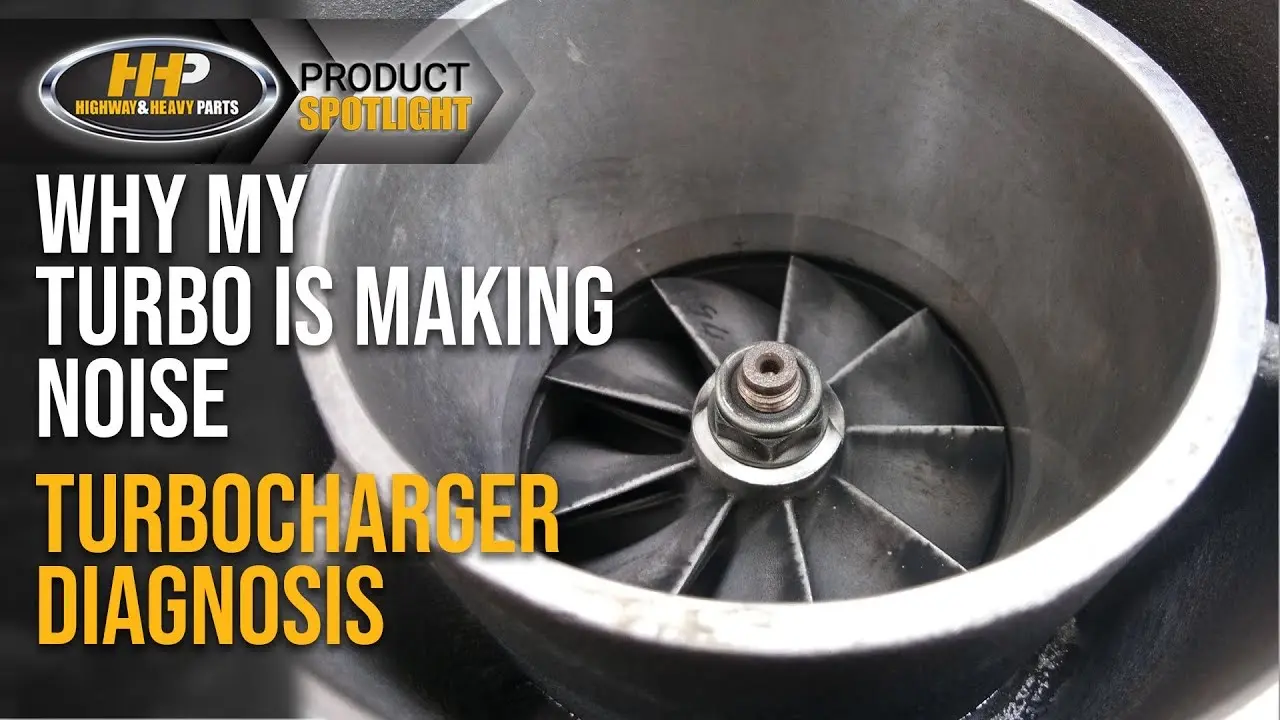
A diesel turbocharger is not silent.
A light whistle, whoosh, or spool sound under load can be completely normal. However, when the sound changes suddenly, gets louder, or comes with smoke, low power, or oil consumption, it can point to a problem in the turbocharger system.
The key is not just hearing the sound.
It is understanding what kind of sound it is, when it happens, and what else the engine is doing at the same time.
Turbocharger noise can come from the turbo itself, but it can also come from boost leaks, exhaust leaks, restricted air filters, fuel system problems, damaged exhaust components, or lubrication issues. Garrett specifically notes that noisy performance, low power, smoke, and oil consumption can come from underlying engine problems—not always the turbocharger itself.
Normal Turbo Whistle or Spool Sound
A normal turbo whistle is usually a smooth, high-pitched sound that increases as the turbocharger builds boost.
You may hear it:
- During acceleration
- While pulling a grade
- When the engine is under load
This sound comes from the compressor wheel speeding up and moving air through the intake system. A light whistle under load is normal on many diesel engines.
The important detail is consistency.
If the sound has always been there and the truck still has normal power, normal smoke levels, and no oil consumption, it is usually not a concern.
Loud Whistling
A louder-than-normal whistle can indicate that air is escaping somewhere in the charge air system.
Common causes include:
- Loose charge air cooler boots
- Cracked charge piping
- Charge air cooler leaks
- Intake connection leaks
A boost leak can force the turbocharger to work harder to meet commanded boost. As a result, the whistle may become louder, sharper, or more noticeable under load. Boost and air leaks are commonly listed as causes of turbo whine or whistle complaints.
If the whistle comes with low power, black smoke, or poor fuel economy, inspect the charge air system before replacing the turbocharger.
Siren-Like Whine
A siren-like whine is more concerning than a normal whistle.
This sound often rises with engine RPM or boost demand and may be heard inside the cab. In many cases, it points to bearing wear, shaft imbalance, wheel damage, oil starvation, or early internal contact. Several turbo diagnostic sources describe a loud siren, high-pitched whine, or drill-like sound as abnormal and worth immediate inspection.
Possible causes include:
- Worn turbo bearings
- Excessive shaft play
- Oil starvation
- Compressor or turbine wheel imbalance
- Foreign object damage
This sound should not be ignored, especially if it is new or getting louder.
Grinding or Scraping
Grinding or scraping is one of the most serious turbocharger sounds.
This can mean the compressor wheel or turbine wheel is contacting the housing. That usually happens when bearing wear, shaft play, imbalance, or internal damage allows the rotating assembly to move outside its normal clearance.
Possible causes include:
- Severe bearing failure
- Excessive shaft play
- Wheel contact with the housing
- Foreign object damage
- Lack of lubrication
Grinding or scraping should be treated as an urgent issue. Multiple turbo failure guides associate scraping, grinding, and metallic sounds with wheel contact or serious internal damage.
If the turbo continues running in this condition, metal debris can enter the intake or exhaust path and cause additional engine damage.
Rattling
A rattle near the turbocharger area can come from the turbo, but it can also come from surrounding components.
Common causes include:
- Loose exhaust clamps
- Loose mounting hardware
- Cracked brackets
- Wastegate or actuator linkage issues
- Internal turbo damage
- Foreign object damage
A rattle that appears only at certain RPMs may be caused by vibration in nearby hardware. A rattle that comes with low boost, smoke, or a change in turbo response should be inspected more seriously.
Do not assume every rattle is a failed turbo. Start with external hardware and work inward.
Hissing
A hissing sound usually points to escaping air or exhaust gas.
If the hiss happens under boost, look for leaks in:
- Charge air cooler piping
- Intake boots
- Clamps
- Charge air cooler core
If the hiss is exhaust-side, look for:
- Exhaust manifold leaks
- Turbo mounting gasket leaks
- Cracked exhaust components
Exhaust leaks may also come with soot trails, exhaust smell, or slower turbo response. Intake-side leaks may come with low boost and excess smoke.
Chuffing, Barking, or Flutter
A chuffing or fluttering sound may point to compressor surge or unstable airflow.
This can happen when pressurized air reverses or pulses through the compressor because airflow conditions are unstable. On a diesel engine, it may show up during throttle changes, sudden load changes, or when airflow is restricted.
Possible causes include:
- Intake restriction
- Incorrect turbo match
- VGT vane control issues
- Sudden boost pressure changes
- Exhaust or boost control problems
This sound should be diagnosed in context. A brief sound during a quick operating change may not mean the same thing as repeated surge under load.
Whooshing
A whoosh during boost or after a load change can be normal depending on the engine and turbo system.
However, a new or excessive whoosh can point to:
- Boost leak
- Loose intake boot
- Charge air cooler leak
- Exhaust leak
- Turbo control issue
The difference between normal and abnormal is whether it is new, louder than usual, or paired with a performance complaint.
Screeching or Squealing
A sharp screech or squeal is not a normal diesel turbo sound.
Possible causes include:
- Exhaust leak at high pressure
- Boost leak through a narrow opening
- Bearing distress
- Wheel contact
- Belt or accessory noise mistaken for turbo noise
Because squealing can come from several areas, isolate the source carefully. If it changes with boost pressure, focus on intake and exhaust leaks. If it changes with RPM regardless of load, check the turbo and accessory drive area.
Sounds That Are Often Misdiagnosed as Turbo Problems
Not every sound near the turbo is caused by the turbocharger.
Before replacing the turbo, check for:
- Air filter restriction
- Charge air cooler leaks
- Exhaust leaks
- Loose clamps or brackets
- Fuel system problems
- Oil supply issues
- Damaged exhaust components
This matters because turbo damage is often a symptom. If the root cause is oil starvation, contamination, a boost leak, or poor fuel delivery, a replacement turbo can fail again.
What to Check First When a Turbo Sound Changes
When a diesel turbocharger starts making a new sound, document what is happening.
Check:
- When the sound occurs: idle, acceleration, deceleration, or under load
- Whether boost pressure is low, high, or unstable
- Whether smoke color changed
- Whether oil consumption increased
- Whether power dropped
- Whether fault codes are present
Then inspect:
- Intake boots and charge air piping
- Charge air cooler
- Exhaust manifold and turbo gaskets
- Oil feed and drain lines
- Air filter and intake restriction
- Turbo shaft play and wheel condition
The sound is only one part of the diagnosis.
Final Takeaway
A diesel turbocharger can make several different sounds, and not every sound means failure.
A light whistle or spool sound can be normal. However, siren-like whining, grinding, scraping, loud hissing, or new fluttering should be inspected quickly.
The most important question is not just: “What does the turbo sound like?”
It is: What changed, when does it happen, and what other symptoms came with it?
That is how you separate normal turbo operation from a developing failure.
Need Help Diagnosing a Turbocharger Issue?
If you’re dealing with a new turbo sound, low boost, smoke, oil consumption, or repeat turbo failure, Highway and Heavy Parts can help you work through the cause before replacing parts.
Call 844-304-7688 or visit highwayandheavyparts.com.
From diagnosis through delivery, we’re Highway and Heavy Parts.


