Keyword Search

Posted on

A Guide to Diesel Anti-Polishing Rings

”APR” stands for “anti-polishing ring.” Other terms for anti-polishing rings include “carbon scraper ring,” “piston cleaning ring,” and “bore polishing ring.” Whichever term you use, it refers to a newer development in Cummins ISX engines where a cylinder liner will have an anti-bore at its top that holds a ring insert.

Continue reading A Guide to Diesel Anti-Polishing Rings
Posted on

Diesel Engine Serial Number Guide: Caterpillar, Cummins, Detroit Diesel & More

Finding the correct engine serial number (ESN) is one of the most important steps when ordering diesel engine parts – but it’s also one of the most confusing. Every manufacturer places their serial numbers in different locations, and many engines have additional arrangement, horsepower, or build codes that matter just as much as the ESN itself.

In this guide, we break down exactly where to find the serial number on popular diesel engines like Caterpillar, Cummins, and Detroit Diesel, so you can identify your engine quickly and get the right parts the first time.

Download this Free ESN Lookup Guide!

How To Find Your Diesel Engine Serial Number

Sometimes it can be hard to find an ESN. Below we’ve collected the general formats your ESNs will have and where you can find them on your engine.

Dataplate on a Caterpillar Engine

Caterpillar Engine Serial Number Location

Most engine serial numbers can be found on the data-plate. As you’ll see later in this article, the data-plates for a certain type of engine can be found in various places depending on the model. However, Caterpillar is pretty consistent, and the data-plate on a Caterpillar engine can be found on the driver’s side of the valve cover.

Caterpillar Engine Serial Number Identification

All Caterpillar ESNs have a similar format. They all begin with a three number/letter prefix, followed by 7 digits. The prefixes will correspond to a particular model. For example, prefixes of 1LW, 2WS, 5DS, 5EK, and 6TS indicate that the engine is a 3406E. For the more popular prefixes, people will refer to their engine by the prefix rather than the model.

You may have heard someone say, “Oh, yeah, my 6NZ runs like a champ.” A 6NZ is a common prefix for a single-turbo C15. Some prefixes’ reputations precede them. For example, a C15 with a prefix of MBN is known as a “Bridge motor” (because it was the bridge engine from the mechanical C15 to the electronic C15 ACERT), and is often heavily critiqued.

Caterpillar ESN Prefixes by Model

3406:

  • 92U

3406B:

  • 2EK
  • 3ZJ
  • 4CK
  • 4MG
  • 5KJ
  • 7FB
  • 8TC

3406C:

  • 3ZJ
  • 4CK
  • 5KJ
  • 8PN

3406E:

  • 1LW
  • 2WS
  • 5DS
  • 5EK
  • 6TS

C7:

  • KAL
  • C7S

C12:

  • 1YN
  • 2KS
  • 8YF
  • 9NS
  • 9SM
  • CPD
  • GEP
  • MBL
  • TME

C15 and C15 ACERT:

  • 6NZ
  • 9NZ
  • B5R
  • BXS
  • EGH
  • JEP
  • KRA
  • MBN
  • MXS
  • NXS
  • RKS
  • SDP
  • TRB

C16:

  • 7CZ

Cummins Engine Serial Number Location

Cummins engine will have the engine serial number on the dataplate; however, the dataplate will be in different locations based on the model of the engine. You can find the location of your dataplate in your owner’s manual, but if you haven’t held on to the physical copy of the manual, then you can access Cummins Quickserve and get a digital copy of the owner’s manual there.

If you don’t have your owner’s manual and don’t have access to Quickserve, we have the locations for the dataplate on some of the more popular engine models.

  • Cummins ISB: either rocker cover or side of the gear housing
  • Cummins ISC and ISL: top side of the gear housing
  • Cummins ISM: rocker housing, towards the fuel pump side of the engine
  • Cummins ISX: top of the rocker lever cover
  • Cummins QSK45 and QSK60: rear of the engine block

Unable to find the dataplate or don’t see your engine model listed? It’s okay. Cummins also stamps the engine serial number into the passenger side of the engine block for all models.

Cummins Engine Serial Number Identification

Cummins engine serial numbers look more like a classic serial number than Caterpillar ESNs do. They are composed only of 8 numbers. They’re in a specific numerical sequence, based on which engine came off the assembly line first. There is no special designation for particular models.

Cummins engines do have something a little unique, called a CPL. This stands for Critical Parts List and, as you can probably guess, is a list of the critical parts of the engine. There are fewer CPLs than ESNs because multiple engines can have the same CPLs. For most major parts of an engine, you can give us a CPL rather than an ESN.

Detroit Diesel Engine Serial Number Location

We could (and did) write an entire blog on where you can find your Detroit Diesel engine serial number. Detroit is notoriously inconsistent when it comes to ESN placement. While the locations you can find your ESN are often consistent across a model, they aren’t always, so don’t panic if you go to look in the spot listed below and don’t find it. It’ll be on the engine somewhere, so just keep looking.

  • Detroit Diesel Series Inline 53: stamped in the upper rear corner of the right side of the block
  • Detroit Diesel Series V53: stamped in the upper right corner of the front of the block
  • Detroit Diesel Series 60: on an option plate with the information located on the left side of the valve cover
  • Detroit Diesel Series Inline 71: printed on the option label, which is attached to the valve cover
  • Detroit Diesel Series V71: stamped into the block in either the left side, upper front corner, or the right side, upper rear corner
  • Detroit Diesel Series V92: stamped on the front side, on either the upper front or upper rear corners
  • Detroit Diesel Series 149: stamped on the rocker cover rail towards the rear

Detroit Diesel Engine Serial Number Identification

Thankfully, the format of Detroit engine serial numbers is more consistent than their location. It can still get rather complicated though. For the sake of keeping this guide simple, were just going to go over the highlights.

  • Detroit Diesel Series Inline 53: ESNs begin with 04D and can be found under the model numbers, which begin with 504.
  • Detroit Diesel Series V53: ESNs begin with a 06D and the model numbers begin with 506.
  • Detroit Diesel Series 60: ESNs begin with 06R and model numbers begin with 606.
  • Detroit Diesel Series Inline 71: ESNs begin with 06A and will be near the model numbers, which begin with 106.
  • Detroit Diesel Series V71: ESNs begin with 08VA and model numbers begin with 708.
  • Detroit Diesel Series V92: ESNs begin with 08VF and model numbers begin with 808.
  • Detroit Diesel Series 149: ESNs start with 12E and model numbers that start with 912.

International/Navistar Engine Serial Number Location

International/Navistar actually keeps the ESN location pretty simple. The engine serial number for International/Navistar engines can be found stamped on a pad on the block. For engines pre-2000 engines, that pad can be found on the left side of the block, just under the head to block parting line. For engines newer than that, the pad is on the right side of the block, between the oil cooler and the top of the block.

For most International/Navistar engines that were built after 1993, you’ll need more than just the engine serial number as well. You will also need the engine model, model year, horsepower rating, and torque rating, which can all be found on the emission label. The emission label can be found on the top of the rocker cover or intake manifold.

International/Navistar Engine Serial Number Identification

International/Navistar engine serial numbers are probably the most informative of all the ESNs for the major OEMs. They have a specific format that will provide the engine model, configuration, application, country of origin, and unit number.

  • The first three (or four, in some cases) digits indicate the engine model. For example, 466 or 570H.
  • The letter after the engine model indicates the configuration; B is for turbo JWAC, D is for naturally aspirated, G is for turbo air to air, H is for HEUI, and T is for turbo engines.
  • The next number and letter combination indicates the application; A2 means a service vehicle and M2 means a truck.
  • The next letter will be the same for all, and is a U, which indicates that the country of origin is the United States.
  • The last seven digits indicate the unit number, which is the part that will be different for each different engine.

The Importance of Diesel Engine Serial Numbers

Long, long ago in a time before electric cars were even conceived, heavy duty diesel engines were first made. These engines were not like mass-produced automotive vehicle engines.

There was no standard Make-Model-Year formula that magically gave all engines with the same model name the exact same parts. No, they were special; each individual engine was different as it came down the conveyor belt.

And apparently the manufacturers didn’t think about what a pain it would be in the future when you need to order parts for repairs.

Because of the lack of foresight, finding parts that correctly fit an engine can be incredibly complicated. Engine serial numbers are important because they are the only guaranteed way to find the exact parts that an engine was built with. Usually, if you’re buying a single part, providing the part number off the old part will also work.

However, if you’re looking to get an engine rebuild kit, we will always ask you for an engine serial number. This might seem excessive, but when it comes to an expensive kit with a lot of parts, we want to make sure you’re getting the right thing. So, whether you’re calling us or using our online quoting tool, be sure to provide your engine serial number.

When calling to order parts, we get some people that want to give us VINs (Vehicle Identification Numbers) instead of ESNs. Unfortunately, a VIN is different from an ESN. We are able to look up some VINs to find their coordinating ESNs, but this is not a guarantee. Depending on your vehicle, you can always use our VIN Decoder Resource Guide.

Anything this didn’t answer for you? Our experienced techs are on hand to answer your questions. Give us a call at 844-304-7688 to get your questions answered!

Related Articles:

HOW TO FIND CUMMINS DIESEL ENGINE SERIAL NUMBERS: LOCATIONS & FORMAT

HOW TO FIND NAVISTAR DIESEL ENGINE SERIAL NUMBERS: LOCATION & PREFIXES

DIESEL ENGINE SERIAL NUMBERS FOR AGRICULTURE ENGINES JOHN DEERE, CATERPILLAR & CUMMINS

Related Videos:
How to Locate Engine Serial Numbers on Caterpillar, John Deere, and Cummins Equipment
 
5 Ways to Improve your Diesel Engine Fuel Economy, Highway and Heavy Parts: Diesel Tech Tips
Short on Time? Take your Quote Online!

We get it- when you need Diesel Engine Parts, time is of the essence. That’s why we’ve developed the HHP Online Quoting System.

Originally Posted November 8, 2017; Edited March 25, 2021

Posted on

How To Install Diesel Fuel Injectors on a Cummins ISX

Odds are, at some point in the life of your diesel engine you’ll need to remove or replace your fuel injectors. But do you know the right way to do this? Master Diesel Mechanic Mike Schrems talked us through how to install diesel fuel injectors in your ISX engine.

Continue reading How To Install Diesel Fuel Injectors on a Cummins ISX
Posted on

What are the Benefits of VGT Turbos? Features & How They Function

There are some great benefits to using a VGT turbocharger in your diesel engine that you might be unaware of. With all of the turbocharger options out there, why pay more for a variable geometry turbo?

Continue reading What are the Benefits of VGT Turbos? Features & How They Function
Posted on

How To Find Cummins Diesel Engine Serial Numbers

In the market for replacement parts for your Cummins diesel engine? It’s important to know your engine serial number to ensure that you’re getting the right fit for your engine.

Continue reading How To Find Cummins Diesel Engine Serial Numbers
Posted on

What Are The Primary Differences Between Cummins Diesel ISX and N14?

Cummins has a history of producing strong, long-lasting diesel engines, including some of the most popular ones for on-highway applications. Two of their engines in particular, the N14 and the ISX, continue to remain popular diesel choices.

Continue reading What Are The Primary Differences Between Cummins Diesel ISX and N14?
Posted on

The 3 Most Common Cummins ISX Issues

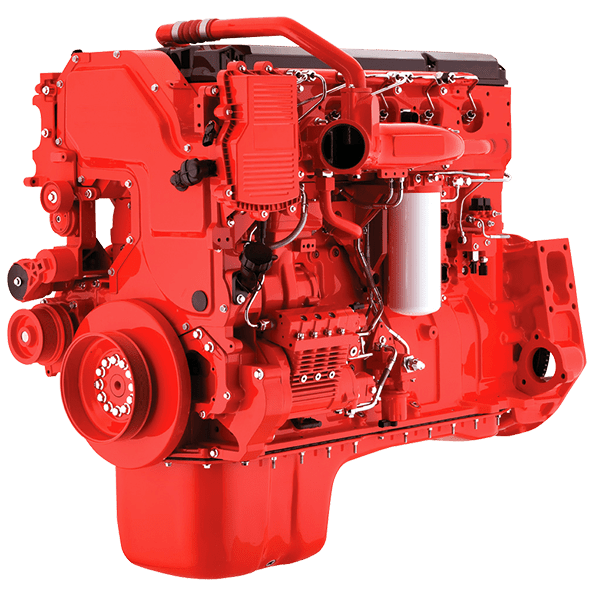
The ISX diesel engine by Cummins is one of the most popular engines on the road today. The first ISX was produced in 1998, as a response to the EPA’s tighter emissions restrictions. It soon replaced the N14, the other workhorse engine produced by Cummins.

Continue reading The 3 Most Common Cummins ISX Issues
Posted on

Diesel Parts Core Charge – What Is It, Why Pay Upfront, How To Return

Considering how common core charges are in the diesel engine industry, a surprising number of our customers ask us that question every day. If you are also one of those people, we’ve put together this handy guide for something you should probably familiarize yourself with if you’re planning to buy replacement parts.

Continue reading Diesel Parts Core Charge – What Is It, Why Pay Upfront, How To Return
Posted on

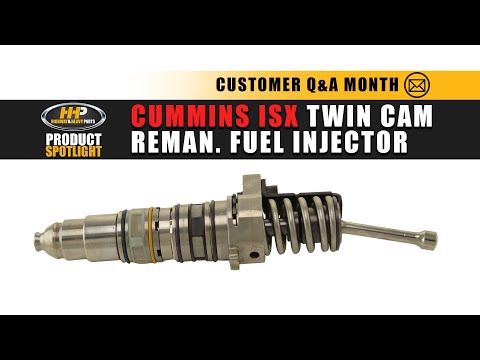
Diesel Cummins ISX Injector, Fuel Injection, Twin Cam ISX, Replacement, Reman Injectors

Cummins ISX Fuel Injectors For Twin Cam ISX! In Stock And Ready To Ship!

Continue reading Diesel Cummins ISX Injector, Fuel Injection, Twin Cam ISX, Replacement, Reman Injectors

Posted on

Cummins ISX Dual Cam Cylinder Head (5658283)

Diagnosing Your ISX Engine Issues

Is your Cummins ISX Dual Cam on the fritz? We can help! A new, replacement cylinder head will prevent the risk of damage and overheating to your engine.

Why the Cylinder Head Is Critical in Your Cummins ISX

The cylinder head is one of the most important components in any Cummins engine. It seals the top of the combustion chamber, manages airflow, and houses critical systems that directly affect power, efficiency, and engine life. When the head begins to wear, crack, or warp, the entire engine’s performance and reliability are at risk.

A properly functioning Cummins cylinder head ensures:

  • Proper Airflow and Combustion: The cylinder head controls how air moves into the cylinders and how exhaust exits. Any restriction, crack, or valve issue disrupts this flow, leading to misfires, low power, excessive smoke, and poor fuel economy.
  • Clean Sealing of the Combustion Chamber : A Cummins engine depends on a perfect seal between the head, valves, and head gasket. If that seal fails, you’ll experience compression loss, coolant intrusion, overheating, and eventually catastrophic damage.
  • Valve Train Precision: The head houses intake and exhaust valves, valve seats, guides, springs, and rocker geometry. Wear in any of these areas affects timing, injector operation, and total combustion efficiency — resulting in ticking noises, rough running, or incomplete fuel burn.
  • Heat Management: Cummins cylinder heads handle extreme temperatures and pressures. Cracks, cooling passage blockages, or warpage can quickly lead to overheating, blown gaskets, and failure of other major components.
  • Total Engine Longevity: A damaged or worn cylinder head puts stress on pistons, rings, bearings, injectors, and the turbocharger. Replacing or remanufacturing a failing head early prevents larger, far more expensive failures down the line.

Common Signs Your Cummins Needs a New Cylinder Head

A failing cylinder head on a Cummins engine can show up in several ways, and catching these symptoms early can prevent major internal damage. Here are the most common warning signs to watch for:

  • Hard Starting or Misfires
  • Coolant Loss or Overheating
  • Excessive White or Blue Smoke
  • Pressurized Cooling System
  • Rough Idle or Poor Fuel Efficiency
  • Ticking, Knocking, or Top-End Noise
  • Oil Contamination

If you notice any of these symptoms, it’s a strong indicator that your cylinder head is no longer sealing, cooling, or controlling airflow the way it should. Addressing the issue early prevents major failures such as piston damage, injector misalignment, overheating, or complete loss of compression. Replacing a failing cylinder head restores performance, protects your bottom end, and keeps your Cummins running reliably for the long haul.

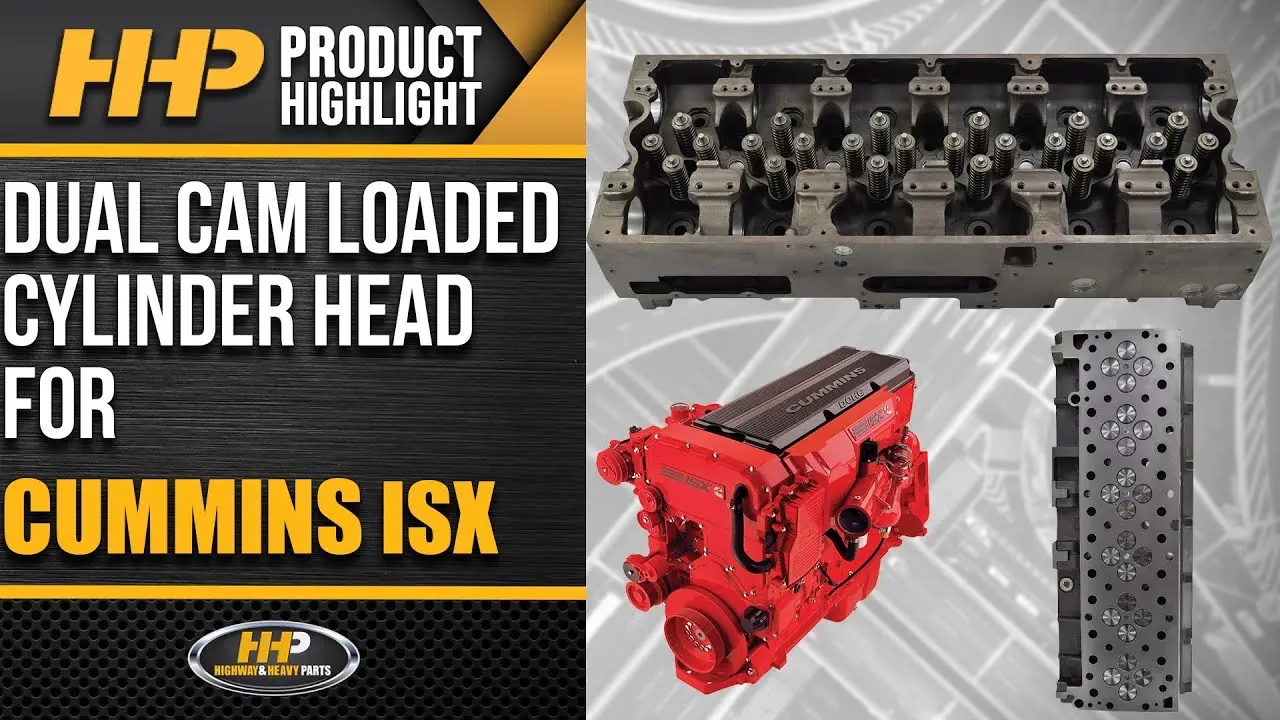
Cummins ISX Dual Cam Cylinder Head (5658283): Built to Perform

We proudly carry the Cummins ISX Dual Cam Cylinder Head (5658283), a direct-fit replacement engineered to meet or exceed OE specifications.

What sets this crankshaft apart:

  • ISO-Certified Manufacturing: Ensures consistency, quality, and reliable performance.
  • Backed by a 2-Year Warranty: You get peace of mind along with premium performance.
  • OE-Spec Design: Built to the original specs for seamless installation – no modifications required.
  • Precision-Balanced Components: Reduces vibration and improves long-term durability at high RPMs.
Cummins ISX, QSX Dual Cam Cylinder Heads From HHP. We Have What You Need!

Common Failure Points Unique to the Cummins ISX Dual Cam

  • Dropped or Loose Valve Seats: One of the most notorious ISX problems. Valve seats can loosen as the head wears, causing loss of compression, misfires, and catastrophic valve-to-piston contact if not addressed.
  • Cracked Injector Bore Areas: The injector bores in the ISX are prone to thermal fatigue, which can cause combustion leakage, injector sealing issues, and hot start problems.
  • Warped or Eroded Fire Rings: The ISX runs extremely high cylinder pressures. Over time, the fire ring sealing surfaces can erode or warp, leading to blow-by, coolant intrusion, and repeated head gasket failures.
  • Camshaft Bore Wear: Because the ISX uses dual overhead cams, any wear in the cam bores affects valve timing, injector timing, and overall top-end synchronization. This often shows up as ticking, misfires, or uneven idle.
  • Broken or Weak Valve Springs: Excessive heat and long service intervals can weaken the valve springs, resulting in valve float under load and long-term damage to rockers, bridges, or cams.
  • Coolant Leaks Through Internal Passages: The long, heavy ISX cylinder head is sensitive to heat cycles. Cracks can form near coolant passages, leading to coolant loss, white smoke, or contamination of the oil.

The Cummins ISX dual cam design is powerful and efficient, but it also has several failure points that are far more common on this engine family than on others. Understanding these weak spots helps diagnose issues early and avoid major internal damage.

Order Your Cummins ISX Dual Cam Cylinder Head Today

Guaranteed for fit and function, HHP parts have the right combination of quality and price with total support from our on-staff ASE-certified technicians. With specialized knowledge, quality products, fast shipping, and unbeatable customer service, HHP has you covered. Order your Cummins ISX Dual Cam Cylinder Head (5658283) today!

Call us at 844-304-7688 or visit highwayandheavyparts.com to order now.

From diagnosis through delivery, we’re Highway and Heavy Parts.

Understanding the ISX Dual Cam System

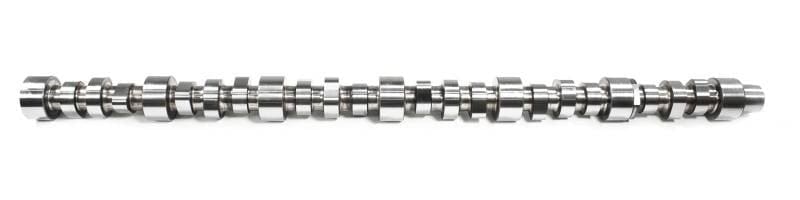
The Cummins ISX Dual Cam represents a significant advancement in diesel engine technology, featuring an innovative dual camshaft design that optimizes both intake and exhaust valve timing. This sophisticated system allows for precise control of valve events, resulting in improved fuel efficiency, reduced emissions, and enhanced overall performance compared to traditional single-cam configurations. The dual cam setup enables independent control of intake and exhaust valve operations, providing engineers with greater flexibility in engine tuning and optimization.

Introduced as part of Cummins’ evolution beyond the legendary N14 engine, the ISX Dual Cam incorporates advanced electronic controls and precision engineering to meet increasingly stringent emission standards while maintaining the durability and reliability that Cummins engines are known for. The dual camshaft configuration requires specialized components and precise maintenance procedures, making quality replacement parts essential for optimal engine performance.

Critical Components and Maintenance Requirements

The complexity of the ISX Dual Cam system demands attention to specific components that are unique to this engine design. Critical parts include the dual camshafts themselves, cam followers, valve bridges, and the intricate timing mechanisms that coordinate the dual cam operation. Additionally, the electronic control systems that manage valve timing require specialized sensors and turbocharger actuators that must meet exact specifications for proper engine operation.

Cylinder Heads and Engine Rebuild Kits

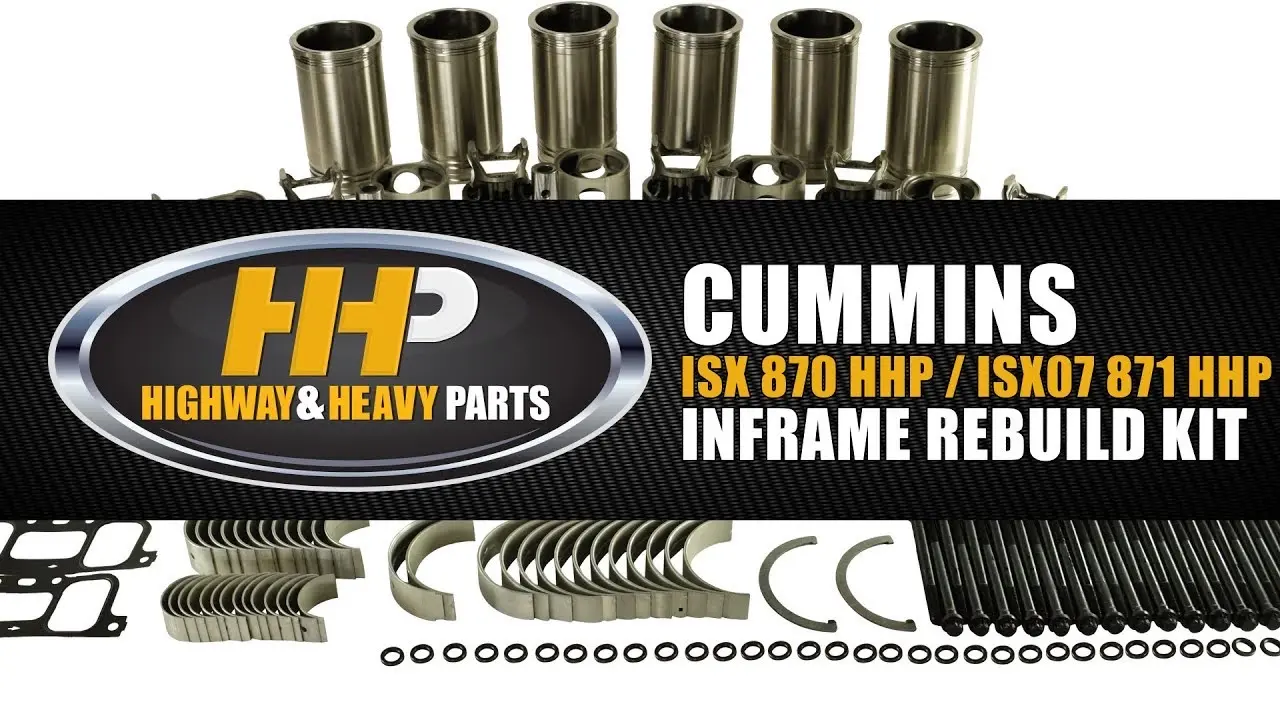
At Highway and Heavy Parts, we specialize in providing complete solutions for ISX Dual Cam maintenance and repair. Our cylinder heads are engineered to meet or exceed OEM specifications, ensuring proper fit and long-lasting performance. We also offer comprehensive engine rebuild kits that include all necessary gaskets, seals, and components for major engine rebuilds.

Expert Support for Your ISX Dual Cam

Our technical team understands the unique requirements of the ISX Dual Cam system and can help you identify the correct parts for your specific application. Whether you need routine maintenance items or major components for a complete engine rebuild, we stock quality parts that keep your ISX Dual Cam running efficiently and reliably.