Posted on

History of Vehicle Emissions Regulations: From Smog Controls to Modern Diesel Standards

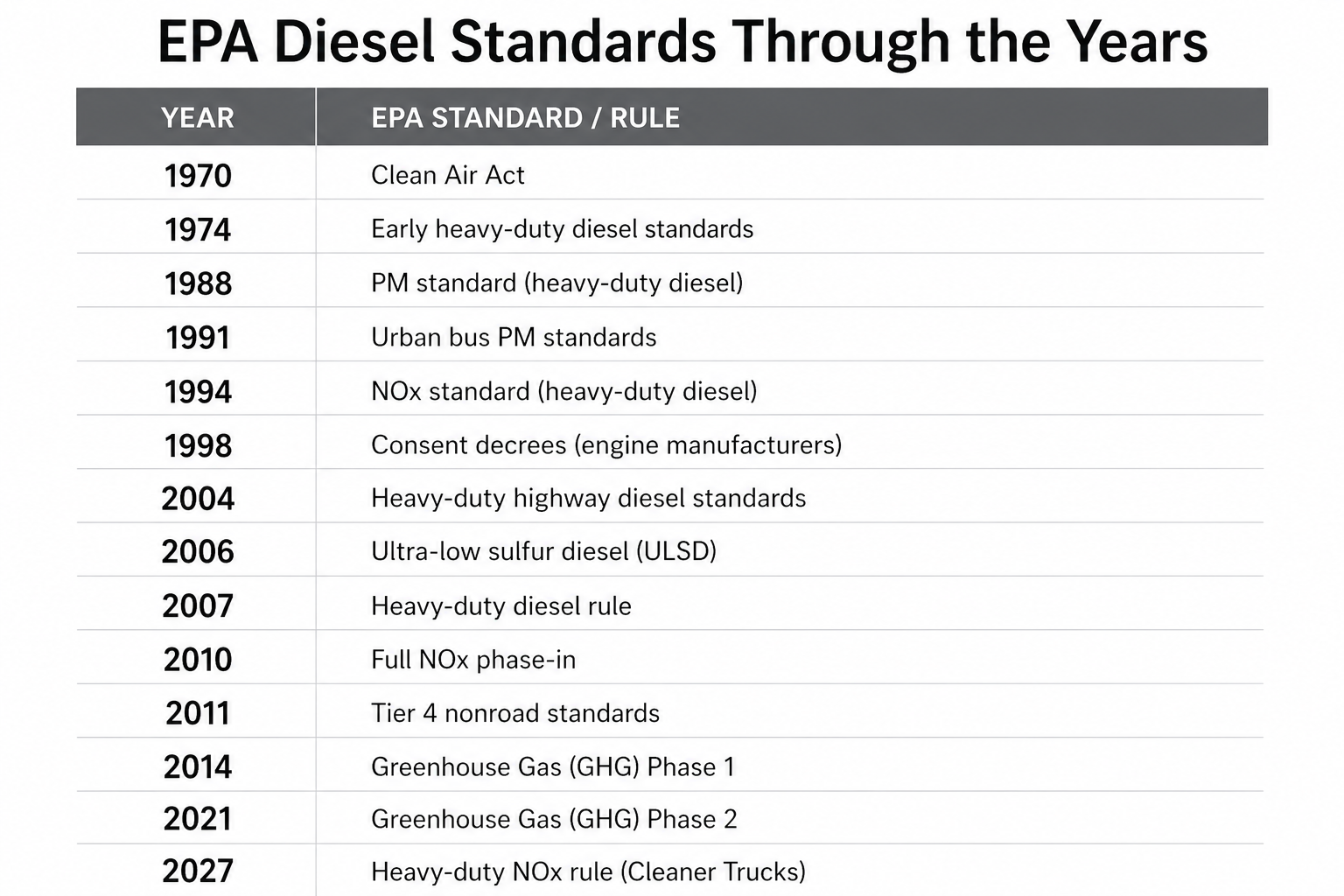
EPA diesel emissions standards timeline chart showing major regulations from 1970 to 2027 including Clean Air Act, ULSD, Tier 4, and NOx rules

Vehicle emissions regulations did not happen all at once.

They developed over decades as engineers, regulators, and manufacturers responded to air quality problems caused by hydrocarbons, carbon monoxide, nitrogen oxides, particulate matter, and later greenhouse gas emissions.

For diesel engines, the biggest changes came when regulations began focusing more heavily on particulate matter, NOx, fuel sulfur levels, and aftertreatment systems.

Continue reading History of Vehicle Emissions Regulations: From Smog Controls to Modern Diesel Standards
Posted on

What Is a 48-Volt Heated Aftertreatment System?

The diesel industry is entering another major emissions transition.

Beginning with EPA 2027 heavy-duty emissions regulations, diesel engines will face some of the strictest nitrogen oxide (NOxNO_x​) standards ever introduced for commercial vehicles.

One of the biggest technologies helping manufacturers meet these standards is the 48-volt heated aftertreatment system.

This system is designed to:

  • Heat emissions components faster
  • Reduce cold-start emissions
  • Maintain catalyst temperature during low-load operation
  • Dramatically reduce NOxNO_x output

Modern diesel engines already rely heavily on aftertreatment systems.

However, EPA 2027 standards require emissions systems to become even more effective during:

  • Cold starts
  • Idling
  • Low-load operation
  • Urban stop-and-go driving

That is where heated aftertreatment systems become important.

Continue reading What Is a 48-Volt Heated Aftertreatment System?