Keyword Search

Posted on

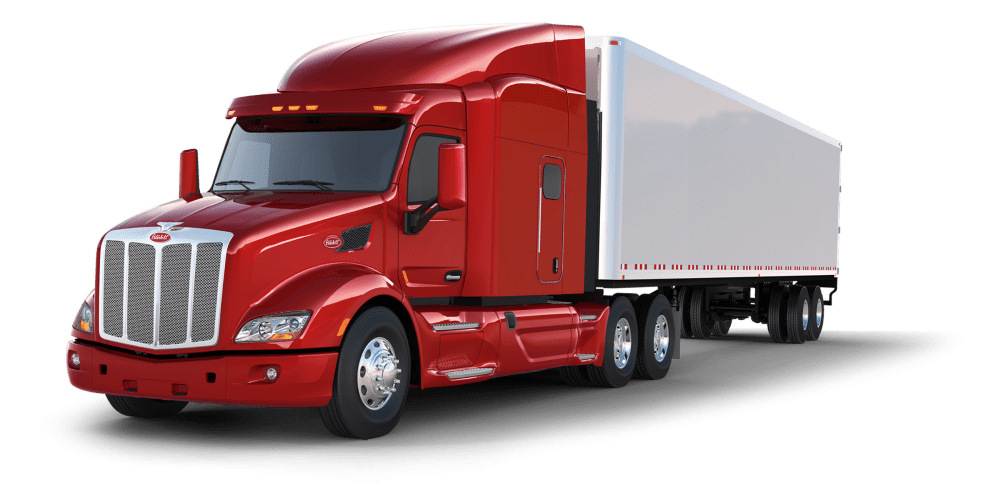
Class 7 vs. Class 8 Trucks: What’s the Difference?

When people talk about heavy-duty commercial trucks, the terms “Class 7” and “Class 8” get used constantly throughout the trucking industry.

The biggest difference comes down to:

  • weight capacity,
  • intended application,
  • drivetrain durability,
  • and overall operating demands.

While both classifications fall into the heavy-duty commercial truck category, Class 7 and Class 8 trucks are designed for very different workloads and operating environments.

Quick Takeaway:
Class 7 trucks are commonly used for regional and vocational applications, while Class 8 trucks are engineered for severe-duty hauling, long-distance transportation, and maximum payload capacity.

Continue reading Class 7 vs. Class 8 Trucks: What’s the Difference?
Posted on

Diesel Cylinder Head and Engine Rebuild Kit Bundle Sale

Cylinder Head and Rebuild Kit Bundle

Highway and Heavy Parts is excited to introduce our new diesel engine parts bundle sales promotion. It includes diesel cylinder heads and diesel engine add-ons for all major heavy-duty truck and equipment manufacturers. If you need a cylinder head for your Cummins, Caterpillar, Detroit Diesel, or other heavy-duty diesel engine, you can get everything you need to do the job right and save some money.

Continue reading Diesel Cylinder Head and Engine Rebuild Kit Bundle Sale
Posted on

The 2026 Truck Driver Shortage: What It Means for Fleets and Equipment Reliability

The U.S. trucking industry is firmly in the spotlight again in 2026—this time for the ongoing shortage of qualified drivers. While much of the conversation focuses on hiring, pay, and working conditions, the driver shortage has direct ripple effects on fleet operations, maintenance schedules, and demand for reliable replacement parts.

When trucks are pushed harder and maintenance windows shrink, the health of your diesel engine becomes even more important.

What’s Causing the Shortage?

Industry research estimates a gap of 60,000 drivers in 2024, with the shortage expected to climb toward 80,000+ drivers by 2026. Whether you run a small operation or a large fleet, fewer available drivers means more pressure to maximize uptime and reduce unplanned repairs.

Several Underlying Causes Include:

  • Aging Workforce: Many experienced truckers are nearing retirement age, and fewer young adults are entering the industry to replace them.
  • Demanding Lifestyle: Long hours, tight schedules, and extended time on the road make it difficult to attract new drivers. The lifestyle isn’t for everyone, and turnover remains high.
  • Compensation Concerns: While wages have increased in many regions, some drivers still feel pay doesn’t fully reflect the demands and responsibilities of the job. This has slowed recruitment and retention efforts across the country.
  • Training Barriers: Earning a CDL requires time and financial investment. For many potential drivers, the upfront cost becomes a barrier to entering the industry.
  • Cost of Diesel Engine Maintenance: Owner-operators face rising expenses – from insurance to diesel fuel to parts and repairs. For some, the increasing cost of maintaining a diesel engine makes staying in the industry difficult.

How the Driver Shortage Impacts Fleets and Diesel Maintenance

The shortage doesn’t just affect staffing – it directly affects how fleets run their equipment:

  • Increased Pressure on Existing Trucks: With fewer drivers available, fleets need every truck to stay operational. Trucks get pushed harder, and maintenance schedules become tighter or delayed.
  • Higher Cost of Downtime: When a truck is down, and there isn’t another driver waiting to take its place, productivity drops. Unplanned engine failure becomes even more costly in a workforce shortage environment.
  • Shift Toward Reliability Over Cost: Fleets are becoming less willing to gamble on low-quality parts. Instead, they look for durable, high-quality components that reduce the risk of repeat failures.
  • Urgency for Faster Repairs: With limited driver availability, downtime isn’t just a scheduling inconvenience—it’s a financial hit. Fleets depend heavily on suppliers who offer quick shipping, dependable stock, and accurate lead times.
  • Preventive Maintenance Gains Importance: Preventive maintenance is becoming a key strategy to offset risk. Replacing worn gaskets, bearings, and other engine internals before failure is more cost-effective than dealing with an unexpected breakdown.

Navigating the Road Ahead: Potential Solutions

While the driver shortage poses real challenges, there are promising steps being taken across the industry to attract and retain qualified drivers – and to support the fleets that depend on them.

  1. Improved Working Conditions: Many fleets are investing in better pay structures, improved benefits, safer equipment, and more predictable home-time schedules. These upgrades help reduce turnover and make driving a more sustainable long-term career.
  2. Apprenticeship & Training Programs: Streamlined CDL training, paid apprenticeships, and on-the-job mentorship are becoming more common. By reducing the upfront cost and complexity of obtaining a CDL, companies are opening the door for younger drivers who may not have considered trucking as a career.
  3. Government Incentives: Tax credits, grant-funded training programs, and federal/state workforce initiatives are helping offset training costs for new drivers. These incentives make it easier for recruits to enter the industry and for fleets to sponsor their growth.
  4. Affordable, Reliable Maintenance Options: One of the biggest barriers for owner-operators—and a major cost driver for fleets – is the rising price of equipment and repairs. Access to high-quality, affordable diesel engine components plays a critical role in keeping trucks on the road without overwhelming maintenance budgets.
  5. Remanufactured and Premium Aftermarket Engine Parts: We offer a cost-effective alternative to OEM components while still delivering dependable performance. For many fleets, these options help reduce repair costs, extend equipment life, and make the total cost of ownership more manageable – especially when every operational dollar counts.

Order from Highway and Heavy Parts Today

At Highway and Heavy Parts, we understand how the driver shortage changes the demands on your equipment. That’s why we focus on:

  • High-quality internal engine components that meet or exceed OEM specifications.
  • Fast, reliable shipping from multiple distribution centers.
  • Expert-level technical support to help diagnose issues and choose the right parts.
  • Stock availability to minimize downtime and keep trucks moving.
  • Warranty-backed parts for peace of mind in a high-pressure operating environment.

Guaranteed for fit and function, HHP parts have the right combination of quality and price with total support from our on-staff ASE-certified technicians. With specialized knowledge, quality products, fast shipping, and unbeatable customer service, HHP has you covered.

Call 844-304-7688 or visit highwayandheavyparts.com to place your order today.

From diagnosis through delivery, we’re Highway and Heavy Parts.

Posted on

Black Series Lab Episode 4: Ring Tension — The Invisible Spec That Determines Engine Life

Two piston rings can look identical.

They can share the same OEM part number, measure the same dimensionally, and appear interchangeable during installation.

But one may have the correct radial tension for the application, while the other may not.

That difference is impossible to see by eye. You cannot feel it by hand. You cannot check it with a standard caliper or micrometer.

Yet ring tension can determine whether a rebuilt diesel engine seals properly, breaks in correctly, controls oil, and avoids excessive blow-by.

That is why Episode 4 of the Black Series Lab focuses on one of the most overlooked specifications in engine rebuilding: piston ring tension.

HHP Quick Takeaway

Piston ring tension is one of the most important specifications you cannot see. If ring tension is too low, the rings may not maintain proper contact with the cylinder liner during break-in, leading to glazing, blow-by, oil consumption, and poor combustion sealing.
Continue reading Black Series Lab Episode 4: Ring Tension — The Invisible Spec That Determines Engine Life
Posted on

Who Is the Black Series Actually For?

Most diesel engine components are marketed the same way.

They’re advertised as the best solution for every truck, every fleet, every rebuild, and every application.

The problem is that real-world diesel engines do not all operate under the same conditions.

A long-haul owner-operator running hundreds of thousands of highway miles has different priorities than a local delivery fleet. A repair shop performing commercial overhauls has different concerns than someone chasing maximum horsepower.

Black Series was not designed to be a one-size-fits-all product line. In fact, the Black Series is not for everyone.

The better question is: Who was it actually designed for?


Not Every Diesel Engine Has the Same Job

Heavy-duty diesel engines live very different lives.

Some spend their careers pulling loads across the country.

Others spend their days making short trips, sitting in traffic, and starting cold multiple times per day.

Some engines are rebuilt by repair shops whose reputation depends on every overhaul performing exactly as expected.

When operating conditions change, the stresses placed on engine components change as well.

That means the ideal solution for one customer may not be the ideal solution for another.

The Black Series was developed around one specific goal: Long-term durability and reliability in demanding commercial diesel applications.

The Same Engine Can Live Very Different Lives

A long-haul truck, local delivery vehicle, vocational truck, and performance build may all use similar engine platforms—but their operating conditions, maintenance requirements, and component priorities can be completely different.


The High-Mileage Owner-Operator

If you’re planning to keep your truck for the long haul, Black Series was built with you in mind.

Many owner-operators are not looking for the highest horsepower number possible.

They’re looking for:

  • Consistent performance
  • Long component life
  • Reduced downtime
  • Fewer unexpected repairs
  • Better long-term value

For these operators, engine components are an investment.

Every repair decision impacts future operating costs, maintenance expenses, and vehicle availability.

The Black Series focuses on durability enhancements and component consistency designed to support long service intervals and dependable operation.

Good Fit: Owner-operators planning to keep their truck for hundreds of thousands of miles and prioritizing long-term reliability over maximum horsepower.

The Fleet Fighting Downtime

Fleet operators face a different challenge.

Many delivery and vocational fleets experience:

  • Frequent cold starts
  • Stop-and-go operation
  • Repeated thermal cycling
  • Long idle periods
  • High annual mileage

These operating conditions place significant stress on engine components.

For fleets, a truck sitting in a repair bay is often more expensive than the replacement part itself.

The Black Series was engineered to support the kinds of operating environments where uptime matters and component durability directly affects operating costs.


The Repair Shop Protecting Its Reputation

Repair facilities often face a challenge that many truck owners never see.

When a component fails, the repair shop may be the first phone call the customer makes.

That means every overhaul carries risk.

A comeback does not just cost labor: it affects customer confidence, future business, and reputation.

That is why many repair facilities prioritize consistency and repeatable results.

Black Series components were developed for customers who value predictable performance and application-specific reliability.

Black Series Philosophy

The goal is not to build a component for every possible application. The goal is to engineer components that perform consistently in the environments they were specifically designed to support.


Who Is Black Series NOT For?

This may be the most important part of the conversation.

If your primary goal is building the highest horsepower truck possible, Black Series may not be the solution you’re looking for.

Performance-focused applications often prioritize:

  • Maximum fueling
  • Elevated cylinder pressures
  • Competition use
  • Extreme performance targets

Those applications introduce operating conditions that differ significantly from the commercial environments Black Series was engineered to support.

That does not make one approach better than the other.

It simply means different goals require different engineering decisions.

Black Series was designed around reliability, longevity, consistency, and uptime—not maximum horsepower.


Why Application Matters More Than Marketing

One of the most common mistakes in the diesel industry is selecting parts based on marketing claims instead of operating conditions.

Before selecting any major engine component, ask:

  • How is the truck actually used?
  • How long will it be kept?
  • What does downtime cost?
  • Is reliability more important than horsepower?
  • Is this a work truck or a performance build?

The answers often point toward the correct solution.


Caterpillar C15 Premium Stage 4 Black Series Cylinder Head

Caterpillar C15 Premium Stage 4 Black Series Cylinder Head

HHP Price
$4,997.15

Designed to support combustion sealing stability, thermal stability, casting integrity, and long-term durability in high-load diesel environments.

View Product
C15 ACERT 3406E Black Series Cylinder Head

Caterpillar C15 ACERT, 3406E Black Series Cylinder Head

HHP Price
$4,340.13

Engineered for durability, thermal stability, and long-term sealing performance in severe-duty diesel applications.

View Product
Black Series Oil Pump for Caterpillar C15 ACERT 3406E

Caterpillar C15 Acert, 3406E Black Series Oil Pump

HHP Price
$661.94

Designed to support lubrication stability and oil delivery consistency in high-load diesel engine environments.

View Product

Talk to an Engineer Before You Decide

The best component is not always the most expensive one.

In addition, it is not always the highest-performance option either.

The best component is the one that matches the application’s actual operating environment.

That is why Highway and Heavy Parts takes an application-based approach to recommendations rather than assuming every customer needs the same solution.

Whether you’re managing a fleet, rebuilding a work truck, or planning a long-term overhaul, understanding the duty cycle is the first step toward selecting the right components.


Final Takeaway

The Black Series was never intended to be a universal solution for every diesel application.

It was engineered for owner-operators focused on longevity, fleets focused on uptime, and repair facilities focused on delivering reliable, repeatable results.

If your goal is long-term durability, consistent performance, and reduced downtime, Black Series may be exactly what you’re looking for.

Is Black Series Right for You?

✓ You prioritize reliability over maximum horsepower

✓ Downtime costs you money

✓ You plan to keep the truck long-term

✓ You want consistent performance over extended service intervals

✓ You view engine components as long-term investments

Talk to one of our ASE-Certified Reps if you’re unsure whether Black Series is the right fit for your application.

Call 844-304-7688 or visit highwayandheavyparts.com/black-series to discuss your application with our team.

From diagnosis through delivery, we’re Highway and Heavy Parts.

Posted on

Major Diesel Engine Manufacturers Around the World

If you work around diesel engines long enough, you’ll start to recognize the same names.

Across trucking, construction, agriculture, marine, and power generation, a group of manufacturers has built engines designed to handle load, heat, and long hours.

This guide is a simple overview of the major diesel engine manufacturers around the world – what they build and where you’ll see them.

Cummins Inc. (United States)

Cummins produces diesel engines for on-highway trucks, industrial equipment, and power generation.

You’ll commonly see them in:

  • Heavy-duty trucks
  • Medium-duty applications
  • Generators and industrial equipment

They are widely used due to broad support and application range.


Caterpillar Inc. (United States)

Caterpillar engines are built for high-load applications like construction, mining, and marine.

You’ll find them in:

  • Construction equipment
  • Mining operations
  • Marine vessels
  • Industrial application

These engines are known for durability in demanding environments.


Detroit Diesel (United States)

Detroit Diesel focuses on on-highway truck engines.

You’ll find them in:

  • Long-haul trucks
  • Fleet operations
  • Freightliner applications

They are designed for consistent highway performance and emissions integration.


Volvo Group (Sweden)

Volvo builds diesel engines for trucks, construction equipment, and marine use.

They also produce engines for:

Their engines focus on integrated systems and efficiency across applications.


Scania (Sweden)

Scania produces diesel engines for trucks, industrial equipment, and power generation.

They are known for:

  • Efficient engine design
  • Strong performance in commercial transport

FPT Industrial (Italy)

FPT Industrial manufactures diesel engines for:

  • On-road trucks
  • Off-road equipment
  • Marine and power generation

They focus on multi-application engine platforms.


Deutz AG (Germany)

Deutz specializes in compact diesel engines used in:

  • Construction equipment
  • Agricultural machinery
  • Material handling

Their engines are known for simple, durable designs.


Rolls-Royce Power Systems (Germany)

MTU engines are used in high-performance applications like:

  • Marine vessels
  • Military equipment
  • Power generation

They are built for continuous operation under heavy load.


Mitsubishi Heavy Industries (Japan)

Mitsubishi produces diesel engines for:

  • Industrial equipment
  • Marine systems
  • Power generation

Their engines are built for long-duration operation.


Yanmar Co., Ltd. (Japan)

Yanmar specializes in smaller diesel engines used in:

  • Agricultural equipment
  • Compact machinery
  • Marine applications

They focus on efficiency and reliability in smaller platforms.


Kubota Corporation (Japan)

Kubota builds compact diesel engines for:

  • Construction equipment
  • Utility vehicles
  • Agricultural machinery

They are widely used in smaller equipment applications.


Isuzu Motors (Japan)

Isuzu produces diesel engines for:

  • Medium-duty trucks
  • Industrial applications

They are known for reliable commercial engine platforms.


Hino Motors (Japan)

Hino manufactures diesel engines for:

  • Commercial trucks
  • Fleet vehicles

They are commonly used in regional and medium-duty transport.


Perkins Engines Company Limited (United Kingdom)

Perkins engines are used in:

  • Agriculture
  • Construction
  • Power generation

They are known for reliable industrial engine platforms.


John Deere Power Systems (United States)

John Deere produces diesel engines for:

  • Agricultural equipment
  • Construction machinery
  • Forestry and industrial applications

They focus on application-specific engine performance.


Komatsu (Japan)

Komatsu builds diesel engines used in:

  • Construction equipment
  • Mining machinery

These engines are designed for heavy-duty off-highway use.


Liebherr (Germany/Switzerland)

Liebherr produces diesel engines for:

  • Mining
  • Construction
  • Cranes and industrial equipment

They focus on high-load, specialized applications.


What All These Manufacturers Have in Common

No matter the size or application, these engines are built around the same fundamentals:

  • Durability Under Load
  • Thermal Management
  • Fuel System Precision
  • Long Service Life

The design may change: but the goal stays the same:

👉 Keep equipment running reliably in real working conditions.


Why This Matters

Knowing the manufacturer helps you understand:

  • How the engine is designed
  • What systems it uses
  • Where problems are likely to show up

Because the same issue – like loss of power or overheating – can have different causes depending on the engine platform.


Final Takeaway

There’s no single “best” diesel engine manufacturer.

Each one is built for a specific purpose.

What matters is:

  • Using the right engine for the job
  • Maintaining it properly
  • Diagnosing problems based on how it was designed

Because in diesel engines, reliability comes down to understanding the system – not just the name on it.


Need Help Identifying or Diagnosing Your Engine?

If you’re working on a diesel engine and need help figuring out:

  • What platform you’re dealing with
  • Common issues
  • The right parts

Visit highwayandheavyparts.com
Or call 844-304-7688 to speak with a diesel parts specialist

From diagnosis through delivery, we’re Highway and Heavy Parts.

Posted on

Worst Truck Bottlenecks in the U.S. (2026 Guide)

Traffic congestion is one of the most consistent challenges in long-haul trucking.

For drivers and fleets, bottlenecks do more than slow traffic – they impact:

  • Delivery schedules
  • Fuel consumption
  • Driver fatigue
  • Overall operating costs

Each year, certain locations consistently rank among the most congested freight corridors in the United States.

Below are some of the most significant truck bottlenecks and high-congestion areas in 2026, along with why they create problems for heavy-duty traffic.

Continue reading Worst Truck Bottlenecks in the U.S. (2026 Guide)
Posted on

Dinex Emission: The Solution to Diesel Pollution

Dinex Emission is a company that has been dedicated to helping diesel operators meet the high standards of the EPA for a very long time. Though the EPA’s goal is to reduce the emissions of dangerous gasses into the air, their restrictions can often make transporting goods, completing construction projects, and harvesting large crops more difficult. As an expert in the field of diesel emissions control, Dinex has long been the solution to this obstacle.

Continue reading Dinex Emission: The Solution to Diesel Pollution
Posted on

Increase Profits With Remanufactured Diesel Fuel Pumps from HHP!

When your engine is down, we know you want to get it back up and running as soon as possible. Highway & Heavy Parts has you covered! We’ve got the best quality parts at the best prices to get your engine performing like it should, saving you time and money!

Continue reading Increase Profits With Remanufactured Diesel Fuel Pumps from HHP!