Keyword Search

Posted on

Common Case/New Holland Diesel Engine Problems

Case/New Holland diesel engines – powered largely by FPT Industrial platforms – are widely used across agriculture and heavy equipment.

You’ll see them in:

  • Combines
  • Tractors
  • Construction equipment
  • Industrial applications

Engines like the 8.7L and 12.9L platforms are built for demanding environments, but like any diesel engine under load, they have common failure points.

Understanding these issues early can help prevent downtime, repeat failures, and major engine damage.

Continue reading Common Case/New Holland Diesel Engine Problems
Posted on

Perkins Engine Rebuild: Why the Crankshaft Won’t Turn After Assembly

You finish a Perkins engine rebuild, go to rotate the crankshaft. And it won’t move.

Or worse, it turns slightly and then binds.

This is one of the most frustrating problems after a rebuild, and it almost always comes down to clearance, alignment, or assembly issues.

If a crankshaft won’t turn freely after assembly, something is wrong. There is no “break-in” that will fix it.

Quick Answer: Why the Crankshaft Won’t Turn

  • Incorrect bearing clearances
  • Improper crankshaft machining
  • Main cap or rod cap misalignment
  • Thrust bearing installation issues
  • Debris or contamination during assembly
  • Incorrect torque sequence or values

Every one of these directly affects how the crankshaft rotates inside the block.


What “Normal” Should Feel Like

Quick takeaway: A properly assembled crankshaft should rotate smoothly with consistent resistance.

With:

  • Bearings installed
  • Caps torqued to spec
  • No pistons installed

You should be able to rotate the crankshaft by hand using a breaker bar. If you feel:

  • Tight spots
  • Binding
  • Uneven resistance

That indicates a mechanical issue: not normal assembly friction.


1. Incorrect Bearing Clearance (Most Common Cause)

Quick takeaway: Too little clearance will lock the crankshaft.

Diesel engines like Perkins rely on precise oil clearance between:

  • Crankshaft journals
  • Main and rod bearings

Typical oil clearance ranges for many Perkins engines:

  • ~0.0015″ to 0.0030″

If clearance is too tight:

  • Oil film cannot form
  • Metal-to-metal contact increases
  • Crankshaft binds or locks

This often happens when:

  • Bearings are mismatched
  • Journals are machined incorrectly
  • Clearances are not verified with plastigage or micrometers

2. Improper Crankshaft Machining

Crankshaft machining must be exact.

Common issues include:

  • Incorrect journal sizing
  • Out-of-round journals
  • Improper surface finish
  • Incorrect fillet radius after grinding

The fillet radius (the transition between journal and crank web) is critical.

If it is not properly finished:

  • Stress concentration increases
  • Bearing fit can be affected
  • Rotation can become restricted

In heavy-duty diesel applications, crankshafts are often:

  • Precision-ground
  • Sometimes shot-peened for durability

Crankshaft condition is just as important as machining accuracy. Learn more about what causes crankshaft damage in our guide on the four main causes of a bent diesel crankshaft: Bent Diesel Crankshaft Guide


3. Main Bearing Cap Misalignment

Quick takeaway: Main caps must be installed in the correct position and orientation.

Each main cap is:

  • Line-bored with the block
  • Matched to a specific position

If caps are:

  • Installed in the wrong location
  • Installed backwards
  • Torqued unevenly

This can:

  • Distort the crank bore
  • Pinch the crankshaft
  • Cause binding

Even slight misalignment can prevent rotation.


4. Thrust Bearing Installation Issues

The thrust bearing controls:

  • Crankshaft end play (forward/backward movement)

If installed incorrectly:

  • The crankshaft can bind when torqued

Common mistakes:

  • Thrust bearing installed backwards
  • Improper seating
  • End play not checked

Typical end play must be within spec—too tight and the crankshaft will not rotate freely.


5. Debris or Contamination During Assembly

Quick takeaway: Even small debris can lock a crankshaft.

After machining:

  • Metal shavings can remain in oil passages
  • Dirt or lint can contaminate surfaces

If debris gets between:

  • Bearing and journal
  • Bearing and cap

It can:

  • Reduce clearance
  • Create high spots
  • Cause immediate binding

This is why thorough cleaning after machining is critical.


6. Incorrect Torque Sequence or Values

Main caps and rod caps must be:

  • Torqued in sequence
  • Torqued to specification

If not:

  • The crankshaft bore can distort
  • Bearings can be unevenly loaded

This creates:

  • Tight spots during rotation
  • Inconsistent resistance

7. Rear Main Seal and Housing Issues (Perkins-Specific)

Some Perkins engines, such as the 4.108, use:

  • Rope-style rear main seals
  • Two-piece seal housings

If installed incorrectly:

  • The seal can drag on the crankshaft
  • Housing misalignment can create resistance

Common issues:

  • Seal trimmed incorrectly
  • Seal packed too tightly
  • Housing sealed improperly

This can make the crankshaft feel tight even if bearings are correct.


8. Connecting Rod Installation Problems

Once pistons and rods are installed, additional issues can appear:

  • Rod caps installed incorrectly
  • Bearing shells misaligned
  • Rods not properly sized

This can:

  • Add resistance
  • Cause binding at specific rotation points

How to Diagnose a Crankshaft That Won’t Turn

Quick takeaway: Isolate the problem step-by-step.

1. Remove Pistons and Rods

  • Check crank rotation with only main bearings installed

2. Check Each Main Cap Individually

  • Torque one cap at a time
  • Rotate crank after each step

3. Measure Bearing Clearance

  • Use plastigage or micrometers
  • Verify against spec

4. Check Crankshaft End Play

  • Verify thrust bearing installation
  • Measure with dial indicator

5. Inspect for Debris

  • Clean all surfaces thoroughly
  • Check oil passages

This Is a Precision Problem

We see this often:

The parts are new, but the system isn’t correct.

A crankshaft that won’t turn is not a defective part issue.
It’s almost always:

  • Machining
  • Measurement
  • Or assembly accuracy

Diesel engines require tight tolerances. Small errors create big problems.


Final Thoughts

If your Perkins engine crankshaft won’t turn after a rebuild, stop immediately.

Do not force it.

Binding is a sign that:

  • Clearances are incorrect
  • Components are misaligned
  • Or something was assembled improperly

Fixing the issue now prevents:

  • Bearing failure
  • Crankshaft damage
  • Complete engine failure

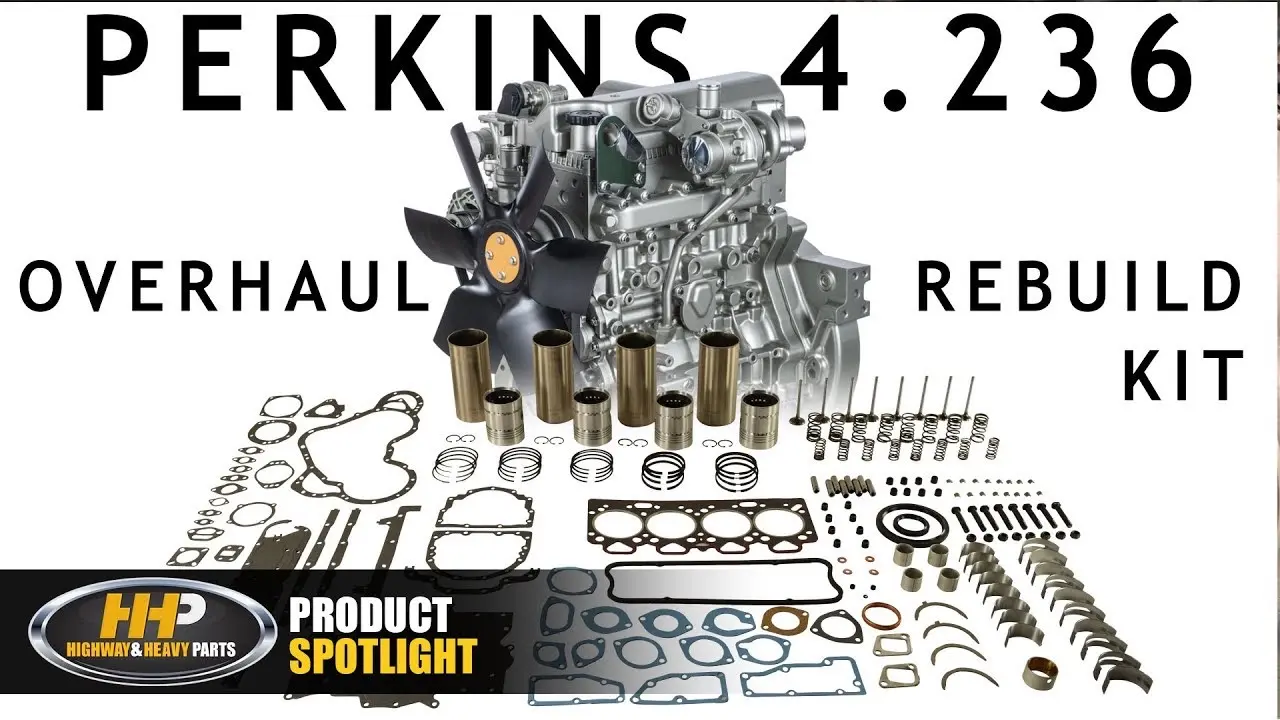
Browse our Perkins engine rebuild kits HERE

Or call 844-304-7688 to speak with a diesel expert.

From diagnosis through delivery, we’re Highway and Heavy Parts.

Posted on

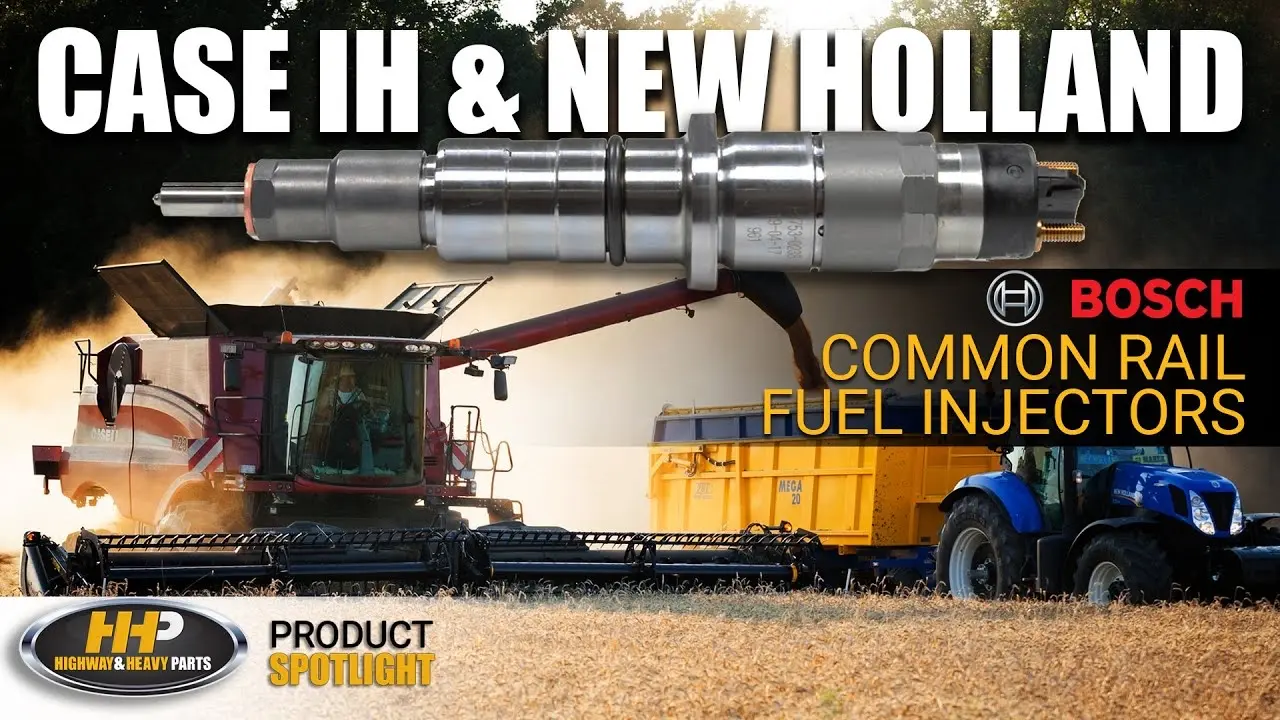
Product Spotlight: Case and New Holland Diesel Fuel Injectors

Agricultural equipment is perhaps the most critical machinery in use today, directly providing for someone’s livelihood.  Properly functioning diesel fuel injectors for your Case or New Holland farm equipment are just as important.

Continue reading Product Spotlight: Case and New Holland Diesel Fuel Injectors
Posted on

Keep Your Vessel Running Strong with Marine Diesel Parts from Highway and Heavy Parts

Most people know Highway and Heavy Parts for our over-the-road diesel expertise — but what many customers don’t realize is that we also supply a full line of marine-rated diesel engine parts for commercial vessels, charter fleets, fishing boats, and recreational boats across the country.

From Caterpillar Marine to Cummins Marine, Detroit Diesel Marine, John Deere Marine, and more, we carry high-quality replacement parts engineered to survive the extreme demands of marine environments: saltwater exposure, constant load, high heat, and long duty cycles.

Whether you’re keeping a single vessel on the water or maintaining an entire fleet, Highway and Heavy Parts has the reliable components you need – backed by expert support, fast shipping, and OEM-level performance.

And below, you’ll find direct links to our most popular marine-specific parts currently available.

Continue reading Keep Your Vessel Running Strong with Marine Diesel Parts from Highway and Heavy Parts
Posted on

Mack Engine Serial Numbers

Mack engines have long meant durability and strength just look at their bulldog mascot. They were founded in 1900, originally as the Mack Brothers Company. They are now owned by Volvo, but through their long history they’ve produced engines that remain popular with many operators.

Continue reading Mack Engine Serial Numbers
Posted on

Yanmar Engine Serial Numbers

Originally founded in Japan in 1912, Yanmar is now a global company, spanning across Europe and America. They began by producing gasoline engines, but the company now specializes in diesel engines, with a particular focus on marine applications.

Continue reading Yanmar Engine Serial Numbers
Posted on

Perkins Engine Serial Numbers

Founded in the early 20th century, Perkins has long produced diesel engines for various industries. They sought to change diesel engines from a slow-moving working engine to a high-speed, high-performance workhorse. They succeeded. At first they produced engines for agricultural applications, but their engines can be found in marine equipment, industrial, construction, and more.

Continue reading Perkins Engine Serial Numbers
Posted on

Case IH Sprayer Pump Pressure Issues (Common Causes and How to Diagnose Them)

If you’re running a Case IH sprayer and dealing with pressure problems, you’re not alone.

Loss of pressure, inconsistent spray patterns, or pressure that won’t hold under load are some of the most common issues operators report – especially in models like the 4440 and 3340.

These problems are rarely isolated.

👉 Pump pressure issues are usually a symptom of a larger system problem.

Understanding where to look first can save time, prevent part swapping, and keep your equipment running during critical windows.

Continue reading Case IH Sprayer Pump Pressure Issues (Common Causes and How to Diagnose Them)
Posted on

Volvo D13 / Mack MP8 Turbo Overspeed Failure: What Causes It And Why Replacing The Turbo Isn’t Enough

Turbocharger failure on a Volvo D13 or Mack MP8 engine isn’t always caused by wear – it’s often the result of turbo overspeed conditions driven by VGT control issues, exhaust imbalance, or air system faults.

In many cases, the turbo fails because it was forced to operate outside of its design limits – not because the turbo itself was defective.

Understanding what causes turbo overspeed is critical to preventing repeat failures.

Continue reading Volvo D13 / Mack MP8 Turbo Overspeed Failure: What Causes It And Why Replacing The Turbo Isn’t Enough
Posted on

Dinex NOx Sensors: Smarter, Faster, Stronger!!

When it comes to maintaining the health and efficiency of your diesel engine’s aftertreatment system, having a reliable NOx sensor is essential. Dinex, a trusted name in the industry, offers a range of NOx sensors designed to keep your engine running smoothly and within emission standards. Whether you’re working with Cummins, Detroit Diesel, Freightliner, International/Navistar, Kenworth, Paccar, Peterbilt, or Volvo engines, Dinex has you covered with their second-generation NOx sensors.

Continue reading Dinex NOx Sensors: Smarter, Faster, Stronger!!
Posted on

Dinex Emission: The Solution to Diesel Pollution

Dinex Emission is a company that has been dedicated to helping diesel operators meet the high standards of the EPA for a very long time. Though the EPA’s goal is to reduce the emissions of dangerous gasses into the air, their restrictions can often make transporting goods, completing construction projects, and harvesting large crops more difficult. As an expert in the field of diesel emissions control, Dinex has long been the solution to this obstacle.

Continue reading Dinex Emission: The Solution to Diesel Pollution