Look at your rocker cover: you’ll probably find your Cummins ISB engine serial number. You might also find it on the side of the gear housing. If you have a Cummins ISM engine, the serial number is on the rocker housing on the fuel pump side.
Continue reading Cummins Diesel Engine Serial NumbersCategory: Blog – Diesel Engine Tech Tips
Why Diesel Engines Use Turbochargers Instead of Superchargers
If you spend any time around diesel engines, you’ll notice something quickly:
👉 Almost all of them are turbocharged.
That’s not by accident.
While both turbochargers and superchargers are designed to increase air pressure into the engine, diesel engines overwhelmingly rely on turbochargers – and there are specific engineering reasons why.
Continue reading Why Diesel Engines Use Turbochargers Instead of SuperchargersHow to Clean EGR Pressure Ports in Diesel Engines (Without Causing Damage)
EGR pressure ports are small, but they play a critical role in how a diesel engine manages emissions and airflow.
When they clog, it can lead to:
- Fault codes
- Engine derate
- Poor performance
- Misdiagnosed EGR system failures
Cleaning them correctly matters just as much as diagnosing the issue.
Continue reading How to Clean EGR Pressure Ports in Diesel Engines (Without Causing Damage)Caterpillar C15, C15 ACERT, 3406E Cylinder Head Bolts: Why They Matter More Than You Think
Cylinder head bolts don’t usually get the attention.
But on a Caterpillar C15, C15 ACERT, or 3406E, they play a critical role in engine performance and reliability.
They’re not just fasteners.
They are what keep combustion sealed.
Continue reading Caterpillar C15, C15 ACERT, 3406E Cylinder Head Bolts: Why They Matter More Than You ThinkBlack Series Lab Episode 4: Ring Tension — The Invisible Spec That Determines Engine Life
Two piston rings can look identical.
They can share the same OEM part number, measure the same dimensionally, and appear interchangeable during installation.
But one may have the correct radial tension for the application, while the other may not.
That difference is impossible to see by eye. You cannot feel it by hand. You cannot check it with a standard caliper or micrometer.
Yet ring tension can determine whether a rebuilt diesel engine seals properly, breaks in correctly, controls oil, and avoids excessive blow-by.
That is why Episode 4 of the Black Series Lab focuses on one of the most overlooked specifications in engine rebuilding: piston ring tension.
Piston ring tension is one of the most important specifications you cannot see. If ring tension is too low, the rings may not maintain proper contact with the cylinder liner during break-in, leading to glazing, blow-by, oil consumption, and poor combustion sealing.
What Happens When a Diesel Engine Sits Too Long? (Fuel, DEF, and Internal Damage Explained)
Diesel engines are built to run – not sit.
At Highway and Heavy Parts, we regularly work with engines that come out of storage with unexpected performance issues. In many cases, the root cause isn’t a failed part: it’s what happened while the engine wasn’t running.
Whether it’s a backup truck, seasonal equipment, or a unit waiting on work, extended downtime can quietly create problems that don’t show up until the engine is put back into service.
And in many cases, those problems get misdiagnosed.
From fuel degradation to DEF crystallization and internal wear, here’s exactly what happens when a diesel engine sits too long – and what to look for before putting it back to work.
Continue reading What Happens When a Diesel Engine Sits Too Long? (Fuel, DEF, and Internal Damage Explained)The Real Benefits of Remanufactured Diesel Engine Parts
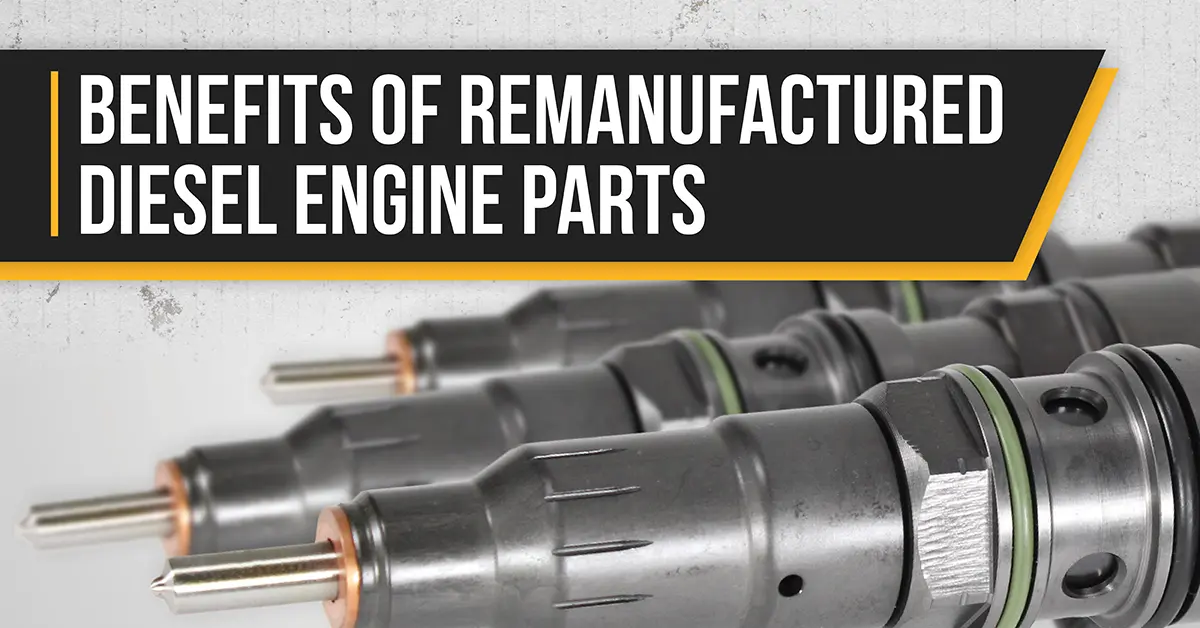
Remanufactured diesel engine parts offer a practical alternative to new OEM components. To understand their value, you first need to understand what “remanufactured” really means.
Continue reading The Real Benefits of Remanufactured Diesel Engine Parts10 Common Causes of Excessive Oil Consumption in Diesel Engines
Diesel engines are built for durability, but excessive oil consumption can quickly turn into a costly repair if the root cause is ignored.
If you’re constantly adding oil, noticing blue or gray smoke, or seeing a drop in performance, there’s usually an underlying mechanical reason. The key is figuring out whether the oil is being burned, leaked, pushed through the intake system, or lost because of internal engine wear.
In this guide, we’ll break down the most common causes of excessive oil consumption in diesel engines, what each one means, and what to check before it turns into a major failure.
Continue reading 10 Common Causes of Excessive Oil Consumption in Diesel EnginesWhy Stop-and-Go Driving Is Hard on a Diesel Engine
Stop-and-go driving is one of the hardest operating conditions for a diesel engine.
A diesel engine is designed to run under load, reach stable operating temperature, and maintain consistent combustion conditions. In stop-and-go traffic, that rarely happens.
Instead, the engine repeatedly moves through:
- Idle time
- Short acceleration events
- Low-speed operation
- Heat buildup
- Frequent temperature changes
Over time, this can increase wear, reduce efficiency, and shorten the life of critical components
Continue reading Why Stop-and-Go Driving Is Hard on a Diesel EngineMLS vs. Graphite Head Gaskets: What’s the Real Difference (and Which Should You Use)?
When it comes to sealing a diesel engine, your head gasket isn’t just another component: it’s one of the most critical sealing surfaces in the entire engine.
And choosing the wrong type? That can mean compression loss, coolant leaks, or even a full teardown.
Two of the most common options are:
- Multi-Layer Steel (MLS) Head Gaskets
- Graphite (Composite) Head Gaskets
They may serve the same purpose – but they behave very differently under real engine conditions.
Continue reading MLS vs. Graphite Head Gaskets: What’s the Real Difference (and Which Should You Use)?How to Replace a Camshaft on a Caterpillar C15 (Step-by-Step Guide)
The camshaft plays a critical role in how your engine runs.
On a Caterpillar C15 diesel engine, even minor camshaft wear can affect:
- Valve timing
- Fuel delivery performance
- Overall engine efficiency
👉 If the camshaft fails, it can lead to serious internal engine damage.
A Caterpillar C15 camshaft replacement is not a small job. It requires proper timing, precision, and a clear understanding of the engine’s setup.

Signs of a Bad Camshaft
Before a Caterpillar C15 camshaft replacement, it’s important to confirm the failure.
Before jumping into a full replacement, it’s important to confirm the camshaft is actually the issue.
👉 If you’re not sure yet, this guide breaks down the symptoms and failure causes in detail:
Caterpillar C15, 3406E Camshaft Guide
Common symptoms include:
- Loss Of Power Under Load
- Rough Idle Or Engine Stalling
- Excessive Engine Noise (Knocking Or Ticking)
- Reduced Fuel Economy
- Hard Starting Or No Start Condition
Even small wear can affect performance.
👉 As little as .001″ wear can change valve timing by several degrees, impacting how the engine runs.
What Causes Camshaft Failure on a C15
Camshaft failure is rarely random.
Most failures are caused by:
- Poor Lubrication (Oil Issues)
- Contaminated Engine Oil
- Worn Rollers Or Lifters
- Improper Installation From Previous Repairs
👉 Before installing a new camshaft, always identify the root cause to prevent repeat failure.
How to Replace a Caterpillar C15 Camshaft
This is a high-level process. Exact procedures may vary depending on your engine configuration.
1. Preparation
- Disconnect batteries
- Drain engine oil
- Remove valve covers
- Inspect visible valvetrain components
2. Set Engine to Top Dead Center (TDC)
Rotate the engine and lock it at Top Dead Center (TDC).
- Use a timing pin to secure the flywheel
- This ensures proper timing during reassembly
👉 This step is critical – incorrect timing can cause engine damage.
3. Remove Front Timing Components
- Remove the front timing cover (“peanut cover”)
- Gain access to the cam gear
4. Remove the Cam Gear
- Use a proper gear puller or removal tool
- Carefully remove the cam gear without damaging surrounding components
5. Remove Rocker Assemblies
- Remove rocker arms and shaft assemblies
- Keep components organized for reinstallation
6. Remove the Camshaft
- Carefully slide the camshaft out
- Avoid damaging cam bearings during removal
👉 This is where many installs go wrong – any scoring or damage can lead to premature failure.
7. Inspect and Replace Bearings
- Always install new camshaft bearings
- Inspect for wear, scoring, or oiling issues
8. Install the New Camshaft
- Lubricate bearings and camshaft thoroughly
- Carefully slide the new camshaft into place
9. Reinstall Components and Set Timing
- Reinstall cam gear
- Align timing marks correctly (typically 12 o’clock alignment)
- Install retainer plate and torque bolts properly
👉 Camshaft bolt torque: ~180 ft-lbs (verify per spec)
10. Final Assembly
- Reinstall rocker assemblies
- Set valve lash to specification
- Reinstall timing cover and remaining components
Important Installation Tips
When replacing a camshaft on a C15, pay attention to:
- Always Verify Fitment Using ESN
- Replace Bearings and Related Components
- Keep All Components Clean
- Follow Torque Specifications Exactly
- Double-Check Timing Alignment
👉 One mistake here can lead to complete engine failure.
Why Camshaft Installs Fail (And How to Prevent It)
Most repeat failures are caused by:
- Reusing worn components
- Improper timing alignment
- Skipping bearing replacement
- Not addressing oil system issues
👉 A camshaft replacement is not just a part swap – it’s a system repair.
At Highway and Heavy Parts, we help you identify the problem and get the right parts the first time.
Call 844-304-7688 or visit highwayandheavyparts.com to place your order today.
From diagnosis through delivery, we’re Highway and Heavy Parts.
Precision Machining Explained: Why It Matters for Diesel Engine Parts
When you open a diesel engine, it’s easy to focus on the big components—pistons, crankshafts, cylinder heads, and turbochargers.
What you can’t see is often just as important.
Modern diesel engines rely on components manufactured to incredibly tight tolerances. In many cases, a difference of just a few thousandths of an inch can affect oil pressure, compression, bearing life, piston ring sealing, and overall engine reliability.
That’s where precision machining comes in.
Precision machining is the process of manufacturing engine components to extremely accurate dimensions, shapes, and surface finishes. While it may not be the most visible part of the manufacturing process, it’s one of the biggest reasons quality diesel engine parts last hundreds of thousands of miles.
In this article, we’ll explain what precision machining is, why it matters, and how it affects the performance and longevity of your diesel engine.
Continue reading Precision Machining Explained: Why It Matters for Diesel Engine Parts