


Your fuel injectors are what keep your diesel engine running at its best. If you want solid diesel engine performance, then you need to use your injectors effectively. There’s a specific system your injector uses to improve engine performance: trim codes.
Continue reading About Diesel Injector Trim CodesCategory: Blog – Diesel Engine Tech Tips
City Driving vs Highway Driving: Engine Impact Explained
The difference is not just speed.
It is how the engine is loaded, how often it changes state, and how long it stays in stable operating conditions.
City driving introduces:
- Frequent acceleration from a stop
- Repeated deceleration and braking
- Idle time with no load
- Shorter run cycles
Highway driving introduces:
- Steady engine speed (RPM)
- Continuous load
- Stable operating temperature
- Fewer transient events
These differences directly affect internal engine conditions.
Continue reading City Driving vs Highway Driving: Engine Impact ExplainedShould Diesel Engine Oil Changes Be Based on Hours or Miles?
If you ask ten diesel technicians whether oil changes should be based on engine hours or mileage, you’ll probably get ten different answers.
The truth is, both measurements have value—but they don’t tell the whole story on their own.
For heavy-duty diesel trucks, the way an engine is used often matters more than how many miles are on the odometer. A truck that spends hours idling, operating a PTO, or crawling through traffic may accumulate just a few miles while putting significant wear on the engine and its oil. Meanwhile, a long-haul truck cruising steadily down the interstate may accumulate hundreds of miles under relatively ideal operating conditions.
So which should you trust—engine hours or miles?
The answer depends on how your truck works.
HHP Quick Takeaway
For many heavy-duty diesel trucks, engine hours provide a more accurate picture of engine wear than mileage alone. However, the best maintenance schedule considers engine hours, mileage, operating conditions, the engine manufacturer’s recommendations, and—when possible—oil analysis.
For many heavy-duty diesel trucks, engine hours provide a more accurate picture of engine wear than mileage alone. However, the best maintenance schedule considers engine hours, mileage, operating conditions, the engine manufacturer’s recommendations, and—when possible—oil analysis.
Continue reading Should Diesel Engine Oil Changes Be Based on Hours or Miles?
Diesel Fuel Additives: What They Do, When They’re Used, and What to Consider
Diesel fuel additives are commonly used in both light-duty and heavy-duty applications.
They are not a single product type. Instead, they are formulated blends designed to address specific fuel system conditions or operating environments.
Depending on formulation, diesel fuel additives may be used to:
- Clean fuel system components
- Improve combustion characteristics
- Support cold-weather operation
- Protect fuel system parts from wear
👉 The effectiveness of an additive depends on fuel quality, engine condition, and application.
Continue reading Diesel Fuel Additives: What They Do, When They’re Used, and What to ConsiderWhy Garrett Turbochargers Are Trusted Worldwide in Heavy-Duty Diesel Engines
When a turbocharger fails on a working diesel engine, it’s not just a parts issue: it’s downtime, lost revenue, and often a deeper underlying problem.
That’s why the turbocharger you choose matters.
Across Caterpillar, Detroit Diesel, and International/Navistar platforms, one name consistently shows up in both OEM applications and reliable aftermarket replacements: Garrett Turbochargers.
There’s a reason for that.
Garrett turbos aren’t just widely used – they’re engineered for consistency under load, thermal durability, and long-term reliability in real-world conditions.
Quick Takeaway:
Turbocharger reliability depends on more than boost pressure alone. Heat management, rotor balance, oil supply stability, and airflow consistency all affect long-term diesel engine performance.
Continue reading Why Garrett Turbochargers Are Trusted Worldwide in Heavy-Duty Diesel Engines Turbocharger reliability depends on more than boost pressure alone. Heat management, rotor balance, oil supply stability, and airflow consistency all affect long-term diesel engine performance.
What Are Electronic Unit Injectors (EUIs)?
If you’re working on engines like the Detroit Diesel Series 60, Caterpillar C15, or Cummins ISX, you’ve probably heard the term EUI.
But understanding what an Electronic Unit Injector (EUI) actually does – and how it fails – is key to diagnosing a lot of performance issues.
Because when an EUI starts to go, it doesn’t just affect fuel delivery.
It affects timing, pressure, combustion, and overall engine balance.
Continue reading What Are Electronic Unit Injectors (EUIs)?Adjusting Diesel Injection Timing (2026)
Diesel injection timing plays a critical role in engine performance, fuel efficiency, and emissions. Whether you’re working on an older mechanical system or a newer electronically controlled engine, proper timing ensures fuel is delivered at the correct moment for optimal combustion.
In 2026, with tighter tolerances and more advanced fuel systems, accurate timing is more important than ever.
Continue reading Adjusting Diesel Injection Timing (2026)Turbocharger Cartridge vs Full Replacement: What Actually Fails Inside a Diesel Turbo
When a diesel turbocharger fails, the first question is always:
Should you replace the cartridge – or the entire turbo?
Most answers online are surface-level. But if you want to avoid repeat failures, you need to understand what actually fails inside the turbocharger.
Because the wrong choice doesn’t just cost money – it can lead to another failure within hours of startup.
Continue reading Turbocharger Cartridge vs Full Replacement: What Actually Fails Inside a Diesel TurboThe Pros and Cons of an EGR System Delete
When you start looking into the pros and cons of EGR deletes, it’s easy to see why EGR valves on diesel engines have such a poor reputation. You’ve probably heard plenty of stories about the trouble they cause for drivers and shop owners alike.
Continue reading The Pros and Cons of an EGR System DeleteAbout The Caterpillar 3406E
In 1993, Caterpillar began production on the 3406E, the last model engine in the 3406 series. While its predecessors –the A, B, and C– were fully or partially mechanical, the Caterpillar 3406E was the first successful fully electronic motor. The 3406E is usually found in Peterbilt and Freightliner vehicles.
Continue reading About The Caterpillar 3406EAbout the Caterpillar C15 Engine
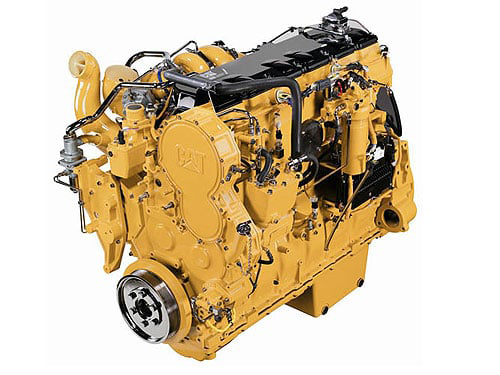
Steam tractors became the go-to tool for agricultural development in the late 1800s/early 1900s. Although their use was widespread, this machinery wasn’t perfect; they didn’t work everywhere. In California, these immensely heavy tractors kept sinking into the soft earth.
Continue reading About the Caterpillar C15 EngineDinex Emission: The Solution to Diesel Pollution

Dinex Emission is a company that has been dedicated to helping diesel operators meet the high standards of the EPA for a very long time. Though the EPA’s goal is to reduce the emissions of dangerous gasses into the air, their restrictions can often make transporting goods, completing construction projects, and harvesting large crops more difficult. As an expert in the field of diesel emissions control, Dinex has long been the solution to this obstacle.
Continue reading Dinex Emission: The Solution to Diesel Pollution


