


If your diesel loses power when hot but runs strong when it’s cold, you’re not imagining it.
This is a common issue and one that gets misdiagnosed all the time.
👉 The key isn’t just what’s failing
👉 It’s why it only shows up when the engine gets hot
If your diesel loses power when hot but runs strong when it’s cold, you’re not imagining it.
This is a common issue and one that gets misdiagnosed all the time.
👉 The key isn’t just what’s failing
👉 It’s why it only shows up when the engine gets hot
Elevation directly impacts diesel engine performance because it changes one critical variable: air density
As altitude increases, atmospheric pressure decreases. This reduces the amount of oxygen available for combustion inside the cylinder.
Diesel engines depend on oxygen – not throttle restriction – to control combustion.
👉 When oxygen availability drops, engine performance changes.
Continue reading How Elevation Affects Diesel Engine Performance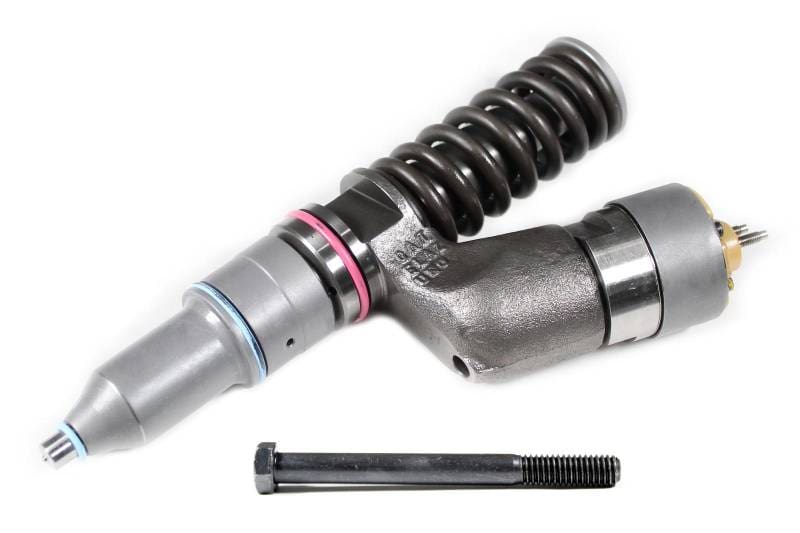
When it comes to diesel engine performance, most people focus on major components: turbochargers, pistons, cylinder heads.
But one of the most overlooked factors in engine performance, efficiency, and longevity is fuel injector balance.
Specifically, how closely each injector matches the others in fuel delivery.
That’s where flow-matched fuel injectors come in.
Continue reading Why Flow-Matched Fuel Injectors Matter in Diesel Engines (And When They Actually Make a Difference)If one cylinder in your diesel engine is running hotter than the others, it’s not random.
It’s a sign of imbalance. In a diesel engine, imbalance means:
The important part is understanding why that one cylinder is different.
Continue reading Why One Diesel Cylinder Runs Hotter Than the Others (And What It Means)Older Cummins engines – especially Big Cam and NTC/N14-era platforms – used two different cooling system designs:
These systems are not just minor variations.
👉 They are fundamentally different in how coolant moves through the engine.
And that matters when you’re trying to solve overheating – or considering a conversion.
Continue reading Converting a Cummins Low-Flow Cooling System to High-Flow: What It Actually TakesSome diesel engine problems only appear when the engine is working hard. A truck may:
…but suddenly lose power while:
This happens because high-load conditions place maximum demand on:
Under light driving conditions, weak components can sometimes “hide.” However, when engine demand increases, those weaknesses often become obvious very quickly.
Continue reading Diesel Problems That Only Show Up Under High LoadInstalling new diesel injectors should make an engine run better.
So when the engine suddenly idles rough, misfires, smokes, knocks, or feels weaker after injector replacement, it can be frustrating.
The first reaction is usually: Did we get bad injectors?
Sometimes the answer is yes. A defective injector is possible.
But in many cases, the injector itself is not the first thing to blame.
A diesel engine that runs worse immediately after injector replacement may be dealing with trapped air, incorrect trim codes, installation issues, fuel pressure problems, wiring damage, injector seating problems, or an unresolved issue that was already present before the injector job.
The key is slowing down and diagnosing the system instead of replacing more parts.
The first question is simple: Did the engine run worse immediately after the injectors were installed?
If yes, the problem is likely connected to something that changed during the repair. That could include air introduced into the fuel system, a loose connection, an injector that was not seated correctly, incorrect calibration data, damaged wiring, or a fuel line issue.
If the engine already ran poorly before the injectors were replaced, the new injectors may not have been the true root cause.
That distinction matters.
Replacing injectors can solve many fuel delivery problems, but it will not fix weak compression, valve adjustment issues, sensor problems, timing signal issues, air handling problems, or engine harness faults.
One of the most common reasons an engine runs rough after injector replacement is trapped air in the fuel system.
During an injector job, fuel lines, rails, injector tubes, or return lines may be opened. When that happens, air can enter the system.
Air in the fuel system can cause rough idle, misfires, surging, hard starting, hesitation, or uneven engine sound.
On some engines, the air clears quickly after proper priming. On others, the system may require a specific bleed or priming procedure.
This is especially important on high-pressure common rail systems, where fuel pressure and injector timing must be extremely precise.
If the engine starts but runs poorly right after the repair, verify the fuel system has been properly primed and that no fittings are allowing air to enter.
Many modern diesel injectors are assigned calibration or trim codes.
These codes tell the ECM how that specific injector flows compared to a baseline. The ECM uses that information to fine-tune fuel delivery cylinder by cylinder.
If the trim codes are incorrect, missing, entered in the wrong cylinder, or not programmed at all, the engine may run unevenly.
Common symptoms may include rough idle, misfires, smoke, poor throttle response, increased fuel consumption, or uneven cylinder contribution.
Not every engine uses the same coding process. Some platforms require injector trim codes, some use different calibration methods, and some older systems may not require programming at all.
The safest approach is to verify the exact procedure for that engine family before assuming the repair is complete.
A diesel injector must seal correctly.
If the injector is not fully seated, if the sealing surface is dirty, if a washer is missing, or if the hold-down clamp is not torqued correctly, the cylinder may not seal or fuel may not be delivered correctly.
Injector seating issues can cause combustion leakage, rough running, misfires, fuel odor, poor performance, and abnormal engine noise.
This is why clean mating surfaces matter so much.
Even small debris, carbon buildup, or damaged sealing surfaces can create problems after installation.
If one cylinder sounds different after the injector job, inspect that injector location carefully.
Injector replacement often requires moving lines, fittings, harnesses, connectors, and covers.
That means something can be disturbed during the repair.
A loose high-pressure line, damaged return fitting, pinched seal, cracked connector, or improperly seated electrical plug can cause performance issues that appear immediately after the injectors are installed.
On electronic engines, wiring issues can create symptoms that look like injector failure.
Bent pins, oil intrusion, corrosion, loose connectors, damaged injector pigtails, or valve cover pass-through issues can all create intermittent misses or dead cylinders.
This is especially important if the problem comes and goes.
Diesel injectors can look similar and still be wrong for the application.
Flow rates, nozzle design, calibration requirements, emissions configuration, and engine software can vary by engine model, serial number, CPL, horsepower rating, or production year.
Installing an incorrect injector can create poor drivability, smoke, imbalance, misfires, or low power.
This is why part number verification matters before installation.
The old injector number, engine serial number, CPL, VIN, and application details should all be used to confirm fitment.
If the engine runs worse after replacement, double-check that the installed injectors are correct for that specific engine configuration.
On some heavy-duty diesel engines, injector installation is closely tied to overhead adjustment.
If injector height, lash, or overhead settings are incorrect, the engine may run poorly even if the injectors are good.
Symptoms may include rough idle, low power, loud knocking, uneven cylinder contribution, or poor throttle response.
This is especially important on engines where injector actuation or adjustment is mechanically linked to the valvetrain.
If the injector job required removing the valve cover and disturbing the overhead, the adjustment should be verified against factory specifications.
A new injector installation can expose fuel system problems that were already present.
If supply pressure is low, rail pressure is unstable, filters are restricted, or the fuel pump is weak, the engine may still run poorly after the injector replacement.
Before condemning the injectors, verify fuel pressure data.
For common rail systems, rail pressure during crank, idle, acceleration, and shutdown can reveal important clues.
If rail pressure is strong and stable, the issue may be elsewhere.
If rail pressure is low or unstable, the problem may involve the fuel pump, pressure regulator, suction side restriction, return flow, filters, or a leak.
A single-cylinder misfire after injector replacement may point toward a specific injector, connector, cylinder, or installation issue.
But when every cylinder shows a misfire or the ECM reports a general misfire across multiple cylinders, the problem may not be the injectors.
Global misfire complaints can point toward timing reference issues, crankshaft or camshaft sensor problems, wiring faults, overhead adjustment problems, airflow modeling issues, software/calibration problems, or sensor data that does not match actual engine operation.
This is where diagnostic software becomes essential.
Cylinder cutout tests, injector performance tests, rail pressure data, cam/crank correlation, active fault codes, and sensor readings should all be reviewed before replacing more parts.
A bad injector is still possible.
This is especially true if the problem is isolated to one cylinder and follows the injector during a swap test.
Signs that may point toward a faulty injector include a single-cylinder misfire, abnormal balance rate, failed injector performance test, failed buzz test, excessive return flow, fuel knock, smoke from one cylinder, or a cylinder contribution issue that moves when the injector is moved.
If the injector is remanufactured, quality and testing history matter.
A poorly rebuilt injector can have an out-of-spec spray pattern, weak solenoid, leakage, improper calibration, or internal wear.
But the injector should be diagnosed, not guessed.
When an engine runs worse after new injectors, work through the basics before jumping to expensive conclusions.
Start with the repair area. Confirm all injectors are seated correctly, all lines are tight, all connectors are fully installed, and all trim codes or calibration values are entered correctly.
Then verify fuel system health. Check fuel supply, rail pressure, filter restriction, return flow, and air intrusion.
Next, use diagnostic software. Look at cylinder contribution, injector tests, active codes, balance data, and sensor values.
Finally, widen the diagnosis. If the data does not point to one injector or one cylinder, look at harness issues, cam/crank signals, overhead adjustment, ECM programming, and air handling.
A diesel engine that runs worse after new injectors does not always mean the injectors are bad.
The issue may be air in the fuel system, missing trim codes, incorrect injector programming, poor seating, loose fuel lines, damaged wiring, wrong part numbers, overhead adjustment problems, or an unrelated issue that was misdiagnosed from the beginning.
The best approach is to diagnose the system carefully.
Start with what was touched during the repair. Verify the installation. Confirm the fuel system is fully primed. Check trim codes and calibration data. Review fuel pressure and cylinder contribution. Then look deeper if the symptoms do not point clearly to one injector.
If you need help identifying the correct diesel injectors or troubleshooting a fuel system issue, Highway and Heavy Parts can help.
Call 844-304-7688 or visit highwayandheavyparts.com to get the right diesel engine parts for your application.
From diagnosis through delivery, we’re Highway and Heavy Parts.
If you spend any time around diesel engines, you’ll notice something quickly:
👉 Almost all of them are turbocharged.
That’s not by accident.
While both turbochargers and superchargers are designed to increase air pressure into the engine, diesel engines overwhelmingly rely on turbochargers – and there are specific engineering reasons why.
Continue reading Why Diesel Engines Use Turbochargers Instead of SuperchargersIf you’ve spent any time around engine builders or performance enthusiasts, you’ve probably heard someone mention “porting the cylinder head.” Some swear it’s one of the best performance upgrades you can make. Others say it’s an expensive way to ruin a perfectly good cylinder head.
So what’s the truth?
Like many things in engine building, the answer depends on the application.
Cylinder head porting can improve airflow and increase engine performance when it’s done correctly. However, it’s far more than simply making the ports larger. In fact, removing too much material can actually reduce airflow, hurt performance, or permanently damage the cylinder head.
Whether you’re rebuilding a heavy-duty diesel engine or simply curious about how cylinder heads work, understanding the basics of porting can help you make more informed decisions.

You’ve replaced the injectors.
You’ve programmed the trim codes correctly.
Everything checks out – and the engine still runs rough.
This is more common than most people realize.
Fuel injector trim codes are designed to fine-tune fuel delivery, but they are not a fix-all. If the engine is still underperforming, the issue is almost always outside the trim code itself.
Continue reading Why Correct Fuel Injector Trim Codes Still Result in Poor Engine PerformanceDiesel injection timing plays a critical role in engine performance, fuel efficiency, and emissions. Whether you’re working on an older mechanical system or a newer electronically controlled engine, proper timing ensures fuel is delivered at the correct moment for optimal combustion.
In 2026, with tighter tolerances and more advanced fuel systems, accurate timing is more important than ever.
Continue reading Adjusting Diesel Injection Timing (2026)


