


If your diesel loses power when hot but runs strong when it’s cold, you’re not imagining it.
This is a common issue and one that gets misdiagnosed all the time.
👉 The key isn’t just what’s failing
👉 It’s why it only shows up when the engine gets hot
If your diesel loses power when hot but runs strong when it’s cold, you’re not imagining it.
This is a common issue and one that gets misdiagnosed all the time.
👉 The key isn’t just what’s failing
👉 It’s why it only shows up when the engine gets hot

A bad diesel fuel injector is likely to cause a variety of symptoms that should help you narrow it down. Some of the main symptoms include poor fuel economy, rough idling, difficulty starting, and excessive exhaust smoke. A modern vehicle should also display a warning light, which might be just a check engine light.
Some of these symptoms can also intersect with other problems, so narrowing them down to indicate a bad diesel fuel injector involves carefully investigating several issues, including exhaust smells, engine sounds, and overall performance. A diagnostic tool can help give you a firm conclusion as well.
To figure out whether you have a bad injector or another problem, it’s important to look at all the symptoms together. Let’s take a look at the various symptoms by category. The more that match up with your problem, the more likely it is to be a bad fuel injector. A bad injector causes uneven fuel delivery, which results in some or all of the symptoms discussed below.
Many of the symptoms of a failing injector or injectors come in the form of performance and starting problems. One of the most common is a rough idle or misfires. When this happens, the engine seems to shake or stumble, running unevenly at rest due to inconsistent fuel delivery. If you have a tachometer, you might notice the needle moving a lot and dipping down below normal.
Another issue is hard starting. In this case, you’ll experience longer cranking, or the engine might fail to start at all. This is especially noticeable when it’s cold. When the vehicle is in motion, you might notice loss of power, such as sluggish acceleration, bogging down on hills, or stumbling. The engine might also cut out unexpectedly.
Another area to look at when you’re trying to diagnose a bad fuel injector is the exhaust. You’re likely to notice excessive smoke, and it might be different colors from the usual gray. Black smoke indicates too much fuel, while white indicates unburned fuel passing through. Blue smoke can indicate burning oil, but it might be linked to bad injectors if they’re washing oil off the cylinder walls. A strong fuel smell is also common.
There are also sounds and warning lights associated with failing fuel injectors. Engine knocking or pinging is a common sound that is caused by bulk delivery of fuel instead of the usual fine mist. In most cases, failing injectors will also trigger a check engine light to let you know that something has gone wrong. Once you’ve confirmed multiple symptoms and there’s a CEL present, it’s time to diagnose the problem and find out if one or more bad injectors are the culprit.
The easiest way to diagnose a bad diesel fuel injector is to use an OBD-II scanner for light-duty trucks made from 1997 on. Specialized diagnostic equipment, such as the J1939 protocol, for medium-duty and heavy-duty trucks and equipment. Both look for diagnostic trouble codes, but scanners won’t tell you exactly what’s wrong; you can use the codes they give to narrow down the possibilities. Another method is to inspect the engine for leaks. Look for wet spots and a diesel smell near the injectors. Modern diesel systems can show injector balance/return rates through diagnostic tools.
Let’s take a closer look at the tools for diagnosing a bad diesel fuel injector. As mentioned above, the easiest way is to use a code scanning tool (OBD-II or J1939 Protocol scanners). You can also use a digital multimeter to measure injector electrical resistance and a mechanic’s stethoscope to listen for injector clicking. To measure fuel delivery and pressure, you’ll need a fuel pressure gauge and a fuel return line kit. A compression test can help you rule out other mechanical engine issues that cause the symptoms we’ve discussed.
Step 1 – In the initial check, use the stethoscope to listen for a steady click. No click or an unusual sound suggests failure. Look for fuel leaks, wet spots, or clean streaks around the injectors.
Step 2 – Use the proper scanning tool for your diesel engine to reveal diagnostic trouble codes for misfires or fuel pressure. You can also do a cylinder isolation test. With the engine idling, disable one injector at a time. If the injector is good, it will cause the RPM to drop. If the RPM doesn’t change significantly, then the injector is likely bad.
Step 3 – Use the multimeter to check injector resistance against manufacturer specs. If you get a reading that’s way off, it indicates an electrical fault. You can also use a scan tool to check if each cylinder is producing equal power and balanced fuel delivery. A large deviation likely means a bad injector.
Step 4 – The most accurate method used by professional shops is a bench test with specialized equipment to simulate real-world conditions and check spray patterns, pressure, and flow.
Does your diesel engine have the above signs? Don’t wait until it gets worse. At Highway and Heavy Parts, we have an expansive range of high-quality diesel engine parts for various makes and models. Our diesel experts are standing by to help you diagnose any issues you might have with bad diesel fuel injectors. Contact us today for assistance and find the best replacement injectors in our catalog. Highway and Heavy Parts is here to ensure that you have the parts and knowledge to keep your diesel engine running.
If your fuel injector is starting to fail, don’t wait for it to turn into a bigger problem.
👉 Verify your Engine Setup
👉 Replace Worn Injectors
👉 Restore Proper Combustion and Performance
Call our diesel experts at 844-304-7688 or browse parts online at Highway and Heavy Parts to get the right parts, faster.
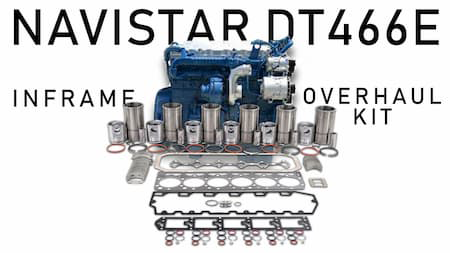

The International/Navistar DT466E diesel engine is a 7.6-liter, inline-six, turbocharged diesel engine. It’s well-known for its durable applications in medium- and heavy-duty equipment, such as trucks and buses. It was produced between 1996 and 2003, based on the DT466 design. The E added to the end of the model number indicates that it has an electronic control system, which makes it more efficient than the previous mechanical version.
Key features of this engine include a horsepower range between 195 and 300 and torque up to 860 pound-feet. It also boasts a wet-sleeve design for easier overhauls. It’s considered one of the most durable International/Navister diesel engines.
The DT466E engine was built for heavy-duty applications, using durable components like a deep-skirt gray-iron block and a forged-steel crankshaft. As mentioned above, the wet-sleeve design makes it easy to overhaul the engine in-frame, which is popular among mechanics. The DT466E was used in a wide variety of vehicles, including dump trucks, fire trucks, school buses, and construction equipment.
Both the original DT466 engine and the E version have a legendary reputation for reliability and can last for hundreds of thousands of miles with good maintenance. They’ve even been known to get up to a million miles with regular maintenance.
Aside from the common International engine issues that came after the rebrand to MaxxForce, the DT466 engines were known for their durability, and a lot of that was due to notably robust cylinder heads. To start, the weight and material of the heads were important. They were crafted from cast iron and weighed about 250 pounds. The two-valve version was made at a U.S. Foundry, while the four-valve versions were made in Brazil.
The advanced design features of the heads included integrated ductile-iron rocker arms for toughness and hardened valve seats for longevity in extreme conditions. The heads were also installed securely with a six-bolt per cylinder design. This ensured a firm and secure fit.
The wet sleeve cylinder liners set the DT466 engines apart thanks to heavy-duty durability and convenient serviceability, something usually only found on bigger engines. The liners were known for their high chrome content for strength and consistent performance. The external side of the sleeves was exposed to engine coolant, allowing for efficient heat transfer.
The liners also contributed to easier maintenance. Each bore had its own sleeve, making cylinder repairs and rebuilds much quicker. In-field repairs were possible with this engine thanks to the cylinder sleeve design.
The DT466E’s wet sleeve design is one of the main reasons these engines are so rebuild-friendly, but it also means proper inspection during an inframe rebuild is critical. Wet sleeve wear, liner protrusion issues, and HEUI system-related problems can all affect long-term reliability if they aren’t addressed before installation. Our guide on DT466E Inframe Rebuild Kits and What To Verify Before Installation breaks down the most important areas to inspect before putting the engine back into service.
The MaxxForce family of engines was originally a rebrand by International/Navistar, but it was later discontinued in favor of new engine platforms. The MaxxForce 13 featured a light and compact design for a big engine, but it has a number of reliability issues. The EGR and DPF systems were the top culprits for poor reliability, often causing premature engine failure. The dual-stage EGR system was well-known for overheating. International/Navistar issued numerous recalls and recalibrations for this engine before eventually discontinuing it.
MaxxForce was essentially a rebrand of the DT466 engines, also called MaxxForce DT. These engines incorporated complex emissions systems and electronic controls that ultimately made them less reliable. The MaxxForce engines have advanced emissions control, like SCR and DEF in the MaxxForce 13. The DT models included EGR systems and became known for having issues.
The mechanical DT engines were more reliable without any modern emissions systems. Some of the electronic versions were generally good, but still often experienced electrical issues. The MaxxForce DT mainly had emissions-related issues.
The DT engines made before 1994 were simple and reliable, with mechanical functions and no modern emissions systems. The DT466E introduced electronic controls, but it remained largely reliable, albeit with some issues. The MaxxForce DT was the next evolution of the DT466, but it featured modern emissions controls and is largely seen as less reliable by owners.
The main problems with the MaxxForce DT engines, and MaxxForce engines in general, are related to the EGR system. EGR failure leads to issues like coolant leaking into the oil and overheating. Other major issues include clogged DPF, turbocharger failures, and cracks in the intake manifold. These are significant and fairly common issues that lead to poor performance and expensive repairs.
The EGR cooler is prone to stress fractures, which allow coolant to leak into the exhaust or the engine oil. This often causes overheating and engine damage. When coolant enters the exhaust system, the main symptom is usually white exhaust smoke. A more severe symptom is excessive engine heat, leading to overheating.
Whether you need International/Navistar diesel engine fuel injectors, turbochargers, or engine rebuild kits, we have you covered at Highway and Heavy Parts. We don’t just sell parts; we also deliver honest pricing, expert support, fast shipping, and quality parts that exceed expectations. We know that time is money and downtime is expensive; that is why you can rely on us from expert diagnosis to quick delivery.

The International/Navistar DT466E is a 7.6-liter, inline-six, turbocharged diesel engine produced between 1996 and 2003. The “E” designation indicates it features an electronic control system, making it more efficient than its mechanical predecessor, the DT466. This engine delivers between 195 and 300 horsepower with torque up to 860 pound-feet, and it’s widely used in medium- and heavy-duty applications, including dump trucks, fire trucks, school buses, and construction equipment.
DT466E engines are renowned for their exceptional durability due to several key design features. They utilize heavy-duty components like a deep-skirt gray-iron block and forged-steel crankshaft. The cylinder heads are made from robust cast iron, weighing about 250 pounds, featuring integrated ductile-iron rocker arms and hardened valve seats. Additionally, the wet-sleeve cylinder liner design allows for efficient heat transfer and easier in-frame overhauls. With proper maintenance, these engines can last hundreds of thousands of miles, with some reaching up to a million miles.
The DT466 (1973-1992) was the original mechanical version known for durability and simple design. The DT466E (1996-2003) added electronic controls while maintaining reliability. The MaxxForce DT was a later rebrand of the DT466 that incorporated complex emissions systems, including EGR (exhaust gas recirculation) and DPF (diesel particulate filter), which unfortunately led to decreased reliability. The MaxxForce 13 is a separate, larger 13-liter engine with advanced emissions controls that experienced significant reliability issues, particularly with its dual-stage EGR system.
The primary issues with MaxxForce DT engines stem from their emissions control systems, particularly failures in the EGR system. Common problems include EGR cooler stress fractures, which can cause coolant to leak into the exhaust or engine oil, resulting in white exhaust smoke and overheating. Other frequent issues include clogged diesel particulate filters (DPF), turbocharger failures, and intake manifold cracks. These emissions-related problems often result in poor performance, engine damage, and expensive repairs, which is why MaxxForce engines are generally considered less reliable than their mechanical DT predecessors.
The wet sleeve cylinder liner design of the DT466E offers significant maintenance advantages typically found only in larger engines. Each cylinder bore has its own individual sleeve with high chrome content for strength and durability. The external side of these sleeves is exposed to engine coolant, providing efficient heat transfer and cooling. This design makes cylinder repairs and engine rebuilds much quicker and more cost-effective, as individual sleeves can be replaced without extensive engine disassembly. The wet sleeve design enables in-field repairs, making the DT466E particularly popular among mechanics and fleet operators.
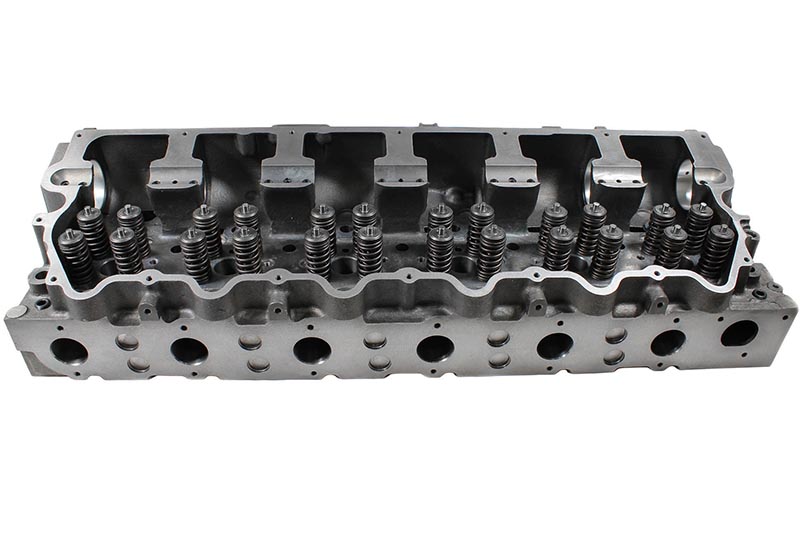

Looking for a reliable replacement cylinder head for your Caterpillar C15, 3406E, or C15 Acert engine? Our Stage 2 loaded cylinder head (OEM Replacement MPN: 2635055) delivers superior performance and durability compared to OEM alternatives. This complete, ready-to-install cylinder head assembly features Inconel exhaust valves and upgraded casting technology designed to handle the extreme demands of heavy-duty diesel applications.

Our cylinder head meets or exceeds OEM specifications while incorporating several critical upgrades:
Learn more about common design features, failure points, and applications in our guide about the CAT C15/C15 ACERT/3406E Diesel Engine Cylinder Head.

| Specification | Details |
| Primary Part Number | 2635055 |
| OEM Replacement | 20R-2647, 20R2647 |
| Stage | Stage 2 – Enhanced Performance |
| Valve Material | Inconel Exhaust Valves (Superalloy) |
| Casting Enhancement | 5% Higher Nickel Content |
| Cooling System | 30% Enlarged Coolant Passages |
| Assembly Type | Fully Loaded (Complete) |
| VVA Compatibility | Pre-drilled for C15 Acert VVA |
| Approximate Weight | 406-493 lbs (184-224 kg) |
| Testing | Pressure & Vacuum Tested |
| Warranty | Manufacturer Warranty Included |

The part number 20R-2647 (or 20R2647 without hyphen formatting) represents the Caterpillar remanufactured cylinder head assembly. The 20R-2648 is a superseding part number. All are compatible replacements for various C15, 3406E, and C15 Acert applications.
Both represent the same part number (with and without hyphen formatting). This is commonly referenced for 3406E and C15 Stage 2/Stage 3 applications and is cross-compatible with the 2635055.
These part numbers (with or without hyphen formatting) refer to specific C15 Acert cylinder head configurations. They’re direct replacements for the 2635055 in most applications.
The primary part number for the Stage 2 loaded cylinder head. Both formats (with or without hyphen formatting) are correct and interchangeable.

Every cylinder head undergoes rigorous quality control:

These part numbers represent different stages and configurations of Caterpillar cylinder heads for the same engine family:
All three are compatible replacements for Caterpillar 3406E, C15, and C15 Acert engines. The primary differences are in manufacturing source (new vs. reman) and performance stage. Our 2635055 offers new construction with upgraded materials rather than remanufactured components.
Yes. This cylinder head is pre-drilled and designed for C15 Acert engines with VVA systems. It provides direct bolt-on compatibility without the need for additional machining or modifications. The head accommodates all necessary VVA mounting points and passages required for proper Variable Valve Actuation operation.
Part numbers 2239250 and 223-9250 (same part, different formatting) are compatible with:
These part numbers cross-reference with 2635055 and serve as direct replacements across the 3406E/C15 engine family. Always verify your engine serial number prefix for exact fitment confirmation.
Yes. The 20R2648 (or 20R-2648) is a superseding part number for the 20R-2647. Caterpillar often releases updated part numbers that replace earlier versions while maintaining full backward compatibility. Both part numbers fit the same engine applications and mounting configurations. Our 2635055 serves as an upgraded aftermarket alternative to both OEM part numbers.
Inconel is a nickel-chromium superalloy specifically engineered for extreme temperature applications. Compared to standard steel exhaust valves:
This makes Inconel valves essential for high-performance, marine, and heavy-haul applications where exhaust temperatures and duty cycles exceed standard operating conditions.
Absolutely. This cylinder head is specifically designed to handle increased performance demands:
Many customers install this head when upgrading to marine camshafts, high-flow fuel injectors, or larger turbochargers. The upgraded design ensures your cylinder head can handle the increased thermal and mechanical stress.
You can also use: C15 Stage 3 Loaded Cylinder Head – 2237263 – P200012, or Ultra Performance Loaded Cylinder Head – 1835296 – P200013 for higher horsepower applications.
Our cylinder head meets or exceeds OEM specifications while offering several advantages:
Material Improvements:
Design Enhancements:
Value Proposition:
Warranty terms vary by manufacturer, but typically include:
Specific warranty details, exclusions, and claim procedures are provided with your purchase. Many suppliers also offer extended warranty options for additional protection. Contact the seller directly for complete warranty information specific to your purchase.
This is a fully loaded cylinder head assembly, meaning it comes completely assembled and ready to install:
Included Components:
You do NOT need to purchase additional components or perform machine work. This saves significant time and ensures all specifications meet proper tolerances. Simply remove your old head and install this complete assembly.
Yes. This cylinder head is ideal for marine applications due to:
Enhanced Durability Features:
Marine-Specific Considerations: Many marine operators choose this head when rebuilding C15 marine engines, particularly for commercial fishing vessels, tugboats, and pleasure craft. The upgraded materials and enhanced cooling make it suitable for continuous-duty marine propulsion and auxiliary power applications.
No core charge or core return is required. This is a new cylinder head, not a remanufactured unit requiring a core exchange. This eliminates the hassle of:
You can dispose of your old cylinder head at your discretion or keep it as a spare.
While this cylinder head is designed for straightforward installation, cylinder head replacement requires:
Technical Skills:
Special Tools:
Recommendation: Unless you have professional diesel engine experience, we recommend installation by a qualified technician. Improper installation can cause serious engine damage. ASE-certified technical support is available to assist professional mechanics during installation.
Watch for these symptoms indicating cylinder head problems:
Performance Issues:
Physical Symptoms:
Visual Indicators:
If you’re experiencing multiple symptoms, cylinder head replacement may be necessary to restore proper engine operation.
Installation time varies by engine configuration and technician experience:
Average Time Frames:
Factors Affecting Time:
Professional shops typically quote 1-2 days for cylinder head replacement, including proper break-in procedures and testing.
Follow these post-installation maintenance guidelines:
Immediate (First 50 Hours):
First Service (250-500 Hours):
Ongoing Maintenance:
Proper break-in and maintenance ensure maximum cylinder head life and optimal engine performance.
Primary Part Numbers:
Engine Applications:
Equipment Categories:
For technical assistance, installation support, or application-specific questions:

Choosing the right cylinder head is critical for engine reliability and performance. Our Stage 2 loaded cylinder head (2635055) delivers:
Superior Materials – 5% higher nickel content and Inconel exhaust valves
Enhanced Design – 30% larger coolant passages and reinforced casting
Complete Assembly – Ready to install with all components included
Quality Assurance – Pressure and vacuum tested for reliability
Technical Support – ASE-certified technicians available to assist
Cost-Effective – Premium quality at a lower cost than OEM
No Core Required – New construction, no core charge or return hassle
Whether you’re rebuilding a long-haul truck, construction equipment, or marine vessel, this cylinder head provides the performance, durability, and value you need to keep your Caterpillar engine running strong.
Compatible Part Number Quick Reference: 2635055 | 263-5055 | 20R-2647 | 20R2647 | 20R-2648 | 20R2648 | 2454324 | 245-4324 | 2239250 | 223-9250 | 2237263 | 223-7263 | 2741953 | 274-1953 | 2811640 | 281-1640
Engine Compatibility: Caterpillar 3406E | Caterpillar C15 | Caterpillar C15 Acert | All VVA Configurations

Variable Geometry Turbochargers (VGTs) are designed to adjust airflow dynamically—but when they fail, one issue shows up more than any other:
Sticking vanes. If the vanes can’t move, the turbo can’t control boost properly.
And that leads to:
The challenge is this:
Not every VGT problem is actually a bad turbo.
Continue reading Why Diesel VGT Turbo Vanes Stick (And How to Tell If It’s the Turbo or the Actuator)Hard starts in cold weather are one common diesel complaint.
And a lot of times, it comes back to one thing:
Glow plugs not doing their job.
Glow plugs are responsible for heating the combustion chamber so the engine can start when it’s cold. If one or more fail, you’ll start seeing issues like long crank times, white smoke, or rough startup.
The good news is: testing them is straightforward if you follow the right process.
Continue reading How to Test Glow Plugs on a Diesel Engine (Step-by-Step Guide)Resurfacing a cylinder head is a precision machining process used to restore a flat, uniform sealing surface between the cylinder head and engine block.
In diesel engines, this surface is critical.
👉 Even minor irregularities can lead to head gasket failure, compression loss, or coolant leaks.
If resurfacing is required, it must be done correctly – both in preparation and execution.
Continue reading How to Resurface a Diesel Engine Cylinder Head (Step-by-Step Guide)Elevation directly impacts diesel engine performance because it changes one critical variable: air density
As altitude increases, atmospheric pressure decreases. This reduces the amount of oxygen available for combustion inside the cylinder.
Diesel engines depend on oxygen – not throttle restriction – to control combustion.
👉 When oxygen availability drops, engine performance changes.
Continue reading How Elevation Affects Diesel Engine Performance
Caterpillar cylinder heads are one of the most critical components in a diesel engine.
They control airflow into and out of the cylinder, combustion sealing, and valve operation under extreme temperature and pressure.
When replacement is required, selecting the correct cylinder head and supporting components is critical to maintaining engine performance, combustion efficiency, and long-term reliability.
Modern Caterpillar diesel engines operate under extremely high cylinder pressure and thermal load. Because of this, cylinder head quality, fitment accuracy, and installation procedures all matter significantly.

If you’ve already replaced a part on your diesel engine, here’s a question worth asking: Did that fix the problem or just the symptom?
Because in diesel engines, parts rarely fail without a reason.
And if that reason isn’t identified, there’s a good chance the same failure is coming back.
Continue reading Are You Fixing the Issue – Or Just Replacing Parts?Cummins fuel systems are designed to deliver precise fuel pressure, injection timing, and fuel volume under extreme diesel operating conditions. Modern Cummins engines rely heavily on consistent fuel delivery to maintain combustion efficiency, throttle response, emissions performance, and starting reliability.
When a Cummins fuel system begins developing problems, the warning signs are not always dramatic at first. Generally, the symptoms begin small before turning into major performance or reliability issues.
In many cases, one of the most common early warning signs is a hard start. In other words, a Cummins engine that cranks longer than normal, starts inconsistently, loses prime, or struggles after sitting overnight may already be showing signs of fuel pressure loss, injector wear, contamination, or air intrusion somewhere in the system.
Most repair shops don’t lose jobs because of price. They lose jobs because they never fully understand what the customer actually wants out of the repair.
A customer might call asking for the “cheapest option,” but once you start asking diesel repair questions, you often discover something different. They need:
That changes the entire conversation.
The best diesel repair shops don’t just quote parts and labor. They guide the customer toward the right repair strategy based on how the truck is actually used.
And in many cases, the questions you ask before quoting the job determine whether the customer says yes or keeps shopping around.
Continue reading What the Best Diesel Repair Shops Ask Before Quoting a Repair


