Keyword Search

Posted on

Heavy-Duty Diesel Engine Oil: Choosing the Right Oil for Your Engine, Climate, and Application

Most diesel engine failures do not happen overnight.

Wear occurs gradually through thousands of operating hours, millions of crankshaft revolutions, and countless heat cycles. One of the biggest factors affecting engine life is something every diesel owner purchases regularly: engine oil.

Choosing the correct heavy-duty diesel engine oil affects far more than oil pressure. It influences cold-start protection, wear control, fuel economy, soot management, emissions system performance, and overall engine longevity.

With multiple viscosity grades, API classifications, conventional oils, synthetic blends, and full synthetic products available, selecting the right oil can quickly become confusing.

Understanding the basics can help ensure your diesel engine receives the protection it needs under the conditions it actually operates in.


Continue reading Heavy-Duty Diesel Engine Oil: Choosing the Right Oil for Your Engine, Climate, and Application
Posted on

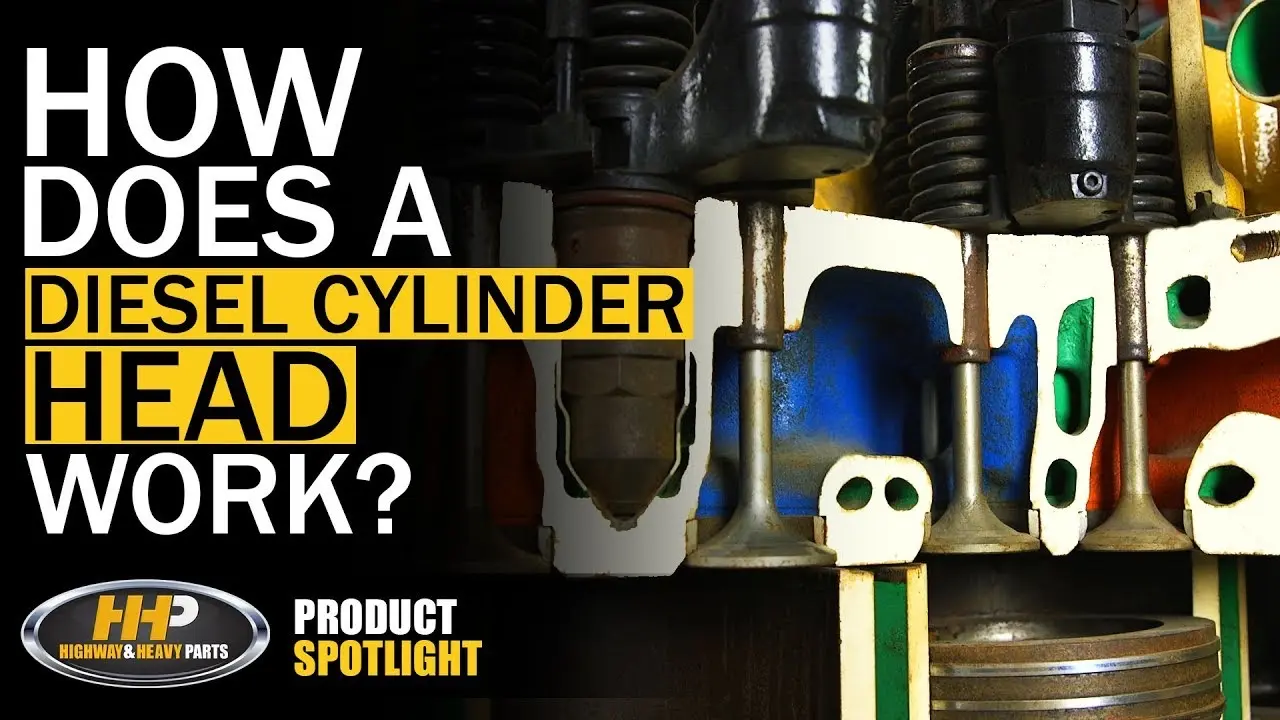
How a Diesel Cylinder Head Works: Airflow, Combustion Sealing, and Thermal Load Explained

A diesel cylinder head does far more than “sit on top” of the engine.

It is a structural, thermal, and airflow control component that directly impacts:

  • Combustion Efficiency
  • Engine Power Output
  • Heat Management
  • Long-Term Engine Durability

Every combustion event in a diesel engine depends on how well the cylinder head controls air, fuel, pressure, and temperature.

Continue reading How a Diesel Cylinder Head Works: Airflow, Combustion Sealing, and Thermal Load Explained
Posted on

Black Series Lab Episode 2: Why Idling a Fresh Rebuild Can Ruin Ring Seating

Most diesel engine owners want to do everything possible to protect a newly rebuilt engine.

That often leads to a common practice after startup: Letting the engine idle.

At first glance, it seems like the safe thing to do. The engine is running, oil pressure is present, temperatures are stable, and everything appears normal.

The problem is that proper engine break-in requires more than simply running the engine.

According to the testing featured in Black Series Lab Episode 2, extended idle time during break-in may actually work against one of the most important processes occurring inside a freshly rebuilt engine: piston ring seating.

Continue reading Black Series Lab Episode 2: Why Idling a Fresh Rebuild Can Ruin Ring Seating
Posted on

Why Your Diesel Engine Runs Worse After Installing New Injectors

Installing new diesel injectors should make an engine run better.

So when the engine suddenly idles rough, misfires, smokes, knocks, or feels weaker after injector replacement, it can be frustrating.

The first reaction is usually: Did we get bad injectors?

Sometimes the answer is yes. A defective injector is possible.

But in many cases, the injector itself is not the first thing to blame.

A diesel engine that runs worse immediately after injector replacement may be dealing with trapped air, incorrect trim codes, installation issues, fuel pressure problems, wiring damage, injector seating problems, or an unresolved issue that was already present before the injector job.

The key is slowing down and diagnosing the system instead of replacing more parts.


Start With the Timing of the Problem

The first question is simple: Did the engine run worse immediately after the injectors were installed?

If yes, the problem is likely connected to something that changed during the repair. That could include air introduced into the fuel system, a loose connection, an injector that was not seated correctly, incorrect calibration data, damaged wiring, or a fuel line issue.

If the engine already ran poorly before the injectors were replaced, the new injectors may not have been the true root cause.

That distinction matters.

Replacing injectors can solve many fuel delivery problems, but it will not fix weak compression, valve adjustment issues, sensor problems, timing signal issues, air handling problems, or engine harness faults.


Air in the Fuel System

One of the most common reasons an engine runs rough after injector replacement is trapped air in the fuel system.

During an injector job, fuel lines, rails, injector tubes, or return lines may be opened. When that happens, air can enter the system.

Air in the fuel system can cause rough idle, misfires, surging, hard starting, hesitation, or uneven engine sound.

On some engines, the air clears quickly after proper priming. On others, the system may require a specific bleed or priming procedure.

This is especially important on high-pressure common rail systems, where fuel pressure and injector timing must be extremely precise.

If the engine starts but runs poorly right after the repair, verify the fuel system has been properly primed and that no fittings are allowing air to enter.


Incorrect or Missing Injector Trim Codes

Many modern diesel injectors are assigned calibration or trim codes.

These codes tell the ECM how that specific injector flows compared to a baseline. The ECM uses that information to fine-tune fuel delivery cylinder by cylinder.

If the trim codes are incorrect, missing, entered in the wrong cylinder, or not programmed at all, the engine may run unevenly.

Common symptoms may include rough idle, misfires, smoke, poor throttle response, increased fuel consumption, or uneven cylinder contribution.

Not every engine uses the same coding process. Some platforms require injector trim codes, some use different calibration methods, and some older systems may not require programming at all.

The safest approach is to verify the exact procedure for that engine family before assuming the repair is complete.


Injector Seating Problems

A diesel injector must seal correctly.

If the injector is not fully seated, if the sealing surface is dirty, if a washer is missing, or if the hold-down clamp is not torqued correctly, the cylinder may not seal or fuel may not be delivered correctly.

Injector seating issues can cause combustion leakage, rough running, misfires, fuel odor, poor performance, and abnormal engine noise.

This is why clean mating surfaces matter so much.

Even small debris, carbon buildup, or damaged sealing surfaces can create problems after installation.

If one cylinder sounds different after the injector job, inspect that injector location carefully.


Fuel Line, Return Line, or Connector Issues

Injector replacement often requires moving lines, fittings, harnesses, connectors, and covers.

That means something can be disturbed during the repair.

A loose high-pressure line, damaged return fitting, pinched seal, cracked connector, or improperly seated electrical plug can cause performance issues that appear immediately after the injectors are installed.

On electronic engines, wiring issues can create symptoms that look like injector failure.

Bent pins, oil intrusion, corrosion, loose connectors, damaged injector pigtails, or valve cover pass-through issues can all create intermittent misses or dead cylinders.

This is especially important if the problem comes and goes.


Wrong Injector Part Number

Diesel injectors can look similar and still be wrong for the application.

Flow rates, nozzle design, calibration requirements, emissions configuration, and engine software can vary by engine model, serial number, CPL, horsepower rating, or production year.

Installing an incorrect injector can create poor drivability, smoke, imbalance, misfires, or low power.

This is why part number verification matters before installation.

The old injector number, engine serial number, CPL, VIN, and application details should all be used to confirm fitment.

If the engine runs worse after replacement, double-check that the installed injectors are correct for that specific engine configuration.

Need Replacement Fuel Injectors?
Whether you’re diagnosing a misfire, replacing a failed injector, or planning a complete fuel system repair, browse our selection of diesel fuel injectors.

Shop Fuel Injectors

Injector Height or Overhead Adjustment

On some heavy-duty diesel engines, injector installation is closely tied to overhead adjustment.

If injector height, lash, or overhead settings are incorrect, the engine may run poorly even if the injectors are good.

Symptoms may include rough idle, low power, loud knocking, uneven cylinder contribution, or poor throttle response.

This is especially important on engines where injector actuation or adjustment is mechanically linked to the valvetrain.

If the injector job required removing the valve cover and disturbing the overhead, the adjustment should be verified against factory specifications.


Fuel Pressure Problems

A new injector installation can expose fuel system problems that were already present.

If supply pressure is low, rail pressure is unstable, filters are restricted, or the fuel pump is weak, the engine may still run poorly after the injector replacement.

Before condemning the injectors, verify fuel pressure data.

For common rail systems, rail pressure during crank, idle, acceleration, and shutdown can reveal important clues.

If rail pressure is strong and stable, the issue may be elsewhere.

If rail pressure is low or unstable, the problem may involve the fuel pump, pressure regulator, suction side restriction, return flow, filters, or a leak.


When All Cylinders Show Misfire Codes

A single-cylinder misfire after injector replacement may point toward a specific injector, connector, cylinder, or installation issue.

But when every cylinder shows a misfire or the ECM reports a general misfire across multiple cylinders, the problem may not be the injectors.

Global misfire complaints can point toward timing reference issues, crankshaft or camshaft sensor problems, wiring faults, overhead adjustment problems, airflow modeling issues, software/calibration problems, or sensor data that does not match actual engine operation.

This is where diagnostic software becomes essential.

Cylinder cutout tests, injector performance tests, rail pressure data, cam/crank correlation, active fault codes, and sensor readings should all be reviewed before replacing more parts.


When the Injector Itself May Be the Problem

A bad injector is still possible.

This is especially true if the problem is isolated to one cylinder and follows the injector during a swap test.

Signs that may point toward a faulty injector include a single-cylinder misfire, abnormal balance rate, failed injector performance test, failed buzz test, excessive return flow, fuel knock, smoke from one cylinder, or a cylinder contribution issue that moves when the injector is moved.

If the injector is remanufactured, quality and testing history matter.

A poorly rebuilt injector can have an out-of-spec spray pattern, weak solenoid, leakage, improper calibration, or internal wear.

But the injector should be diagnosed, not guessed.


A Smarter Diagnostic Order

When an engine runs worse after new injectors, work through the basics before jumping to expensive conclusions.

Start with the repair area. Confirm all injectors are seated correctly, all lines are tight, all connectors are fully installed, and all trim codes or calibration values are entered correctly.

Then verify fuel system health. Check fuel supply, rail pressure, filter restriction, return flow, and air intrusion.

Next, use diagnostic software. Look at cylinder contribution, injector tests, active codes, balance data, and sensor values.

Finally, widen the diagnosis. If the data does not point to one injector or one cylinder, look at harness issues, cam/crank signals, overhead adjustment, ECM programming, and air handling.


Final Takeaway

A diesel engine that runs worse after new injectors does not always mean the injectors are bad.

The issue may be air in the fuel system, missing trim codes, incorrect injector programming, poor seating, loose fuel lines, damaged wiring, wrong part numbers, overhead adjustment problems, or an unrelated issue that was misdiagnosed from the beginning.

The best approach is to diagnose the system carefully.

Start with what was touched during the repair. Verify the installation. Confirm the fuel system is fully primed. Check trim codes and calibration data. Review fuel pressure and cylinder contribution. Then look deeper if the symptoms do not point clearly to one injector.

If you need help identifying the correct diesel injectors or troubleshooting a fuel system issue, Highway and Heavy Parts can help.

Call 844-304-7688 or visit highwayandheavyparts.com to get the right diesel engine parts for your application.

From diagnosis through delivery, we’re Highway and Heavy Parts.
Posted on

Why Summer Heat Is Harder on Diesel Engines Than You Think

Most people think winter is the hardest season on a diesel engine.

Cold starts, thick oil, weak batteries, gelled fuel, and freezing temperatures all create obvious problems.

But summer can be just as hard on a heavy-duty diesel engine—sometimes harder—because the warning signs are often less obvious.

A truck may run perfectly in spring, then start feeling sluggish once temperatures rise, the trailer is hooked up, the A/C is running, and the engine is working under load. The temperature gauge may still look normal, but the cooling system, oil, fuel system, turbocharger, and aftertreatment system may all be operating closer to their limits.

Summer heat does not always break a diesel engine immediately.

It tests every system that was already weak.

HHP Quick Takeaway

Summer heat increases stress on the cooling system, engine oil, fuel system, turbocharger, airflow system, and aftertreatment components. The best way to protect your diesel engine is to address small maintenance issues before high temperatures, heavy loads, and long idle periods expose them.

Continue reading Why Summer Heat Is Harder on Diesel Engines Than You Think
Posted on

Most Common Cylinder Head Problems in Diesel Engines

Cylinder heads are one of the most critical components in a diesel engine. They seal combustion pressure, manage airflow, house the valves and injectors, and help transfer heat away from the combustion chamber.

Because cylinder heads operate under extreme pressure and temperature, they are also one of the most failure-prone areas in a diesel engine.

Many major engine failures eventually trace back to cylinder head problems caused by:

  • Overheating
  • Cooling system issues
  • Excessive combustion pressure
  • Poor maintenance
  • Improper installation procedures

Some cylinder head failures develop slowly over hundreds of thousands of miles. Others can happen suddenly and cause catastrophic engine damage in minutes.

A failed cylinder head can lead to:

  • Coolant loss
  • Compression loss
  • White smoke
  • Hard starting
  • Engine overheating
  • Piston and liner damage

That is why accurate diagnosis matters so much.

Continue reading Most Common Cylinder Head Problems in Diesel Engines
Posted on

Aftermarket vs OEM Diesel Parts: What’s the Real Difference?

When it comes to diesel engine parts, one of the most common questions is: why are OEM parts so expensive?

Many assume higher cost means higher quality – but that’s not always the case. In reality, the difference between OEM and aftermarket parts often comes down to manufacturing, distribution, and how the parts reach you.

If you’re comparing options right now, you can shop diesel engine parts to find high-quality components built for your specific engine and application.

Understanding that difference can help you make a more informed – and more cost-effective – decision when it’s time to repair your engine.

Continue reading Aftermarket vs OEM Diesel Parts: What’s the Real Difference?
Posted on

Should You Replace the CHRA or the Entire Turbocharger? What Diesel Owners Need to Know

When a turbocharger fails, most people ask the same question:

Should you rebuild it with a cartridge (CHRA), or replace the entire turbo?

The answer depends on what actually failed.

And getting that wrong can cost you more than the turbo itself.

Continue reading Should You Replace the CHRA or the Entire Turbocharger? What Diesel Owners Need to Know
Posted on

Diesel Fuel Pump Brands Explained: Bosch vs Delphi vs Denso vs Stanadyne (And More)

If you’ve ever tried to compare diesel fuel pumps, you’ve probably run into the same problem:

👉 Plenty of brand names
👉 Almost no clear explanations

If you’re in sales, diagnostics, or repairs, you’re expected to understand:

  • What pump a customer needs
  • What brands are reliable
  • What actually matters when choosing one

This guide breaks it down in a way that actually makes sense.

Continue reading Diesel Fuel Pump Brands Explained: Bosch vs Delphi vs Denso vs Stanadyne (And More)
Posted on

Diesel Engine Smoke Colors: What White, Black, and Blue Smoke Mean

A healthy diesel engine should produce little to no visible smoke once it reaches normal operating temperature.

So when smoke starts coming out of the exhaust, it is usually a sign that something inside the engine is not working as intended.

The good news is that the color of the smoke can provide valuable clues about what is happening. In many cases, experienced diesel technicians can narrow down potential causes simply by observing the exhaust before they ever connect a diagnostic tool.

Whether you’re operating a Caterpillar, Cummins, Detroit Diesel, International/Navistar, Paccar, Mack, Volvo, John Deere, Ford, Mercedes-Benz, Chevy/GMC, Dodge, Perkins, or another diesel platform, understanding what your exhaust is trying to tell you can help identify problems before they become major repairs.

Continue reading Diesel Engine Smoke Colors: What White, Black, and Blue Smoke Mean
Posted on

What Is a Runaway Truck Ramp and Why Are They Needed?

Every CDL driver hopes they never need one.

Most passenger vehicle drivers have seen them but never really thought about them.

And when one is used, it usually makes the local news. We’re talking about runaway truck ramps.

These emergency escape lanes are built for one purpose: safely stopping heavy vehicles that have lost braking capability on steep mountain descents.

While modern braking systems are extremely reliable, brake failure can still occur when a truck is operating under severe conditions. When it does, a runaway truck ramp can mean the difference between a close call and a catastrophic accident.

Understanding how these ramps work—and why drivers sometimes need them—provides valuable insight into one of the most important safety systems on America’s highways.

Continue reading What Is a Runaway Truck Ramp and Why Are They Needed?