Keyword Search

Posted on

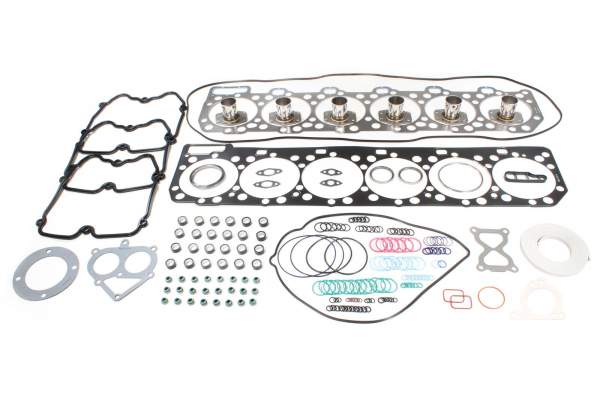
MLS vs. Graphite Head Gaskets: What’s the Real Difference (and Which Should You Use)?

When it comes to sealing a diesel engine, your head gasket isn’t just another component: it’s one of the most critical sealing surfaces in the entire engine.

And choosing the wrong type? That can mean compression loss, coolant leaks, or even a full teardown.

Two of the most common options are:

  • Multi-Layer Steel (MLS) Head Gaskets
  • Graphite (Composite) Head Gaskets

They may serve the same purpose – but they behave very differently under real engine conditions.

Continue reading MLS vs. Graphite Head Gaskets: What’s the Real Difference (and Which Should You Use)?
Posted on

Precision Machining Explained: Why It Matters for Diesel Engine Parts

When you open a diesel engine, it’s easy to focus on the big components—pistons, crankshafts, cylinder heads, and turbochargers.

What you can’t see is often just as important.

Modern diesel engines rely on components manufactured to incredibly tight tolerances. In many cases, a difference of just a few thousandths of an inch can affect oil pressure, compression, bearing life, piston ring sealing, and overall engine reliability.

That’s where precision machining comes in.

Precision machining is the process of manufacturing engine components to extremely accurate dimensions, shapes, and surface finishes. While it may not be the most visible part of the manufacturing process, it’s one of the biggest reasons quality diesel engine parts last hundreds of thousands of miles.

In this article, we’ll explain what precision machining is, why it matters, and how it affects the performance and longevity of your diesel engine.

Quick Takeaway: Precision machining isn’t about making parts look perfect—it’s about making them fit, seal, and operate exactly as the engine designer intended. Even tiny dimensional differences can affect compression, oil pressure, bearing life, and overall engine durability.

Continue reading Precision Machining Explained: Why It Matters for Diesel Engine Parts
Posted on

Should Diesel Engine Oil Changes Be Based on Hours or Miles?

If you ask ten diesel technicians whether oil changes should be based on engine hours or mileage, you’ll probably get ten different answers.

The truth is, both measurements have value—but they don’t tell the whole story on their own.

For heavy-duty diesel trucks, the way an engine is used often matters more than how many miles are on the odometer. A truck that spends hours idling, operating a PTO, or crawling through traffic may accumulate just a few miles while putting significant wear on the engine and its oil. Meanwhile, a long-haul truck cruising steadily down the interstate may accumulate hundreds of miles under relatively ideal operating conditions.

So which should you trust—engine hours or miles?

The answer depends on how your truck works.

HHP Quick Takeaway

For many heavy-duty diesel trucks, engine hours provide a more accurate picture of engine wear than mileage alone. However, the best maintenance schedule considers engine hours, mileage, operating conditions, the engine manufacturer’s recommendations, and—when possible—oil analysis.

Continue reading Should Diesel Engine Oil Changes Be Based on Hours or Miles?
Posted on

Diesel Fuel Additives: What They Do, When They’re Used, and What to Consider

Diesel fuel additives are commonly used in both light-duty and heavy-duty applications.

They are not a single product type. Instead, they are formulated blends designed to address specific fuel system conditions or operating environments.

Depending on formulation, diesel fuel additives may be used to:

  • Clean fuel system components
  • Improve combustion characteristics
  • Support cold-weather operation
  • Protect fuel system parts from wear

👉 The effectiveness of an additive depends on fuel quality, engine condition, and application.

Continue reading Diesel Fuel Additives: What They Do, When They’re Used, and What to Consider
Posted on

Worst Truck Bottlenecks in the U.S. (2026 Guide)

Traffic congestion is one of the most consistent challenges in long-haul trucking.

For drivers and fleets, bottlenecks do more than slow traffic – they impact:

  • Delivery schedules
  • Fuel consumption
  • Driver fatigue
  • Overall operating costs

Each year, certain locations consistently rank among the most congested freight corridors in the United States.

Below are some of the most significant truck bottlenecks and high-congestion areas in 2026, along with why they create problems for heavy-duty traffic.

Continue reading Worst Truck Bottlenecks in the U.S. (2026 Guide)
Posted on

What Are Electronic Unit Injectors (EUIs)?

If you’re working on engines like the Detroit Diesel Series 60, Caterpillar C15, or Cummins ISX, you’ve probably heard the term EUI.

But understanding what an Electronic Unit Injector (EUI) actually does – and how it fails – is key to diagnosing a lot of performance issues.

Because when an EUI starts to go, it doesn’t just affect fuel delivery.

It affects timing, pressure, combustion, and overall engine balance.

Continue reading What Are Electronic Unit Injectors (EUIs)?
Posted on

Turbocharger Cartridge vs Full Replacement: What Actually Fails Inside a Diesel Turbo

When a diesel turbocharger fails, the first question is always:

Should you replace the cartridge – or the entire turbo?

Most answers online are surface-level. But if you want to avoid repeat failures, you need to understand what actually fails inside the turbocharger.

Because the wrong choice doesn’t just cost money – it can lead to another failure within hours of startup.

Continue reading Turbocharger Cartridge vs Full Replacement: What Actually Fails Inside a Diesel Turbo
Posted on

About The Caterpillar 3406E

In 1993, Caterpillar began production on the 3406E, the last model engine in the 3406 series. While its predecessors –the A, B, and C– were fully or partially mechanical, the Caterpillar 3406E was the first successful fully electronic motor. The 3406E is usually found in Peterbilt and Freightliner vehicles.

Continue reading About The Caterpillar 3406E
Posted on

About the Caterpillar C15 Engine

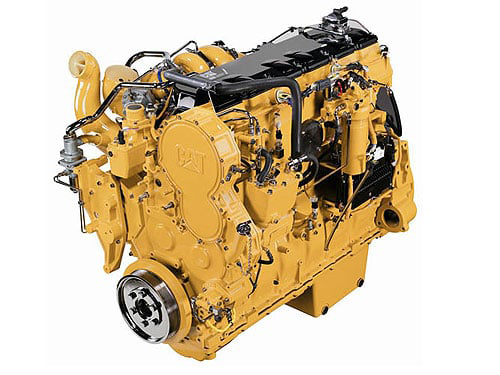
CAT C15 Engine

Steam tractors became the go-to tool for agricultural development in the late 1800s/early 1900s. Although their use was widespread, this machinery wasn’t perfect; they didn’t work everywhere. In California, these immensely heavy tractors kept sinking into the soft earth.

Continue reading About the Caterpillar C15 Engine
Posted on

5 Myths About Using Aftermarket Diesel Parts Debunked!

With so many different kinds of aftermarket diesel engine parts on the market today, there’s a ton of conflicting information about their durability, performance, and manufacturing. Some people will tell you that using aftermarket parts in your engine is dangerous and would void your engine’s warranty, while others say some aftermarket parts are even better than the OEM. So who is correct?

Continue reading 5 Myths About Using Aftermarket Diesel Parts Debunked!
Posted on

What is the cost of replacing a diesel fuel injector in 2023?

If you own a diesel engine, you may be wondering about the cost and process of replacing your fuel injectors. Fuel injectors are an essential component of a diesel engine, as they are responsible for delivering fuel to the combustion chamber. Over time, fuel injectors can become clogged or damaged, which can lead to a decrease in performance and fuel efficiency. In this blog post, we will discuss the process and cost of replacing diesel fuel injectors in 2023.

Continue reading What is the cost of replacing a diesel fuel injector in 2023?
Posted on

How Variable Geometry Turbochargers Work in Diesel Engines

Variable geometry turbochargers (VGT) are a key component in modern diesel engine performance.

Unlike fixed-geometry turbochargers, a VGT is designed to control exhaust flow dynamically, allowing the engine to produce consistent boost across a wide operating range.

The result is faster response, improved efficiency, and better control of engine performance under load.

Continue reading How Variable Geometry Turbochargers Work in Diesel Engines