


Mack engines have long meant durability and strength just look at their bulldog mascot. They were founded in 1900, originally as the Mack Brothers Company. They are now owned by Volvo, but through their long history they’ve produced engines that remain popular with many operators.
Continue reading Mack Engine Serial NumbersCategory: Blog – Diesel Engine Tech Tips
Yanmar Engine Serial Numbers
Originally founded in Japan in 1912, Yanmar is now a global company, spanning across Europe and America. They began by producing gasoline engines, but the company now specializes in diesel engines, with a particular focus on marine applications.
Continue reading Yanmar Engine Serial NumbersPerkins Engine Serial Numbers
Founded in the early 20th century, Perkins has long produced diesel engines for various industries. They sought to change diesel engines from a slow-moving working engine to a high-speed, high-performance workhorse. They succeeded. At first they produced engines for agricultural applications, but their engines can be found in marine equipment, industrial, construction, and more.
Continue reading Perkins Engine Serial NumbersBlack Series Lab Episode 1: Why Your Cylinder Liners Are Never Actually Round
Most diesel technicians assume a brand-new cylinder liner comes out of the box perfectly round and ready to install.
However, advanced dimensional analysis shows that even new production liners contain small amounts of geometric variation throughout the liner surface.
While these variations are often microscopic, they can still influence:
- ring sealing,
- oil control,
- blow-by behavior,
- and long-term rebuild reliability under operating conditions.
That is exactly what Highway and Heavy Parts explores in Black Series Lab– Episode 1. In this episode, we examine:
- cylinder liner roundness,
- dimensional stability,
- storage conditions,
- advanced measurement technology,
- and why standard inspection methods may not always reveal the full picture during a diesel engine rebuild.
Continue reading Black Series Lab Episode 1: Why Your Cylinder Liners Are Never Actually Round
Diesel Prices Around the World in June 2026
If you run trucks, manage repairs, or budget for diesel work, fuel price changes matter fast.
As of June 01, 2026, the global average retail diesel price was $1.56 per liter, or $5.91 per gallon, according to GlobalPetrolPrices. Their dataset notes that some countries are updated weekly and others monthly, depending on how their fuel markets are regulated.
What stands out most is not just the average. It’s the spread.
On the low end, a few heavily subsidized or regulated markets were still posting diesel prices near zero in U.S. dollar terms. On the high end, some developed markets were above $2.50 per liter, with Hong Kong above $4.50 per liter.
Continue reading Diesel Prices Around the World in June 2026Black Series Lab Episode 3: Crosshatch — The Surface You’ve Never Actually Seen
Most engine rebuild conversations focus on the parts everyone can see.
Pistons. Rings. Bearings. Cylinder heads. Gaskets. Liners.
But one of the most important surfaces in the entire engine is almost invisible once the rebuild is complete.
The cylinder liner crosshatch.
That microscopic pattern machined into the cylinder wall plays a major role in oil retention, piston ring seating, compression control, blow-by prevention, and long-term engine durability.
In Black Series Lab Episode 3, we look closer at that surface and explain why the liner wall is not just a smooth bore. It is an engineered sealing surface.
Quick Takeaway: Crosshatch is not just a machining mark. It is a controlled surface pattern designed to retain oil, support ring seating, and help the engine maintain compression and oil control after a rebuild.
Continue reading Black Series Lab Episode 3: Crosshatch — The Surface You’ve Never Actually Seen Oil Change Intervals After Diesel Engine Break-In
A diesel engine rebuild is not finished the moment the engine starts.
Even after the first startup and initial break-in procedure, the internal components are still seating, wearing in, and establishing the final sealing surfaces that help the engine build compression, control oil, and operate reliably.
That is why oil changes during the break-in period matter.
Fresh oil helps protect the engine, but early oil changes help remove assembly debris, break-in particles, and microscopic metal from new contact surfaces before they circulate through bearings, turbochargers, piston rings, and other critical components.
The exact break-in procedure and oil change schedule should always follow the engine builder’s or manufacturer’s recommendation. However, for many rebuilt heavy-duty diesel engines, an early oil and filter change is still one of the best ways to protect the investment you just made.
HHP Quick Takeaway
After a diesel engine rebuild, oil changes should be more frequent during the break-in period. A first oil and filter change around the first 500 miles is a common best practice because it helps remove assembly debris and break-in wear particles before they can contribute to premature engine wear.
Continue reading Oil Change Intervals After Diesel Engine Break-In After a diesel engine rebuild, oil changes should be more frequent during the break-in period. A first oil and filter change around the first 500 miles is a common best practice because it helps remove assembly debris and break-in wear particles before they can contribute to premature engine wear.
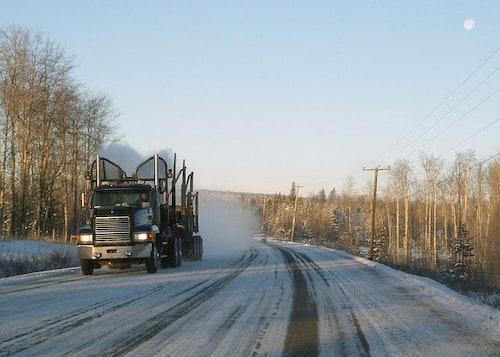
Winter Driving Tips for Heavy-Duty Diesel Trucks: How to Prepare Before the Snow Falls
Winter can be one of the toughest seasons for both diesel trucks and the people who drive them. Snow, ice, freezing temperatures, reduced visibility, and changing road conditions all increase the risk of breakdowns and accidents. Cold weather also puts additional stress on your truck’s batteries, cooling system, air system, tires, and engine.
The good news is that most winter problems can be prevented with a little preparation before your trip begins.
Whether you’re hauling freight across multiple states or making regional deliveries, these winter driving tips can help keep you safer, reduce downtime, and protect your diesel engine throughout the season.
Need replacement parts to get your diesel engine ready for winter? Our ASE Certified Technicians can help you find the right parts the first time.
New Tires vs. Retread Tires: Which Is Right for Heavy-Duty Trucks?
If you’ve spent any time around commercial trucking, you’ve probably heard the debate:
Should you buy new tires, or retread the ones you already have?
Some fleets run almost exclusively on premium new tires. Others routinely retread their drive and trailer tires multiple times to maximize the value of every casing.
The truth is that there isn’t one correct answer for every truck or every fleet.
The best choice depends on the truck’s application, axle position, operating environment, casing condition, and maintenance program.
Let’s look at how new and retread tires compare.
Quick Answer
Retread tires typically cost 30–50% less than comparable premium new tires while using roughly one-third of the raw materials required to manufacture a new tire. When built on quality casings and properly maintained, retreads are a common and proven solution for commercial trucking fleets.
Continue reading New Tires vs. Retread Tires: Which Is Right for Heavy-Duty Trucks? Retread tires typically cost 30–50% less than comparable premium new tires while using roughly one-third of the raw materials required to manufacture a new tire. When built on quality casings and properly maintained, retreads are a common and proven solution for commercial trucking fleets.
Why You Should Replace Your Crankshaft and Vibration Damper Together
When a diesel engine suffers a broken crankshaft, it’s easy to assume the crankshaft simply reached the end of its life.
In reality, that’s rarely the full story.
Heavy-duty diesel crankshafts are designed to withstand millions of combustion cycles under enormous loads. Yet even these incredibly strong components are constantly twisting and flexing as each cylinder fires. That twisting motion—known as torsional vibration—is completely normal, but it must be controlled.
That’s where the vibration damper comes in.
While the crankshaft converts combustion into rotational power, the vibration damper absorbs harmful torsional vibrations before they can damage the lower rotating assembly.
When the damper begins to wear out, the crankshaft absorbs more of those forces itself. Over time, the result can be accelerated fatigue, bearing wear, excessive vibration, and eventually a cracked or broken crankshaft.
Understanding how these two components work together can help prevent one of the most expensive diesel engine failures possible.
Quick Takeaway
A broken crankshaft is often the result of long-term torsional fatigue—not simply a defective crankshaft. Replacing both the crankshaft and vibration damper during a major lower-end repair helps restore the engine’s harmonic control system and reduces the risk of repeat failures.
Continue reading Why You Should Replace Your Crankshaft and Vibration Damper Together A broken crankshaft is often the result of long-term torsional fatigue—not simply a defective crankshaft. Replacing both the crankshaft and vibration damper during a major lower-end repair helps restore the engine’s harmonic control system and reduces the risk of repeat failures.
PACCAR MX-13 Common Engine Problems & Solutions
The PACCAR MX-13 is used in many Kenworth and Peterbilt heavy-duty trucks, especially in long-haul and fleet applications.
Like any modern diesel engine, it depends on several systems working together:
- Fuel System
- EGR System
- Turbocharger
- Cooling System
- Sensors and ECM
- Aftertreatment System
When one of these systems starts to fail, the symptom may show up as low power, derate, rough idle, hard starting, excessive regens, or poor fuel economy.
The key is not just replacing the part that triggered the fault code: it is identifying why the issue happened in the first place.
Continue reading PACCAR MX-13 Common Engine Problems & SolutionsWhy Diesel Engines Sound Different Than Gas Engines
Diesel and gasoline engines both rely on combustion to produce power, but the way that combustion occurs is fundamentally different.
Those differences directly affect:
- Pressure rise inside the cylinder
- Combustion timing
- Vibration and structure-borne noise
👉 The result is the distinct sound commonly associated with diesel engines.
Combustion Method: Spark Ignition vs Compression Ignition
The primary difference begins with how the fuel ignites.
Gasoline engines use spark ignition:
- Air and fuel are mixed before entering the cylinder
- A spark plug ignites a relatively uniform (homogeneous) mixture
- Combustion begins at a controlled point and spreads smoothly across the chamber
Diesel engines use compression ignition:
- Only air is compressed during the compression stroke
- Fuel is injected directly into hot, highly compressed air
- No spark plug is used
👉 This creates a non-uniform (heterogeneous) air-fuel mixture, where combustion begins in multiple localized regions.
Rapid Pressure Rise and Diesel “Knock”
One of the main contributors to diesel sound is how quickly pressure rises during combustion.
In a diesel engine:
- Fuel is injected into very hot, high-pressure air
- There is a short delay before ignition (ignition delay)
- During this delay, fuel continues to accumulate in the cylinder
When ignition begins:
- Multiple pockets of fuel-air mixture ignite nearly simultaneously
- This results in a rapid pressure rise inside the cylinder
👉 That rapid pressure rise produces the sharp “knock” or “clatter” associated with diesel engines.
This is often referred to as diesel knock, and it is different from uncontrolled knock in gasoline engines.
Diesel Knock vs Gasoline Engine Knock
It is important to separate these two concepts.
In gasoline engines:
- Knock (detonation) is abnormal combustion
- It occurs when the air-fuel mixture ignites prematurely
- It can cause engine damage
In diesel engines:
- Combustion always occurs through compression ignition
- The rapid ignition of accumulated fuel is part of normal operation
- The resulting pressure waves create noise
👉 Diesel knock is a controlled phenomenon, not a failure condition.
Fuel Injection Pressure and Atomization
Another major factor in diesel engine sound is the fuel injection system.
Diesel engines use:
- Extremely high injection pressures (often 20,000–40,000+ PSI in modern systems)
- Precision injector nozzles to atomize fuel
High-pressure injection creates:
- Very fine fuel droplets
- Rapid mixing with compressed air
- Localized combustion zones
👉 The injection event itself contributes to noise, both mechanically and through combustion dynamics.
Older mechanical injection systems were especially noisy due to:
- Mechanical actuation
- Abrupt fuel delivery
- Less precise control of injection timing
Multiple Injection Events in Modern Diesel Engines
Modern diesel engines have significantly reduced noise compared to older designs.
This is largely due to common rail injection systems, which allow:
- Pilot injection (small amount of fuel injected before the main event)
- Main injection
- Post injection (in some cases)
Pilot injection is especially important because it:
- Begins combustion earlier with a smaller fuel quantity
- Reduces the amount of fuel accumulated before ignition
- Lowers the rate of pressure rise
👉 This results in smoother combustion and reduced noise.
Structural Transmission of Noise
The sound you hear is not just combustion – it is how that combustion is transmitted.
Diesel engines typically have:
- Higher compression ratios
- Heavier internal components
- Stronger engine structures
The rapid pressure rise during combustion creates:
- Vibrations in the cylinder walls
- Forces transmitted through the crankshaft and block
- Structure-borne noise that travels through mounts and drivetrain
👉 These vibrations are radiated as the characteristic diesel “clatter.”
Operating Conditions and Load
Diesel engine sound also changes based on operating conditions.
At higher loads:
- More fuel is injected
- Combustion pressure increases
- Noise becomes more pronounced
At lighter loads or idle:
- Less fuel is injected
- Combustion events are smaller
- Noise may be sharper but less intense
This is why diesel engines often sound different:
- At idle
- Under acceleration
- Under heavy load
Summary of Key Differences
Diesel engines sound different than gasoline engines due to:
- Compression ignition instead of spark ignition
- Heterogeneous air-fuel mixture
- Rapid pressure rise during combustion
- High-pressure fuel injection systems
- Structural transmission of vibration
Modern diesel engines reduce this noise through:
- Advanced injection timing control
- Multiple injection events
- Improved engine design and insulation
Final Takeaway
The characteristic sound of a diesel engine is a direct result of how combustion occurs.
It is not simply “louder” or “rougher” – it reflects:
- High compression
- Controlled rapid ignition
- High-pressure fuel delivery
👉 Diesel engine noise is a byproduct of an efficient, high-load combustion process designed for durability and torque.
Call 844-304-7688 or visit highwayandheavyparts.com to get the right diesel engine parts for your application.
From diagnosis through delivery, we’re Highway and Heavy Parts.


