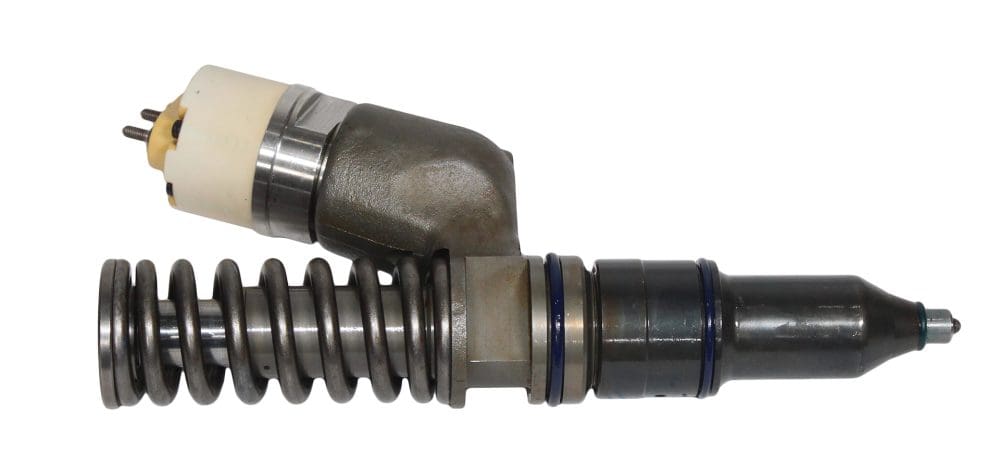
Your fuel injectors are what keep your diesel engine running at its best. If you want solid diesel engine performance, then you need to use your injectors effectively. There’s a specific system your injector uses to improve engine performance: trim codes.
Continue reading About Diesel Injector Trim CodesCategory: Caterpillar Engine Parts & Heavy-Duty Components
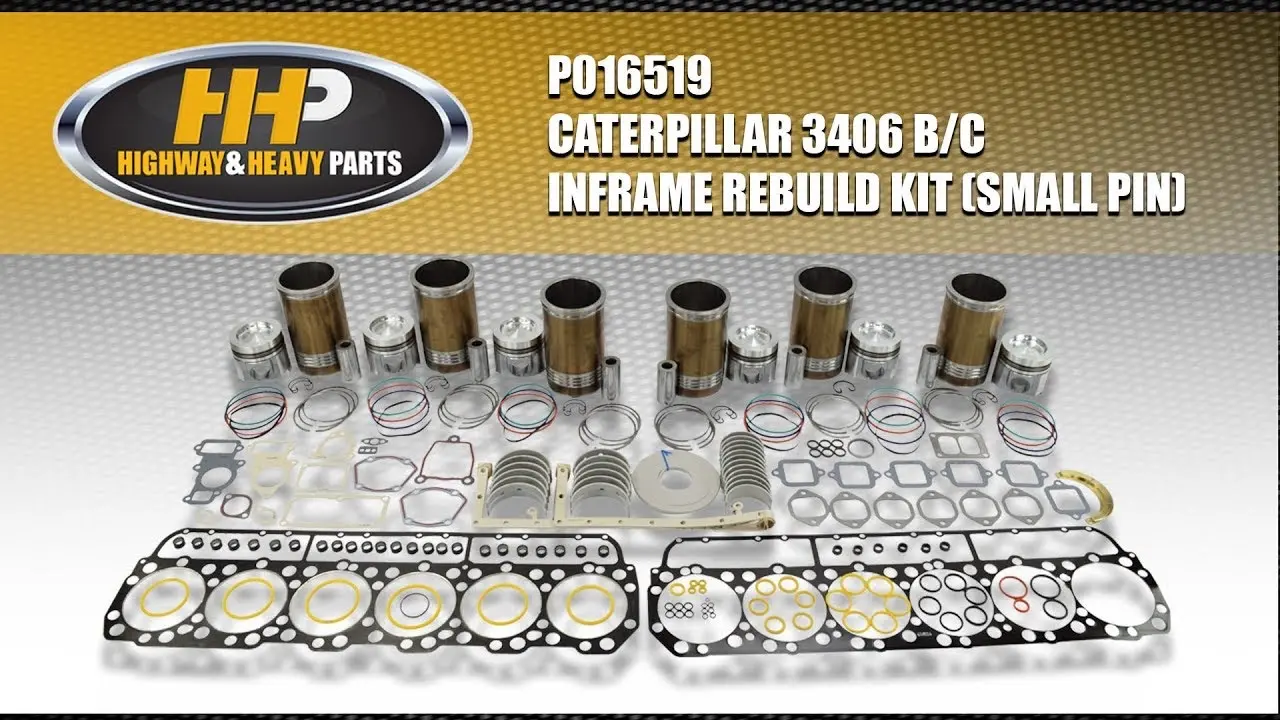
Caterpillar 3406B, 3406C Engine Rebuild Kit: What It Fixes and Why It Matters
The Caterpillar 3406B and 3406C are known for durability.
But like any diesel engine, they don’t last forever without internal wear.
Over time, compression drops, oil consumption increases, and performance starts to decline.
When that happens, a complete solution like a Caterpillar 3406B, 3406C engine rebuild kit becomes necessary.
Continue reading Caterpillar 3406B, 3406C Engine Rebuild Kit: What It Fixes and Why It MattersCaterpillar C15, C15 ACERT, and 3406E Cylinder Head: Failure Symptoms, Causes, and When to Replace
The cylinder head on a Caterpillar C15, C15 ACERT, or 3406E is one of the most critical components in the engine.
It controls:
- Combustion Sealing
- Airflow into the Cylinders
- Exhaust Flow out of the Engine
- Fuel Injector Operation
When the cylinder head starts to fail, it doesn’t stay contained. It affects the entire engine.
Continue reading Caterpillar C15, C15 ACERT, and 3406E Cylinder Head: Failure Symptoms, Causes, and When to ReplaceCaterpillar C12 Inframe Rebuild Kit: What It Includes, When You Need It, and How It Restores Performance
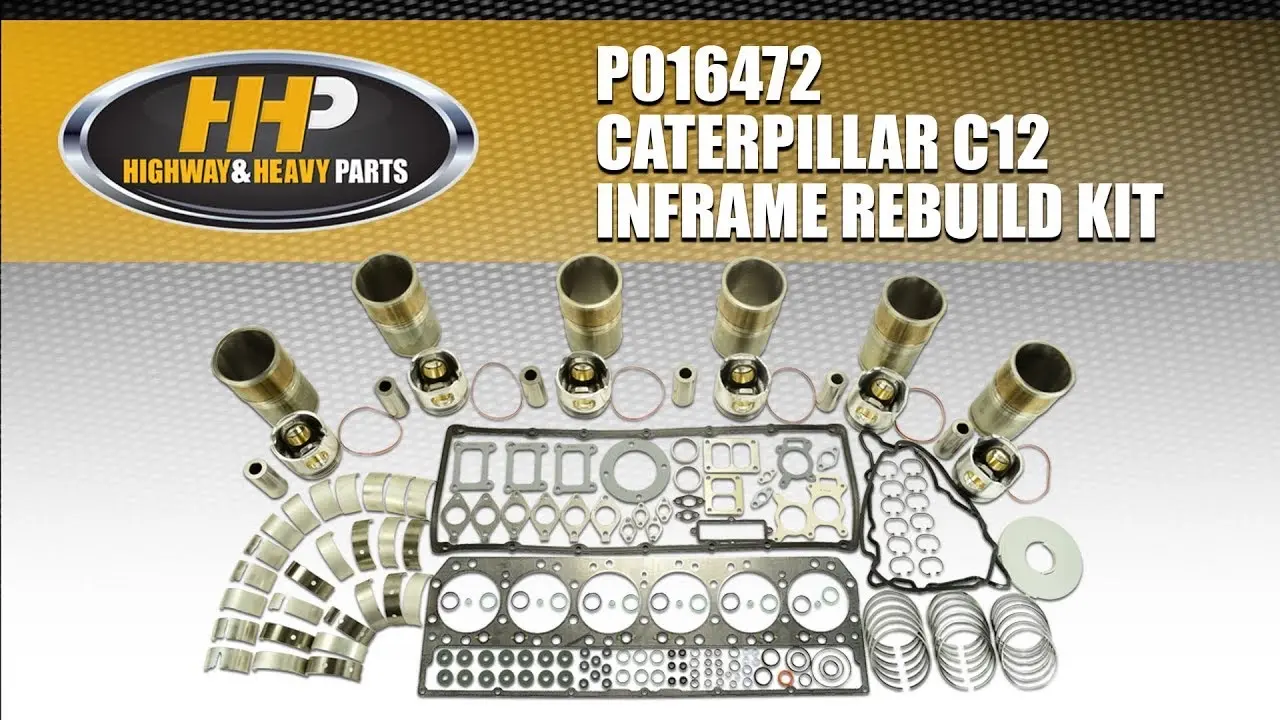
If your Caterpillar C12 is losing power, burning oil, or showing signs of internal wear, you may be getting close to a rebuild.
And when that time comes, an inframe rebuild kit is one of the most efficient ways to restore engine performance without removing the entire engine.
But knowing when to rebuild – and what’s actually included – makes all the difference.
Continue reading Caterpillar C12 Inframe Rebuild Kit: What It Includes, When You Need It, and How It Restores PerformanceCaterpillar C15 Head Gasket Problems: Failure Points, Diagnosis, and Replacement
Head gasket problems on the Caterpillar C15 are rarely random.
They are almost always tied to:
- Heat
- Clamping force
- Or failure in related components like the spacer plate or cylinder head
If you’re seeing coolant, oil, or pressure issues – especially toward the left side or rear of the engine – you’re already looking in the right place.
Continue reading Caterpillar C15 Head Gasket Problems: Failure Points, Diagnosis, and ReplacementCaterpillar C15 Fuel Injector Failures: Precise Diagnosis, Failure Modes, and Replacement Strategy
If a Caterpillar C15 starts to smoke, miss, haze at idle, or loses power under load, injectors are high on the list: but guessing is what gets engines hurt.
On many C15 variants (notably HEUI systems), injectors are hydraulically actuated by high-pressure engine oil. That means injector performance depends on two systems at once:
- Fuel supply (clean, stable pressure)
- Actuation oil (ICP/IAP pressure, clean oil, correct viscosity)
When either side is off, injector behavior changes.
What “Correct” Looks Like
With a healthy system:
- Smooth idle, even exhaust note
- Stable rail/actuation pressure under load
- Balanced cylinder contribution
- Minimal visible smoke once warm
Any deviation should be traced to a cylinder, then to a cause – not straight to parts replacement.
Primary C15 Injector Failure Modes (What Actually Fails)
1) Internal Leakage → Fuel Dilution (High Risk)
Mechanism
- Worn check valve or sealing surfaces inside injector
- Failed injector O-rings (upper/middle/lower) allowing cross-leakage
What happens
- Fuel bypasses normal metering
- Fuel can enter the cylinder uncontrollably or migrate past rings
Hard indicators
- Engine oil level rising with no external leak
- Oil smells like diesel
- Reduced oil viscosity → bearing risk
Why it matters
- Fuel-diluted oil cannot maintain hydrodynamic film
- Main and rod bearings are at risk quickly
2) Solenoid / Electrical Control Failure
Mechanism
- Coil failure, high resistance, intermittent connection
- Damaged injector pigtail or harness
What happens
- Injector fails to open/close precisely
- Timing and duration errors
Hard indicators
- Misfire at specific cylinder
- Contribution test shows weak cylinder
- Electrical codes may or may not set
Key point
Electrical faults can look identical to mechanical injector failure – verify before replacing.
3) Nozzle Wear, Erosion, or Coking
Mechanism
- High-pressure fuel erodes or deforms nozzle holes
- Carbon buildup (“coking”) distorts spray pattern
What happens
- Poor atomization
- Larger droplets → incomplete burn
Hard indicators
- Black smoke under load (overfueling/poor burn)
- Elevated EGT on affected cylinder
- Soot accumulation increases
Result
- Higher piston crown temperature
- Long-term risk to valves and liners
4) Sticking Injector (Open or Closed Behavior)
Mechanism
- Deposits or wear cause internal components to hang
What happens
- Injector stuck open → overfueling
- Injector stuck closed → dead cylinder
Hard indicators
- White/gray smoke (raw fuel) or dead miss
- Engine may clear up as it warms (thermal expansion)
- Severe cases: cylinder washdown
5) Seal/O-Ring Failure (Fuel/Air Cross-Leak)
Mechanism
- O-ring degradation from heat, age, or contamination
What happens
- Air intrusion into fuel system
- Fuel pressure instability
- Cross-port leakage
Hard indicators
- Hard start after sitting
- Aerated fuel symptoms
- Inconsistent performance
6) HEUI-Specific: Actuation Oil Problems Misdiagnosed as Injectors
Mechanism
- Low ICP/IAP pressure
- Aerated or contaminated oil
- High-pressure oil leaks (o-rings, rail)
What happens
- Injectors cannot achieve commanded fuel pressure
- Poor response, misfires under load
Hard indicators
- Low actuation pressure vs commanded
- Multiple cylinders affected
- Improves with RPM (sometimes)
Key point
This is often misdiagnosed as “bad injectors”.
Diagnostic Workflow (What Actually Works)
Do not start with parts. Start with isolation.
1) Cylinder Cut-Out / Contribution Test
- Disable one cylinder at a time (via Cat ET or manual method)
- Watch RPM drop or fuel correction
Result
- Weak change → suspect that cylinder
2) Verify Fuel Supply Pressure
- Check at filter base or test port
- Ensure stable pressure during crank and load
Why
Low supply pressure affects all injectors and mimics failure.
3) Check Actuation Oil Pressure (HEUI)
- Compare actual vs commanded ICP/IAP
- Look for lag, drop, or instability
Why
No actuation pressure = no injector performance.
4) Valve Cover Inspection
Look for:
- Fuel wash (clean, stripped oil areas)
- Oil dilution signs
Fuel wash indicates:
→ injector leaking into that cylinder
5) Temperature Comparison (Advanced but Effective)
- Use IR gun on exhaust manifold runners
Result
- Cold cylinder → underfueling/misfire
- Hot cylinder → overfueling/poor atomization
Replacement Strategy (What Actually Makes Sense)
Replace One Injector vs Set?
- Single failure, low hours: targeted replacement is acceptable
- High mileage / multiple symptoms: replace as a set
Reason:
- Injector balance matters
- Mixed wear levels create uneven combustion
Always Replace:
- Injector O-ring kits
- Any damaged cups (if applicable)
- Verify harness/pigtails
After Replacement:
- Prime fuel system
- Verify pressures
- Recheck contribution balance
What Causes Repeat Injector Failures
Injectors rarely fail in isolation.
Common root causes:
- Contaminated fuel
- Poor filtration maintenance
- Low fuel pressure
- Air intrusion
- Oil system issues (HEUI engines)
If the root cause isn’t fixed:
→ new injectors will fail again
HHP Insight: Don’t Treat Injectors as the Root Problem
Most repeat failures come from:
- Fuel system imbalance
- Actuation pressure issues
- Contamination
Injectors are often the symptom, not the cause.
Final Thoughts
C15 injector problems are not just about replacing parts.
They’re about:
- Identifying the failing cylinder
- Verifying fuel and oil systems
- Understanding combustion behavior
That’s how you prevent:
- Repeat failures
- Engine damage
- Unnecessary costs
Need Caterpillar C15 fuel injectors?
Shop here:
👉 Caterpillar C15 Fuel Injectors
Or call 844-304-7688 to speak with a diesel expert.
From diagnosis through delivery, we’re Highway and Heavy Parts.
Caterpillar C15 Head Gasket Failure: Root Causes, Symptoms, And Proper Repair Process
A failed head gasket on a Caterpillar C15 isn’t just a sealing issue – it’s usually the result of improper clamping force, liner height variation, or thermal stress inside the engine.
Replacing the gasket without addressing the underlying cause often leads to repeat failure.
Understanding why the gasket failed is critical before installing a new cylinder head gasket set.
Continue reading Caterpillar C15 Head Gasket Failure: Root Causes, Symptoms, And Proper Repair ProcessWhy Your Caterpillar C15 ACERT Turbocharger Might Not Be the Real Problem
If you’re dealing with low power, smoke, or oil around the turbo on a Caterpillar C15 ACERT, it’s easy to assume the turbocharger has failed.
But that’s not always the case.
At Highway and Heavy Parts, we see this all the time – turbos get replaced, but the original problem is still there. That’s because many turbo “failures” are actually symptoms of fuel system issues, oil problems, or internal engine wear.
Before replacing your turbo, it’s critical to understand what’s really going on.
Continue reading Why Your Caterpillar C15 ACERT Turbocharger Might Not Be the Real ProblemAbout The Caterpillar 3406E
In 1993, Caterpillar began production on the 3406E, the last model engine in the 3406 series. While its predecessors –the A, B, and C– were fully or partially mechanical, the Caterpillar 3406E was the first successful fully electronic motor. The 3406E is usually found in Peterbilt and Freightliner vehicles.
Continue reading About The Caterpillar 3406EAbout the Caterpillar C15 Engine
Steam tractors became the go-to tool for agricultural development in the late 1800s/early 1900s. Although their use was widespread, this machinery wasn’t perfect; they didn’t work everywhere. In California, these immensely heavy tractors kept sinking into the soft earth.
Continue reading About the Caterpillar C15 EngineDinex Emission: The Solution to Diesel Pollution
Dinex Emission is a company that has been dedicated to helping diesel operators meet the high standards of the EPA for a very long time. Though the EPA’s goal is to reduce the emissions of dangerous gasses into the air, their restrictions can often make transporting goods, completing construction projects, and harvesting large crops more difficult. As an expert in the field of diesel emissions control, Dinex has long been the solution to this obstacle.
Continue reading Dinex Emission: The Solution to Diesel PollutionRevving Up Performance: A Look at Garrett Diesel Turbochargers
Garrett, a name synonymous with turbocharging technology, has long been a leader in the diesel performance world. Their turbochargers are renowned for reliability, innovative design, and ability to elevate engine performance.
Continue reading Revving Up Performance: A Look at Garrett Diesel TurbochargersPremium Quality Parts for Your Caterpillar Equipment
Highway and Heavy Parts is your trusted source for over 250,000 replacement diesel engine parts, including a comprehensive selection of Caterpillar engine components. Whether you’re maintaining fleet vehicles or heavy equipment, we carry the parts you need to keep your Caterpillar engines running at peak performance. This, combined with our ASE Certified service team, makes us industry experts and qualified to write about everything Caterpillar-related.
On this page, you will find blogs that discuss common Caterpillar issues, diesel engine part highlights, and how-tos.
Complete Caterpillar Parts Inventory
Engine Components & Service Parts
Our extensive Caterpillar inventory includes essential engine components such as engine blocks, pistons, fuel injectors, and turbochargers. From routine maintenance items to major engine rebuild components, we stock everything required for C15, C15 ACERT, 3406E, and other popular Caterpillar engine models.
Quality You Can Trust
At Highway and Heavy Parts, you’ll get parts that have been manufactured in an ISO 9001:2015 certified facility, ensuring quality and consistency for your Caterpillar equipment. Our commitment to quality ensures you receive parts engineered for durability and long-lasting performance.
Why Choose Highway and Heavy Parts for Caterpillar Components?
Fast, Reliable Service
Order by 2PM EST, and in-stock items will ship the same day (M–F), ensuring minimal downtime for your equipment.
We understand the importance of keeping your fleet operational and ready for work.
Expert Knowledge & Support
Highway and Heavy Parts, LLC is owned and operated by diesel engine experts.
We know the importance of keeping a delivery fleet on the road. Our team combines decades of experience with comprehensive product knowledge to help you find the right parts for your specific application.
Comprehensive Parts Selection
You can quickly and easily find the precise part you need with our large range, saving you time and effort. From gaskets and seals to major engine components, our inventory covers the full spectrum of Caterpillar parts needs.
Caterpillar’s Legacy in Heavy-Duty Applications
While Caterpillar has a long and storied history of producing top-notch diesel engines and was known for construction and mining equipment, they also produced engines for on-highway applications. Though Caterpillar has discontinued their truck engine production, existing equipment still requires quality replacement parts and ongoing maintenance support.
Browse our complete selection of Caterpillar parts today and experience the Highway and Heavy Parts difference – where quality meets reliability for all your heavy-duty diesel engine needs.